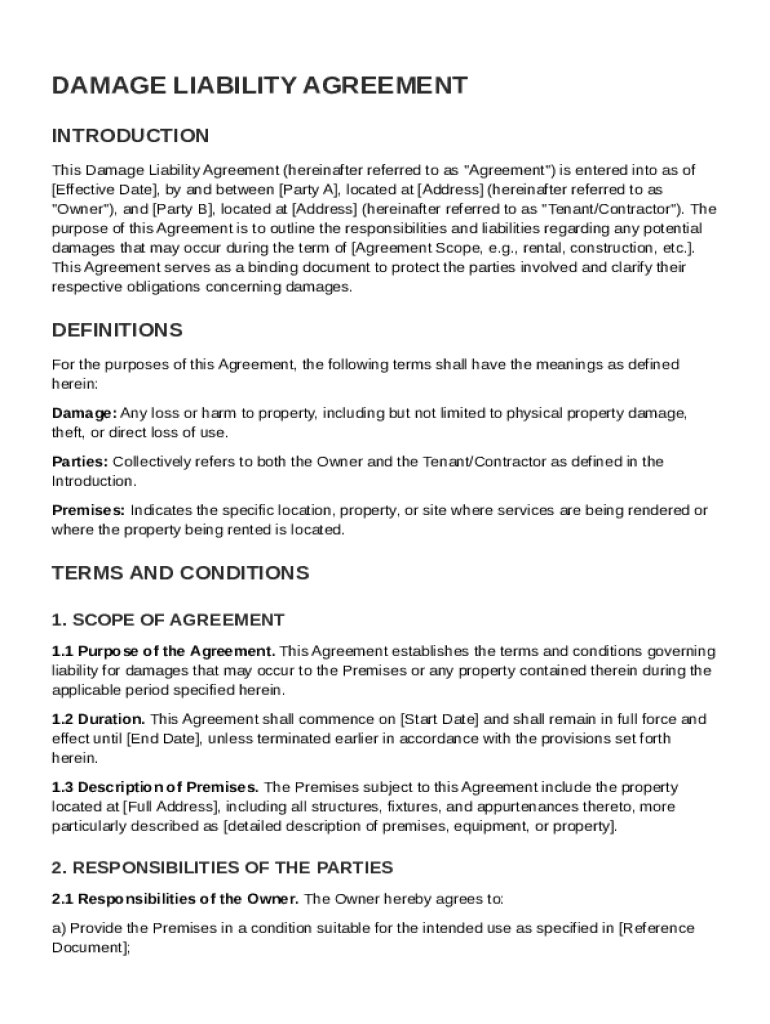







Definition and Meaning
A Damage Contract Template is a structured document used to outline the responsibilities and liabilities concerning potential damages between involved parties, such as an owner and a tenant or contractor. It serves as a legal agreement specifying the conditions under which one party may be responsible for compensating the other for damages that occur during a specified period. This type of contract is essential for clarifying expectations and minimizing disputes over damage-related issues.
Key Elements of the Damage Contract Template
Key elements of the Damage Contract Template include the identification of the parties involved, the scope of the agreement, and the explicit responsibilities of both parties. These elements ensure clarity on who is accountable for damages and under what conditions. The template usually includes insurance requirements to cover potential damage costs, as well as defined procedures for assessing damages and resolving disputes.
Responsibilities and Liabilities
- Clearly defines roles and obligations of each party
- Outlines the scope of liability and possible indemnities
- Establishes criteria for damage identification and reporting
Insurance Requirements
- Details necessary insurance coverage to mitigate potential financial loss
- Specifies the party responsible for maintaining insurance policies
- Includes options for additional insurance protection
Legal Use of the Damage Contract Template
The Damage Contract Template acts as a legally binding document once it is signed by all parties. It is governed by the laws of a specified jurisdiction, which means it must comply with state and federal regulations pertinent to contractual agreements. This ensures that the contract is enforceable in legal proceedings if disputes arise and promotes fair treatment of all parties under the law.
Jurisdictional Considerations
- Specifies the applicable legal jurisdiction for governing the agreement
- Includes provisions for amendments in line with legal updates and changes
- Details methods for legal dispute resolution, including arbitration or mediation
Steps to Complete the Damage Contract Template
Completing the Damage Contract Template involves a thorough understanding of the agreement's terms and conditions. Each section of the template needs to be filled accurately to reflect the intentions of the parties involved. Here’s a step-by-step guide to completing the template successfully:
- Identify the Parties: Clearly list the full legal names and addresses of the parties involved.
- Define the Scope: Outline the specific services or activities covered by the contract.
- Detail Responsibilities: Describe the duties and expectations from each party regarding potential damages.
- Insurance Information: Include details of any required insurance policies.
- Signatures: Obtain signatures from all parties after review and agreement.
Digital vs. Paper Version
The Damage Contract Template can be utilized in both digital and paper formats, each offering distinct advantages. Digital versions are especially beneficial for editing and signing remotely, providing convenience and efficiency. They are easily stored and managed using electronic filing systems. Conversely, paper versions are useful when parties prefer physical copies for record-keeping or if electronic access is limited.
Digital Advantages
- Easy to distribute and store electronically
- Supports digital signatures for quick execution
- Reduces paper waste and physical storage needs
Paper Considerations
- Suitable for formal presentations and legal reviews
- Preferred when physical signatures are required
- Often used when electronic platforms are inaccessible or impractical
Why Use the Damage Contract Template
Using a Damage Contract Template is essential for preventing misunderstandings and disputes regarding damage-related responsibilities. It offers clarity on the procedures and financial responsibilities associated with potential damages. This pre-structured template saves time by offering a comprehensive framework, reducing the need for drafting a new contract from scratch for every agreement.
State-Specific Rules for the Damage Contract Template
State-specific rules can significantly impact the use and enforcement of a Damage Contract Template. It is imperative to understand these rules, as they determine the enforceability and legal standing of the contract. Some states may have unique regulations or required disclosures that must be included in the contract.
Variations by State
- Differences in statutory limitations for damage claims
- State-specific insurance requirements that may need to be addressed
- Local dispute resolution mechanisms that might affect contract clauses
Examples of Using the Damage Contract Template
Different scenarios illustrate the practical use of a Damage Contract Template. For instance, a landlord might use this template to formalize the responsibilities of tenants concerning property damage. Similarly, a contractor might enter into a damage liability agreement with a property owner to outline responsibilities for damages that occur during renovation projects.
Real-World Scenarios
- Tenant and Landlord Agreements: Clarifying damage assessments during rental periods.
- Contractor and Owner Relationships: Establishing responsibilities for construction-related damages.
- Event Venues and Clients: Detailing liability for equipment and property damages during hosted events.