




01. Edit your form online
Type text, add images, blackout confidential details, add comments, highlights and more.

Type text, add images, blackout confidential details, add comments, highlights and more.

Draw your signature, type it, upload its image, or use your mobile device as a signature pad.

Send it via email, link, or fax. You can also download it, export it or print it out.
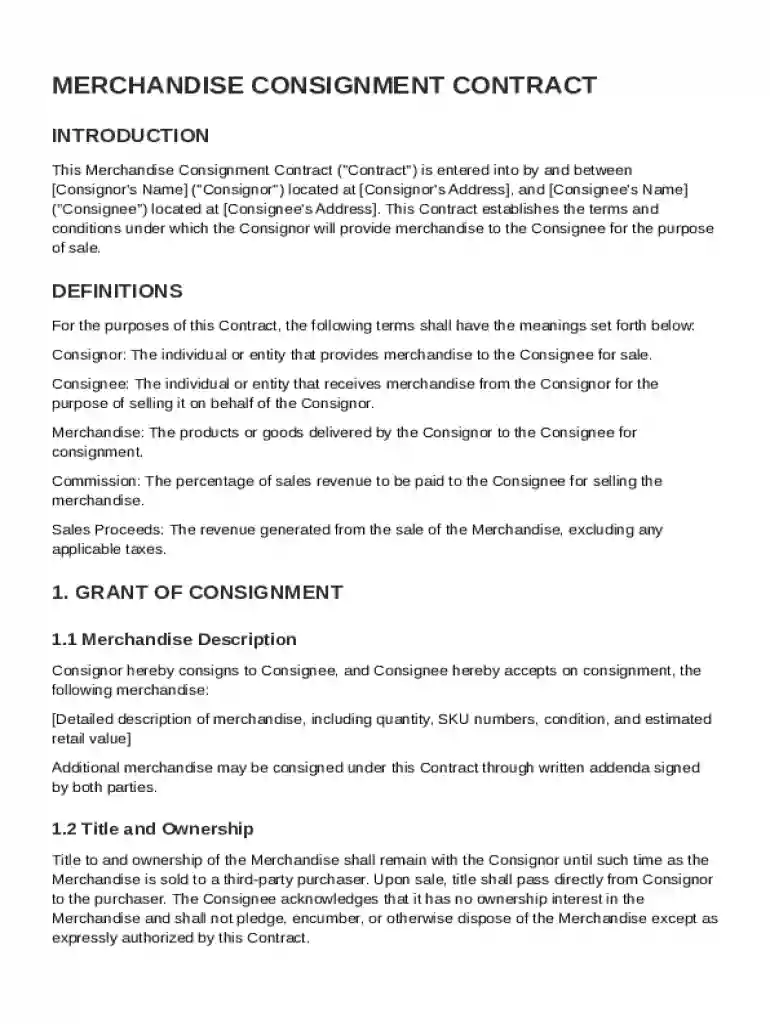
A Merchandise Consignment Contract is a legal agreement between a consignor, who owns merchandise, and a consignee, who agrees to sell the merchandise. This contract outlines the terms under which the consignee will hold, display, and sell the merchandise on behalf of the consignor. Importantly, ownership of the goods remains with the consignor until a sale is completed, ensuring control over the merchandise throughout the consignment period. The contract typically includes details such as commission rates, inventory management procedures, and sales reporting requirements.
Contracts should comply with applicable state and federal laws governing sales, business practices, and consignment arrangements. Ensure that all terms are legally enforceable and in line with commercial codes. The contract must establish that ownership remains with the consignor until the sale is completed, protecting their interests and minimizing risk. Both parties should retain signed copies for their records, and any modifications or amendments must be agreed upon in writing.
This template is commonly employed by:


While consignment contracts are generally consistent, state-specific laws may affect terms such as commission structures and legal requirements. It's crucial to review any regional business laws and commercial codes that could impact the consignment agreement in states where business is conducted. Consideration of local tax implications and insurance requirements is also essential, as these can vary significantly by state.
At DocHub, your data security is our priority. We follow HIPAA, SOC2, GDPR, and other standards, so you can work on your documents with confidence.


Oct 14, 2021 Consignment and pipeline settlement. For goods withdrawals from consignment stocks or from a pipeline, you do not expect an invoice from the
Consignment Agreement. WHEREFORE,. , owner and Consignor of certain items more particularly described hereinafter and Harper College as owner and operator


