






Definition and Meaning of a Tuition Reimbursement Contract Template
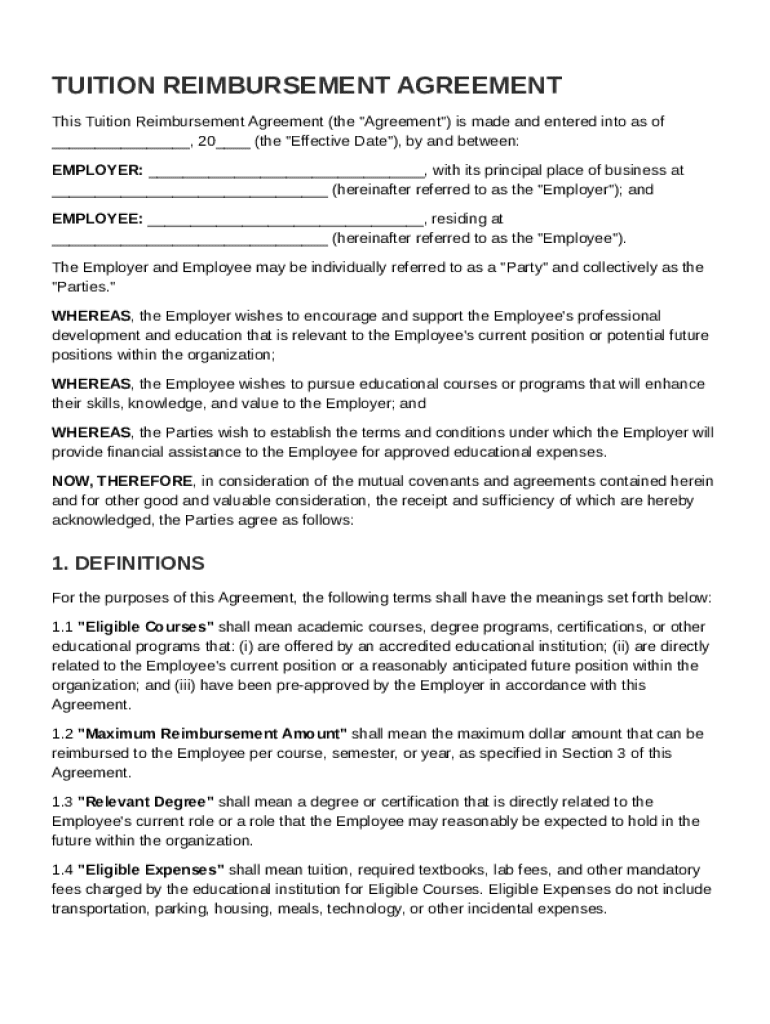
A Tuition Reimbursement Contract Template is a formal document used by employers to delineate the conditions under which they will financially support an employee's pursuit of further education. This template serves as a foundational guide to outline essential terms such as eligible courses, reimbursement limits, and employee eligibility criteria. It helps in clearly defining the mutual expectations of both parties, emphasizing professional development while setting guidelines for repayment should employment terminate prematurely.
How to Use the Tuition Reimbursement Contract Template
Using the Tuition Reimbursement Contract Template involves several steps to ensure that it accurately reflects the terms of agreement between the employer and employee.
- Customize the Template: Tailor the document to fit the specific needs of your organization, including any company-specific requirements or conditions.
- Define Eligible Courses: Clearly specify which courses are eligible for reimbursement. This might include industry-related degrees or courses enhancing specific professional skills.
- Set Reimbursement Limits: Establish financial caps for tuition assistance, including any associated expenses such as books or materials.
- Determine Employee Eligibility: Outline who qualifies for the program, considering factors such as duration of employment and current job role.
- Include Repayment Conditions: Detail the circumstances that would necessitate repayment, such as voluntary resignation or failure to complete a course.
Key Elements of the Tuition Reimbursement Contract Template
A comprehensive Tuition Reimbursement Contract Template includes several critical elements designed to protect both the employer and employee.
- Purpose and Scope: Clearly state the purpose of the policy and the importance of continuing education.
- Eligibility Criteria: Define the prerequisites an employee must meet to be considered for reimbursement.
- Reimbursement Structure: Outline how much will be reimbursed for different kinds of educational endeavors.
- Repayment Terms: Specify terms under which the employee must repay the reimbursed tuition if specific conditions aren't met.
- Application and Approval Process: Detail the steps required for an employee to apply for tuition assistance and how approvals are managed.
- Duration and Amendment: Provide the terms of the validity of the contract and conditions under which it may be amended.
Important Terms Related to Tuition Reimbursement Contract Templates
Understanding the terminology associated with Tuition Reimbursement Contracts can help in effectively managing and creating such templates.
- Eligible Courses: Courses or degree programs that qualify under the reimbursement policy.
- Reimbursement Limits: The maximum financial support an employer is willing to provide.
- Eligibility Criteria: Conditions that employees need to fulfill to qualify for tuition reimbursement.
- Repayment Terms: Provisions detailing how and when an employee must repay any tuition funds.
- Course Completion: Requirements for attaining a certain grade or credit to qualify for reimbursement.
Legal Use of the Tuition Reimbursement Contract Template
The legal use of a Tuition Reimbursement Contract Template ensures that all conditions comply with state and federal laws while protecting both employer and employee interests.
- Compliance with Labor Laws: Ensure that the contract aligns with employment and education laws of the state.
- Documenting Repayment Clauses: Legal advice may be necessary to draft repayment clauses to protect the organization's interests.
- Formal Agreement: Require both employer and employee signatures to make the document a binding legal agreement.
State-Specific Rules for Tuition Reimbursement Contracts
Different states may have varying rules that affect the implementation of Tuition Reimbursement Contracts. Employers should familiarize themselves with these guidelines to ensure compliance.
- Minimum Wage and Labor Laws: Compliance with state wage laws may affect how tuition payments are handled.
- Tax Implications: State-specific tax codes may influence how tuition reimbursement is treated for tax purposes.
- Employment Law: Aligning contracts with state-specific employment laws ensures they are enforceable and compliant.
Examples of Using the Tuition Reimbursement Contract Template
Real-world application of Tuition Reimbursement Contracts varies across industries, reflecting differing needs and priorities.
- Tech Industry: Employees may pursue certifications or degrees in new technologies or coding, with employers eager to upskill their workforce.
- Healthcare: Nurses or technicians may wish to gain advanced medical certifications, with hospitals often providing significant educational support.
- Finance: Financial institutions may offer tuition reimbursement for employees pursuing degrees in finance, economics, or related fields to develop advanced analytical skills.
Software Compatibility for Managing Tuition Reimbursement Templates
Managing Tuition Reimbursement Contracts efficiently can benefit from using specific software platforms that integrate with existing business systems. While DocHub offers robust editing capabilities useful for creating and managing these contracts, other software solutions can also facilitate template management.
- Document Management Systems: These systems help in storing and organizing contracts for easy retrieval and tracking.
- Payroll Integration Software: Linking contract terms with payroll systems ensures smooth handling of tuition reimbursements.
- HR Platforms: Software like DocHub can integrate with HR systems to track employee eligibility and manage contract renewals or amendments seamlessly.