




Definition & Meaning
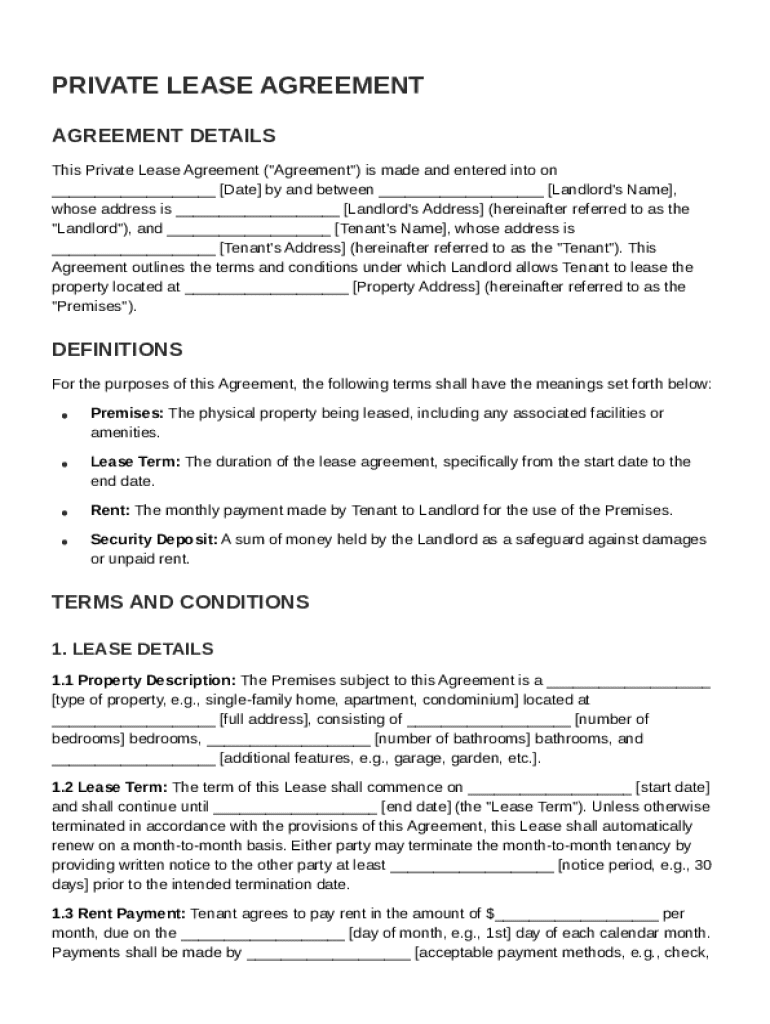
The Private Lease Agreement Template is a legally binding document outlining the terms and conditions for leasing a property between a landlord and a tenant. This template serves as an essential framework that details the rights and responsibilities of both parties involved in the rental arrangement. Key aspects covered in this agreement include the lease term duration, rental payment schedules, and guidelines for property use. By clearly defining these conditions, the document helps prevent misunderstandings and disputes between landlords and tenants, ensuring a smooth leasing experience.
Key Elements of the Private Lease Agreement Template
This template contains several critical components that guide the relationship between the landlord and the tenant:
- Lease Term Duration: Specifies the period for which the lease is valid, including start and end dates.
- Rental Payment: Details the amount of rent, due dates, and accepted payment methods.
- Security Deposit: Outlines the deposit required, its purpose, and conditions for its return.
- Maintenance and Use: Defines responsibilities for property upkeep and permissible uses of the premises.
- Alterations and Modifications: Lists protocols for making changes to the property and obtaining necessary permissions.
- Termination Clause: Explains circumstances under which the lease can be prematurely ended.
How to Use the Private Lease Agreement Template
To effectively use this template, follow these steps:
- Review Core Details: Familiarize yourself with the entire document, ensuring that all the primary sections are understood.
- Customization: Tailor the template to meet specific needs, such as adjusting rent amounts or altering maintenance responsibilities based on agreements between the parties.
- Legal Verification: Consult with a legal professional to verify that the agreement complies with local and state laws.
- Formal Agreement: Once finalized, both parties should sign the agreement to formalize their understanding and commitments.
Steps to Complete the Private Lease Agreement Template
Completing the template involves a structured approach:
- Gather Information: Collect essential details such as tenant names, property address, lease term, and rental amount.
- Fill Out Sections: Complete each section of the template meticulously to reflect the agreed terms.
- Consult Legal Advice: Before signing, consult with a lawyer to ensure all legal stipulations are adequately covered.
- Review and Sign: Both landlord and tenant should thoroughly review the document for accuracy and then sign it to indicate agreement.
Important Terms Related to Private Lease Agreement Template
Several terms are integral to fully understanding this template:
- Leasehold Estate: The interest that the tenant holds in the property as per the lease agreement.
- Breach of Contract: Occurs when either party fails to fulfill their obligations as stipulated in the agreement.
- Subleasing: Allows the tenant to lease a portion or all of the property to a third party.
- Eviction: Legal process by which a landlord may remove a tenant from the property for breach of lease conditions.
Legal Use of the Private Lease Agreement Template
The legal application of this template is crucial for enforceability:
- Complying with Jurisdiction: The lease agreement should adhere to the laws of the state where the property is located, ensuring its legal standing.
- Record Keeping: Properly executed agreements should be maintained in a secure location for future reference and potential legal proceedings.
- Amendments: Any changes to the agreement should be documented in writing and signed by both parties to become valid.
State-Specific Rules for the Private Lease Agreement Template
Lease agreements must conform to state-specific laws:
- Security Deposit Limits: Certain states impose caps on the monetary deposit a landlord can request.
- Notification Requirements: Some jurisdictions require specific timelines for termination notices provided by either party.
- Rent Control Laws: Understanding local rent control laws is essential for compliance with allowable rent increases.
Who Typically Uses the Private Lease Agreement Template
This template is most commonly used by:
- Individual Landlords: Seeking to formalize rental agreements with tenants.
- Property Management Companies: Streamlining the leasing process across multiple properties.
- Tenants: Ensuring protection of their rights and clearly laid out obligations in the lease agreement.

Examples of Using the Private Lease Agreement Template
Practical scenarios for the utilization of this template include:
- Single-Family Rentals: Individual landlords leasing out residential homes.
- Apartment Leases: Property management firms handling multiple tenants in apartment complexes.
- Commercial Leases: Businesses leasing office spaces requiring professional lease documentation.