
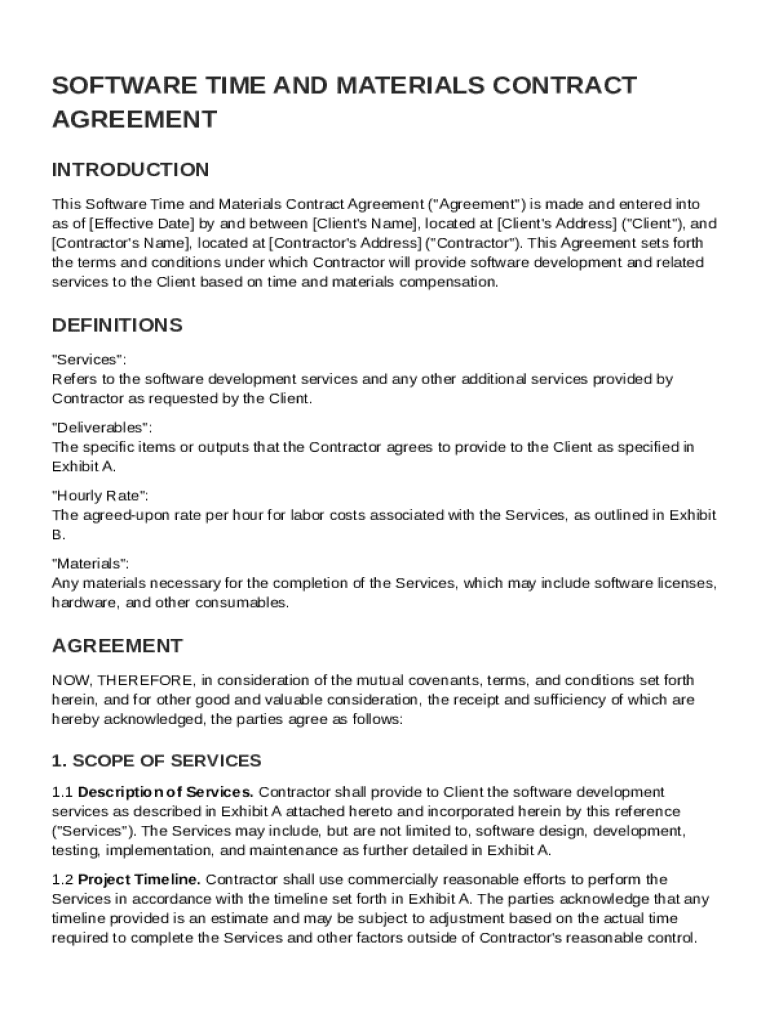







Definition and Purpose of Software Time and Materials Contract
A Software Time and Materials Contract is a legal agreement between a client and a contractor, detailing the terms of service for software development. This contract is specifically designed to focus on the compensation model based on time and materials, meaning the contractor is paid according to the time spent and resources used. This allows for flexibility in budgeting and can accommodate adjustments during the project's scope. Key responsibilities, deliverable timelines, and mutual cooperation are emphasized, ensuring both parties are aligned throughout the development process.
Key Elements of the Software Time and Materials Contract
This contract encompasses several critical components to protect both parties and outline clear expectations:
- Scope of Work: Defines the project's boundaries, including what the contractor will deliver and any constraints or limitations.
- Compensation Terms: Details the payment structure, often hourly rates or costs per unit of materials used.
- Responsibilities: Includes the duties and expectations of both the client and contractor, ensuring mutual obligations are understood.
- Change Orders: Outlines procedures for amending project requirements, including approvals needed and how these changes will impact costs.
- Confidentiality: Specifies how proprietary information will be handled and safeguarded.
- Intellectual Property Rights: Clarifies ownership of work produced, typically favoring the client post-completion.
- Termination Conditions: Details conditions under which either party can exit the agreement.
How to Use the Software Time and Materials Contract Template
Using the template involves a systematic approach to ensure all necessary components are included:
- Review All Sections: Understand each area of the template to ascertain which parts require customization for your specific project.
- Input Specific Details: Tailor sections such as project scope, payment terms, and responsibilities with precise details related to your agreement.
- Customize Change Order Processes: Define procedures specific to your needs, including stakeholder approvals for altering project deliverables.
- Incorporate Legal Obligations: Ensure that confidentiality and intellectual property rights sections comply with local and federal laws.
- Finalize: Once populated with the pertinent details, review to ensure accuracy, then both parties should sign to validate the contract.
Who Typically Uses the Software Time and Materials Contract Template
This template is invaluable for various stakeholders in the software development sector, including:
- Software Development Companies: Often employ this model for projects requiring high adaptability and ongoing client input.
- Freelance Developers: Prefer this structure for projects where scope might change based on iterative feedback.
- Clients: Who need detailed customization and wish to have more oversight on the billing based on utilized resources rather than a fixed price.

Steps to Complete the Software Time and Materials Contract Template
Completing this template requires careful attention to ensure all relevant information is captured:
- Gather Necessary Information: Collate all pertinent details such as project objectives, estimated hours, and needed resources.
- Consult Legal Guidance: Engage a legal expert to review the contract terms, ensuring compliance with applicable laws.
- Field Editing: Populate fillable sections of the form with project-specific data, ensuring clarity and exactness.
- Obtain Signatures: Once reviewed and agreed upon, both parties sign the contract, making it legally binding.
- Distribute Copies: Ensure both parties have signed copies for their records.
Legal Use of the Software Time and Materials Contract Template
This template supports legal compliance by including crucial elements like:
- Adherence to ESIGN Act: Facilitating electronic signatures that are legally binding.
- Confidentiality and Intellectual Property: Ensuring sensitive information protection and clear rights delineation.
- Governing Laws and Jurisdictions: Specific to your project's locale to ensure enforceability.
Advantages of Software Time and Materials Contracts
Selecting a time and materials contract offers the following benefits:
- Flexibility: Allows for project scope to evolve, which can accommodate changes in client practices or market variations.
- Transparency: Provides the client visibility into actual work and costs, fostering trust.
- Adaptability: Ideal for agile projects where iterative development leads to ongoing modifications.
Software Compatibility for Managing the Template
The template is compatible with a suite of digital platforms that streamline document management:
- DocHub: Offers features to edit, annotate, and sign documents with ease from any device.
- Google Workspace: Facilitates direct import and export from Google Drive, ensuring efficient file management.
- Support for Multiple Formats: The template can be opened and edited in formats like PDF, DOC, and more, enhancing versatility.




