






Definition & Meaning
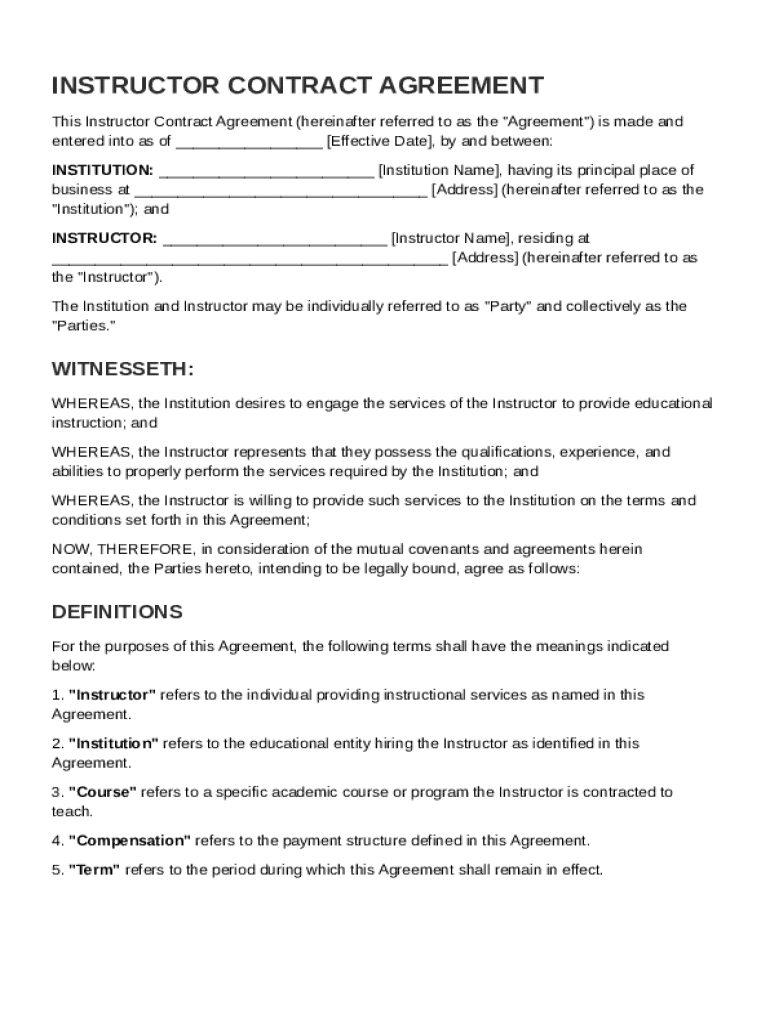
The Instructor Contract Template is a structured document that formalizes the agreement between an educational institution and an instructor. This agreement defines the scope of work, compensation, responsibilities, and legal obligations of both parties. Its primary purpose is to ensure that both the institution and the instructor have a clear understanding of their rights and duties. Through this template, instructors are engaged for their expertise to deliver educational services, emphasizing transparency and accountability.
- Scope of Work: Details the specific courses or modules to be taught and outlines the instructor's responsibilities, such as curriculum development and student assessment.
- Compensation: Clearly defines salary or payment terms, including payment frequency and any additional benefits or provisions, such as health insurance or retirement plans.
- Obligations: Specifies the obligations of both the instructor and institution, including adherence to academic policies and attendance at faculty meetings.
Key Elements of the Instructor Contract Template
A comprehensive Instructor Contract Template consists of several critical sections that ensure both parties are aligned on expectations and obligations.
- Definitions: Clarifies terminology used within the contract to avoid misunderstandings, such as "institution," "instructor," and "services."
- Term and Termination: Specifies the duration of the contract and conditions under which either party can terminate the agreement, including notice periods.
- Governing Law: Indicates the legal jurisdiction that oversees the contract, which can impact dispute resolution processes.
Compensation and Benefits
The compensation section must be detailed to prevent future disputes.
- Base Salary: States the fixed salary and any performance-based bonuses.
- Additional Benefits: May include healthcare, travel reimbursements, and professional development funds.
Responsibilities and Duties
This section delineates what is expected operationally from both parties.
- Instructor's Duties: Outlines teaching hours, office hour requirements, and administrative duties.
- Institution's Support: Includes provisions for classroom resources and administrative assistance.
Legal Use of the Instructor Contract Template
Executing an instructor contract in compliance with legal standards is crucial for enforceability.
- Compliance with Labor Laws: Ensures that salary and working conditions comply with state and federal labor regulations.
- Confidentiality and Intellectual Property: Protects the institution's proprietary information and ensures the instructor's academic work is properly attributed.
Confidentiality Clauses
Confidentiality agreements are a critical part of any instructor template to safeguard intellectual property.
- Scope of Confidentiality: Specifies what information must remain private, such as student records or academic materials.
- Breach Consequences: Details the repercussions of breaking confidentiality agreements, including potential legal action.
How to Use the Instructor Contract Template
Using the Instructor Contract Template involves customizing it to suit the specific needs of the institution and instructor.
- Review Template Content: Examine all sections to ensure all terms are applicable.
- Customize Specific Sections: Adjust the scope of work, compensation details, and any legal provisions as needed.
- Legal Review: Have the template reviewed by a legal professional to ensure compliance with relevant laws.
- Finalize and Sign: After all alterations, both parties should review the final draft and sign, acknowledging their agreement to the terms.
Steps to Complete the Instructor Contract Template
Completion of the Instructor Contract Template should be systematic to ensure all details are precise.
- Input Instructor Information: Enter personal details like the full name, address, and contact information.
- Define Scope and Responsibilities: Detail the specific courses or responsibilities the instructor will handle.
- Set Compensation Parameters: Clearly outline payment terms, schedules, and any included benefits.
- Review Legal Provisions: Ensure the governing law and confidentiality clauses are correct and applicable.
- Obtain Necessary Approvals: Secure any needed institutional approvals before final signatures.
Examples of Using the Instructor Contract Template
The practical application of the Instructor Contract Template is diverse, catering to various educational settings.
- University Adjuncts: Frequently use this template to outline course delivery and academic expectations.
- Corporate Training Programs: Adapted for use in professional development courses, defining fee structures and intellectual property rights.
- Online Educators: Utilized for remote teaching scenarios, specifying digital resource usage and virtual classroom management.
Variations and Edge Cases
Different educational settings may necessitate template adjustments.
- One-time Workshops vs. Semester Courses: The duration of teaching engagements can vary widely, affecting compensation and responsibilities.
- Part-time vs. Full-time: Employment status can influence benefit administration and labor law compliance.
Who Typically Uses the Instructor Contract Template
The template serves a broad audience within the educational sector.
- Higher Education Institutions: Colleges and universities use it to formalize partial-term or adjunct faculty appointments.
- Private Tutoring Companies: Engage freelance educators with structured contracts that outline service expectations.
- Non-Profit Educational Organizations: Use the template when contracting subject matter experts for community education programs.


Business Types That Benefit Most
Certain organizations optimize operations through standardized contract use.
- Training Providers: Reduce administrative load by customizing templates for multiple clients.
- Vocational Schools: Streamline instructor onboarding by defining technical and labor-specific teaching requirements.
- Educational Consultancies: Ensure compliance and consistency across diverse client engagements.
State-Specific Rules for the Instructor Contract Template
Understanding local regulations is necessary for legally sound contract use.
- State Labor Laws: Compensation and working conditions must adhere to varying state labor legislation.
- Education Department Guidelines: Some states may impose additional requirements for educational contracts.
Adapting to State Differences
State guidelines can influence various template elements.
- Record-keeping Requirements: Different states may require documentation of work hours differently.
- Benefit Structures: State laws may dictate minimum benefit levels for certain instructor categories.
By focusing on these essential components, users of the Instructor Contract Template can ensure comprehensive and clear agreements that facilitate successful educational engagements.