






Definition & Meaning
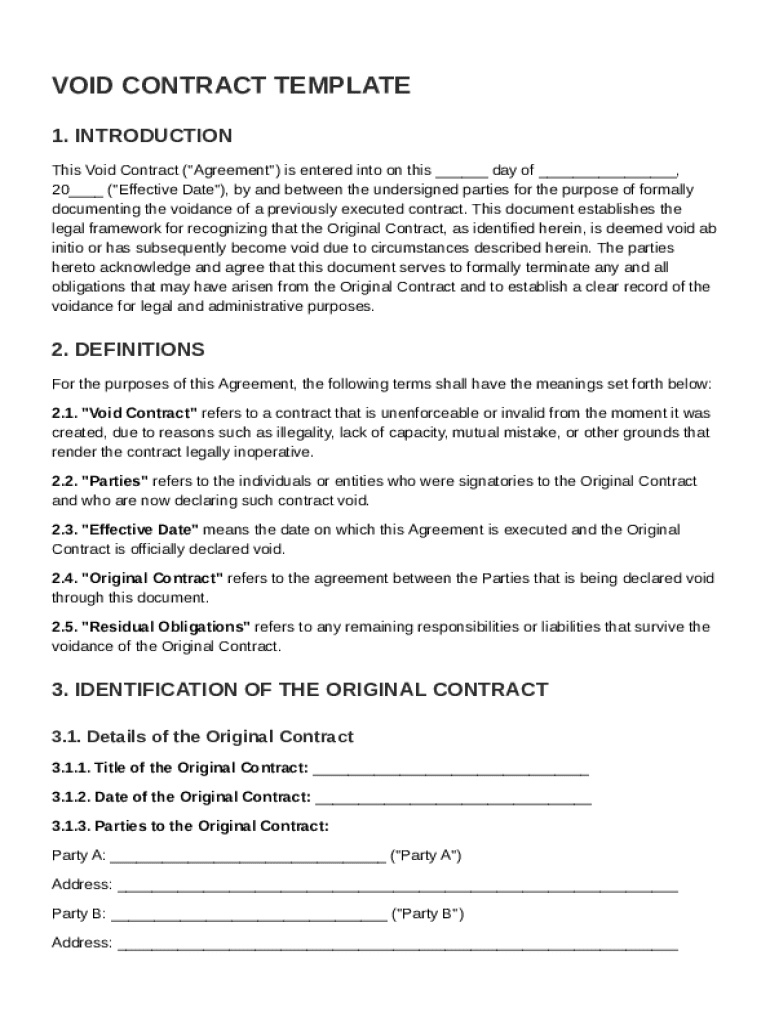
The Void Contract Template is a formal document used to declare that a previously executed contract is considered null and void. It serves to establish that the original agreement legally holds no binding power for either party involved. This template includes sections that outline the terms of voidance, identify the original contract, and acknowledge the removal of all obligations associated with the original agreement. By using this document, both parties record the mutual understanding that they are released from their commitments under the initial contract.
Key Elements of the Void Contract Template
The Void Contract Template comprises several critical sections designed to ensure clarity and comprehensiveness. These elements include:
- Identification of Parties: Names and details of all parties initially involved in the contract.
- Original Contract Details: Specifics such as date, title, and key elements of the original agreement.
- Reasons for Voidance: Explanation and justification for declaring the contract void.
- Acknowledgment of Voidance: Both parties must agree and sign off on the terms of voidance.
- No Further Obligations Clause: Clearly states that neither party holds obligations to the other from the original contract.
Each section promotes transparency and provides an unambiguous record of the voidance process, ensuring all legal and procedural standards are met.
Steps to Complete the Void Contract Template
Completing the Void Contract Template involves several detailed steps to ensure accuracy and legal compliance:
- Gather Necessary Information: Collect all relevant details about the original contract and the parties involved.
- Fill Out Party Information: Input names, addresses, and contact details of both parties.
- Enter Original Contract Details: Specify the contract number, title, date of execution, and key terms.
- Detail Reasons for Voidance: Clearly articulate why the contract is being declared void, supported by any necessary documentation.
- Signatures and Date: Both parties must sign and date the template to acknowledge and finalize the voidance process.
Each step should be followed with precision to ensure that the template serves its intended legal function.
Legal Use of the Void Contract Template
The Void Contract Template is an essential tool in the legal domain to formally communicate the dissolution of a contract. It is used when:
- Mutual Mistake: Both parties agree that a fundamental error has rendered the contract unenforceable.
- Illegality: The contract's terms are found to be illegal or against public policy.
- Lack of Capacity: One or more parties lacked the legal capacity to enter into a contract initially.
Utilizing this template correctly helps in mitigating potential legal disputes by providing a documented and agreed-upon resolution.
Why Should You Use the Void Contract Template
Various practical reasons necessitate the use of a Void Contract Template:
- Prevent Legal Disputes: By mutually agreeing on the voidance, parties can prevent future legal conflicts.
- Clarity and Documentation: It provides a clear, written record of the agreement to void the contract, preventing misunderstandings.
- Business Integrity: Regularizing contract voidance maintains trust and integrity within business relationships.
Each use case underscores the importance of such documentation in maintaining professional and legal standards.
Software Compatibility for the Void Contract Template
DocHub's platform ensures ease of use for the Void Contract Template across various devices and software systems:
- File Formats: Compatibility with formats such as DOC, PDF, and more ensures flexibility.
- Integration: Smooth integration with tools like Google Workspace allows for efficient document management.
- Accessibility: The template can be managed on both desktop and mobile web browsers, providing ease of access from any location.
These features facilitate seamless document workflow management, supporting business and legal operations involving void contracts.
State-Specific Rules for the Void Contract Template
While the Void Contract Template provides a comprehensive guide, users must also be aware of state-specific regulations that may influence the voidance process:
- Contract Law Variations: States may have different interpretations of contract elements and enforceability.
- Notarization Requirements: Certain states might require notarization for the template to be valid.
- Filing and Notification Procedures: Some states might necessitate filing the voidance with a local governmental entity or notifying specific third parties.
Understanding these nuances ensures that the template is used correctly and legally within the relevant jurisdiction.
Examples of Using the Void Contract Template
Practical scenarios where the Void Contract Template proves beneficial include:
- Real Estate Transactions: When a mutual agreement is reached to void a property sale contract due to financing issues.
- Business Collaborations: In cases where partnerships are dissolved due to strategic misalignments.
- Service Agreements: When a service provider and a client mutually decide not to proceed with their agreement due to scope changes.
These examples illustrate the wide applicability of the template across different industries and contract types.