
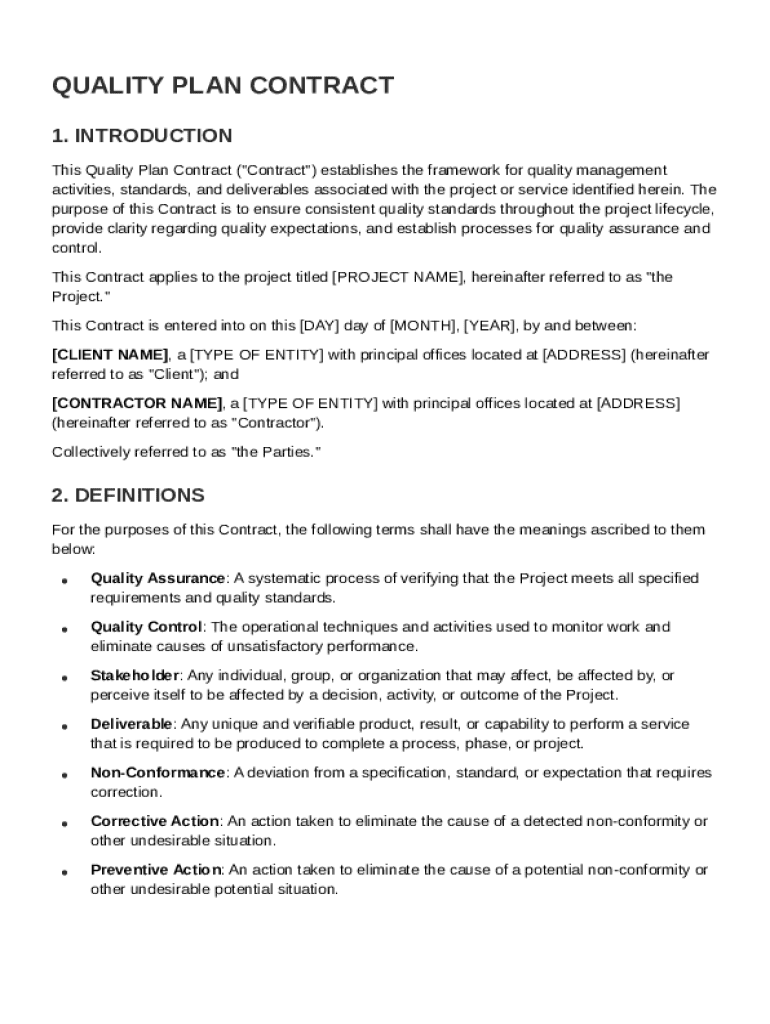







Definition and Meaning
The Quality Plan Contract Template is a foundational document that specifies the framework for managing quality within a project. It outlines critical elements such as quality assurance, quality control, and non-conformance. By defining quality objectives, including compliance with regulatory standards and customer satisfaction, the template supports achieving consistent quality throughout the project life cycle. This document plays a pivotal role in ensuring that the project's deliverables meet the agreed-upon standards and expectations.
Key Components
- Quality Assurance: Processes that focus on providing confidence that quality requirements will be fulfilled.
- Quality Control: Techniques and activities used to fulfill quality requirements.
- Non-Conformance Management: Handling deviations from the set quality standards.
Practical Example
Consider a construction company working on a large-scale infrastructure project. Using the Quality Plan Contract Template, they can detail procedures for regular inspections and testing to ensure materials and workmanship meet specified standards, thereby minimizing the risk of costly planning, execution errors, and project delays.
Steps to Complete the Quality Plan Contract Template
Completing the Quality Plan Contract Template involves several methodical steps to ensure all essential components are thoroughly addressed:
- Define Quality Objectives: Outline clear, measurable goals related to quality outcomes and compliance with regulatory requirements.
- Identify Roles and Responsibilities: Assign specific quality management tasks to key personnel like the Project Manager and Quality Assurance Team.
- Establish Procedures: Document strategies for inspection, testing, and handling non-conformance.
- Outline Reporting Protocols: Develop standardized formats for periodic quality reports.
- Detail Improvement Plans: Describe processes for continuous improvement, including regular audits and performance reviews.
Following these steps fosters a proactive approach to maintain quality standards and manage potential issues efficiently.
Key Elements of the Quality Plan Contract Template
The Quality Plan Contract Template encompasses several vital elements critical to effective quality management within a project:
- Project Overview: General description and scope of the project.
- Quality Objectives: Specific goals defined in measurable terms.
- Roles and Responsibilities: Designation of duties to project participants.
- Inspection and Testing Procedures: Defined processes to evaluate quality.
- Non-Conformance Management: Protocols for addressing and rectifying deviations.
- Audit Schedules and Continuous Improvement Plans: Timelines for ongoing quality evaluations and strategies for enhancement.
These elements collectively form a comprehensive approach to managing quality, contributing to a structured and systematic execution of project tasks.
Who Typically Uses the Quality Plan Contract Template
This template is predominantly utilized by entities involved in projects where high standards of quality are crucial:
- Construction Enterprises: Ensure consistency in materials and processes.
- Manufacturing Firms: Maintain product specifications and compliance.
- IT and Software Development Companies: Uphold coding standards and software performance metrics.
- Healthcare Providers: Adhere to stringent regulatory guidelines.
By focusing on maintaining high quality standards, these organizations can enhance client trust and achieve strategic objectives efficiently.


How to Use the Quality Plan Contract Template
Using the Quality Plan Contract Template involves a strategic approach to customize the framework per specific project needs:
- Customize the Template: Modify sections to align with the project’s unique requirements.
- Incorporate Industry Standards: Ensure the inclusion of relevant regulatory and industry quality standards.
- Engage Stakeholders: Collaborate with all project stakeholders for input and confirmation of the plan.
- Regularly Update and Review: Continuously adapt the template to reflect project changes and lessons learned.
These practices enhance the template’s effectiveness, making it a pivotal tool in maintaining project quality.
Important Terms Related to the Quality Plan Contract Template
Understanding key terminology is vital for effective use of the Quality Plan Contract Template:
- Quality Assurance: Proactive processes to ensure quality will be met.
- Quality Control: Observational and corrective actions on deliverables.
- Compliance: The state of meeting applicable legal and regulatory standards.
- Non-Conformance: Instances where outcomes differ from standards.
Familiarity with these terms enables stakeholders to navigate and implement the contract effectively, ensuring a shared understanding of quality expectations.
Examples of Using the Quality Plan Contract Template
Practical applications of the Quality Plan Contract Template provide valuable insights:
- Construction Project: A builder employs the template to outline material quality checks, reducing rework and ensuring safety standards.
- Software Development: A tech firm defines coding protocols and testing measures within the template, which aids in delivering a robust application.
- Healthcare Facility Management: Utilizes the template to adhere to patient care guidelines, enhancing treatment outcomes and compliance.
These scenarios demonstrate the versatile applications of the template in ensuring successful project outcomes.
Legal Use of the Quality Plan Contract Template
The Quality Plan Contract Template is an essential document with legal implications:
- Contractual Obligations: The template creates enforceable commitments regarding quality standards.
- Regulatory Compliance: Helps in documenting adherence to industry regulations.
- Dispute Resolution: Provides a basis for resolving conflicts arising from quality issues.
It’s crucial for project entities to ensure that the template is legally sound and comprehensive to protect against liabilities, thereby supporting the overall integrity of the quality management process.




