
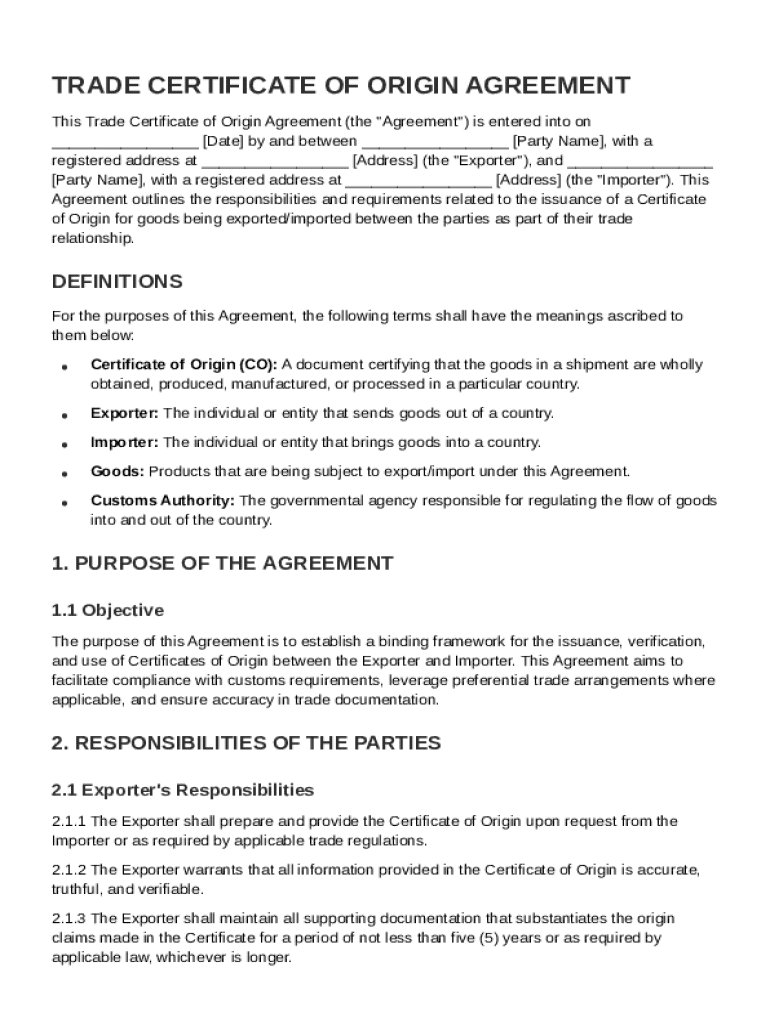







Definition & Meaning
A Trade Certificate of Origin Agreement Template establishes a formal framework between an exporter and an importer for the issuance, verification, and utilization of Certificates of Origin for goods in trade. These templates serve as a critical document in international trade, attesting that goods in a particular shipment originate from a specific country and thereby qualify for any favorable trade terms set by certain trade agreements. Certificates of Origin help ensure compliance with trade regulations and can impact duty rates and compliance requirements.
Certificates of Origin are essential in proving the origin of goods, affecting tariff applications and ensuring adherence to agreements between countries. They also play a significant role in anti-dumping policies, which aim to protect domestic industries from foreign competition unfairly subsidized or priced below market value.
Key Elements of the Trade Certificate of Origin Agreement Template
The Trade Certificate of Origin Agreement Template includes several key elements crucial to its functioning:
- Parties Involved: Clearly identifies the exporter and importer entering the agreement.
- Responsibilities: Outlines duties of both parties regarding documentation and compliance with customs regulations.
- Issuance and Validation: Details the procedures for issuing and validating certificates to avoid any discrepancies during verification.
- Indemnification Clause: Provides protection against inaccuracies in the certificate that could lead to financial liabilities.
- Expiration and Termination: Specifies when the agreement is valid and conditions under which it can be terminated.
These elements ensure clarity and prevent misunderstandings, thereby facilitating smoother trade practices between involved parties.
Steps to Complete the Trade Certificate of Origin Agreement Template
Completing the template involves several methodical steps:
- Party Information Entry: Begin by entering complete details of the involved parties, including their legal names and contact information.
- Goods Identification: Clearly list the goods for which the certificate is being issued, including descriptions, quantities, and destination countries.
- Verification Procedures: Outline the process, including any third-party verification needed to substantiate the origin claims.
- Signatures and Dates: Ensure that all parties involved duly sign the document, indicating their agreement to the terms.
- Submission and Record Keeping: Submit the completed form to relevant authorities and maintain copies for record-keeping and future reference.
How to Use the Trade Certificate of Origin Agreement Template
The template streamlines the documentation process essential for international trade compliance:
- Filling Out Information: Input the necessary data into each section of the template, ensuring accuracy to avoid future disputes.
- Customization: Tailor the template to specific trade agreements or regulatory requirements pertinent to the goods being traded.
- Review Process: Have all sections reviewed by legal or trade compliance professionals to ensure completeness and accuracy.
- Audit Preparation: Use completed agreements to demonstrate compliance during audits by trade authorities or when disputes arise.
Legal Use of the Trade Certificate of Origin Agreement Template
The agreement holds legal weight, serving as evidence in legal disputes concerning the origin of goods:
- International Trade Compliance: Helps demonstrate adherence to international trade laws and regulations.
- Customs Authority Acceptance: Assures customs authorities of the legitimacy of origin claims, crucial for obtaining duty exemptions or reductions.
- Dispute Resolution: Can be presented in disputes regarding non-compliance or discrepancy in trade practices.
Certifications of origin are binding and require truthful and accurate completion to avoid penalties or legal repercussions.
Penalties for Non-Compliance
Failure to comply with the terms outlined in the Trade Certificate of Origin Agreement can result in serious penalties:
- Monetary Fines: Imposed by customs authorities for false information or non-submission.
- Trade Sanctions: May lead to product confiscation or restrictions on future trade.
- Legal Consequences: Misrepresentation or fraud can result in legal actions against the responsible parties, including potential jail time depending on the jurisdiction.
Maintaining strict compliance with the template's provisions prevents these adverse consequences.
Who Typically Uses the Trade Certificate of Origin Agreement Template
This template is used by diverse business entities engaged in international trade:
- Exporters and Importers: Principal parties responsible for initiating the trade process.
- Logistics Companies: Often involved in the documentation process, ensuring logistics align with the agreed terms.
- Trade Compliance Specialists: Professionals tasked with ensuring all trade documents adhere to international standards.
Such entities rely on the accurate completion of the template to conduct uninterrupted trade activities.


Software Compatibility and Integration
Efficiency in managing the Trade Certificate of Origin Agreement Template can be enhanced with integration into various software systems:
- Document Management Systems: Software like DocHub can streamline filling, signing, and distributing certificates.
- Compliance Platforms: Integrations with tools that handle trade compliance tasks ensure automated checks against current trade regulations.
- Collaboration Tools: Integration with Google Workspace allows for seamless updates and communication between parties involved.
Utilizing digital solutions aids in error reduction and improves process efficiency across the board.




