






Definition and Meaning
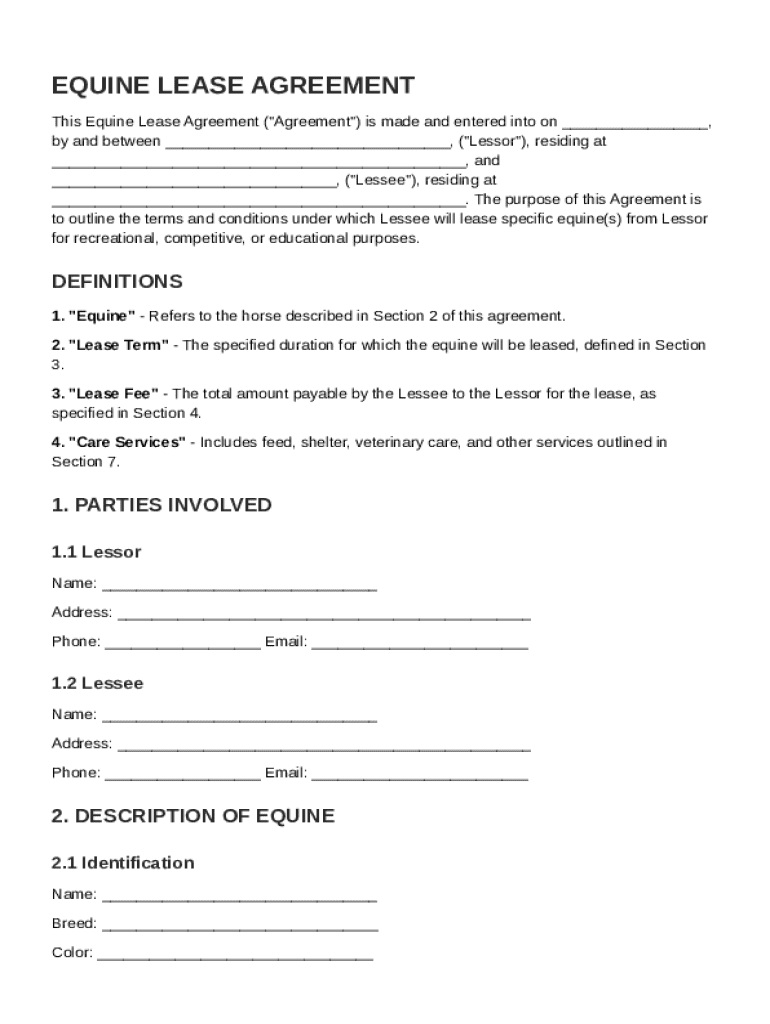
An Equine Lease Agreement Template is a structured document that delineates the specific terms and conditions for leasing a horse. This template is primarily utilized to establish a legal and binding agreement between two parties: the lessor, who owns the horse and is leasing it out, and the lessee, who is acquiring the right to use the horse for a specified period. The agreement typically covers a wide array of stipulations, such as the purpose of the lease, which might include recreational riding, competitive sports, or educational purposes. The document also defines critical terms related to the responsibilities of each party concerning the care, feed, and maintenance of the horse during the lease period. This agreement serves as a comprehensive tool to ensure transparency, accountability, and legal compliance, protecting both parties' interests throughout the leasing arrangement.
Key Elements of the Equine Lease Agreement Template
The Equine Lease Agreement Template includes several key components vital for ensuring comprehensive coverage and clarity. Essential elements encompass:
- Parties Involved: Clearly identifies the lessor and lessee, including their contact information and any relevant affiliations.
- Lease Duration: Specifies the start and end dates for the lease term, as well as any provisions for renewal or extension.
- Fees and Payment Structure: Outlines the financial arrangements, including lease fees, payment schedules, and accepted payment methods.
- Care and Maintenance Obligations: Details the responsibilities related to the horse's daily care, including feeding, veterinary visits, and grooming.
- Insurance Requirements: States any necessary insurance policies that must be maintained during the lease term for protection against potential liabilities.
- Termination Clauses: Describes the conditions and processes for terminating the agreement prior to the lease end date, including any associated penalties or notice periods.
- Liability and Indemnification: Defines the liability of each party and any indemnification clauses that protect both parties from third-party claims.
- Governing Law: Indicates applicable laws, typically aligning with local or state regulations, that will govern the lease agreement.
Steps to Complete the Equine Lease Agreement Template
Completing the Equine Lease Agreement Template involves several structured steps to ensure all necessary details are accurately reflected:
- Gather Information: Collect contact details and identification for both parties involved in the lease agreement.
- Define the Lease Terms: Clearly outline the purpose, duration, and financial aspects of the lease arrangement.
- Assign Responsibilities: Specify the daily care and maintenance obligations for the horse, agreeing on who will handle routine and emergency veterinary care.
- Formulate Insurance Details: Verify and document insurance coverage that meets the agreement's requirements.
- Establish Termination Protocols: Agree on and document conditions under which the lease can be terminated early.
- Draft Indemnity and Liability Clauses: Define circumstances under which each party holds liability and include any indemnity agreements.
- Review Governing Law Clauses: Ensure the agreement adheres to the relevant legal standards applicable in the state where the lease is executed.
- Sign and Date: Once the document is complete, both parties should review, sign, and date the agreement to formalize it.
Legal Use of the Equine Lease Agreement Template
The legal use of an Equine Lease Agreement Template involves ensuring that the standard terms within the agreement align with local regulations and industry standards for equine leasing. It must define precise terms that govern the leasing arrangement to avoid disputes and potential legal issues. The agreement can be used as supporting documentation in legal proceedings, should any misunderstandings or breaches of contract arise. Compliance with the ESIGN Act is critical, ensuring that electronic signatures used to finalize the agreement are legally recognized and binding. Consequently, both parties are advised to consult with legal professionals experienced in equine law to validate that the agreement meets specific state laws and accurately reflects mutual expectations.
Important Terms Related to Equine Lease Agreement Template
Several crucial terms are typically included in the Equine Lease Agreement Template to ensure all parties have a clear understanding of each's rights and obligations:
- Lessor and Lessee: The lessor is the owner of the horse, and the lessee is the individual gaining usage rights.
- Lease Payment: The agreed-upon fee the lessee pays to the lessor, which can be one-time or recurring.
- Security Deposit: A refundable or non-refundable fee held against potential damages or breaches.
- Gelding/Stallion/Mare: Specific terms used to describe the gender and type of horse involved in the lease.
- Indemnify: Refers to the compensation paid for harm or loss, ensuring the lessor and lessee are protected against unforeseen liabilities.
- Negligence: Any failure to exercise the care expected by the agreement that results in harm to the horse or persons associated with the lease.
State-Specific Rules for the Equine Lease Agreement Template
When utilizing an Equine Lease Agreement Template, it is essential to be aware of state-specific equine laws that may impact the conditions of the lease:
- Liability Releases: Some states have statutory limitations on the enforceability of signed liability waivers.
- Insurance Mandates: Certain regions may have mandatory insurance requirements for horses used for specific activities, like competitions or public events.
- Care Standards: Local animal welfare regulations can dictate minimum care standards that the lessee must meet.
- Contract Terms: States may have restrictions on contract lengths or renewal conditions for livestock leases.
Consult the department of agriculture or equine authority in your state to ensure your agreement aligns with local laws and regulations.
Examples of Using the Equine Lease Agreement Template
The Equine Lease Agreement Template can be applied to various leasing scenarios:
- Competitive Leasing: Leasing a performance horse for a show season where the agreement covers transportation, stabling, and competition schedules.
- Educational Programs: An educational institution leasing horses for a trade school or university equestrian program, specifying riding schedules, student access, and equipment usage.
- Therapeutic Riding: Organizations seeking horses temporarily for therapy sessions need to define handling and usage specifics in these agreements.
- Private Leisure Lease: An individual leasing a horse for personal recreational activities like trail riding, ensuring the contract addresses usage limits and liability aspects.