






Definition & Meaning
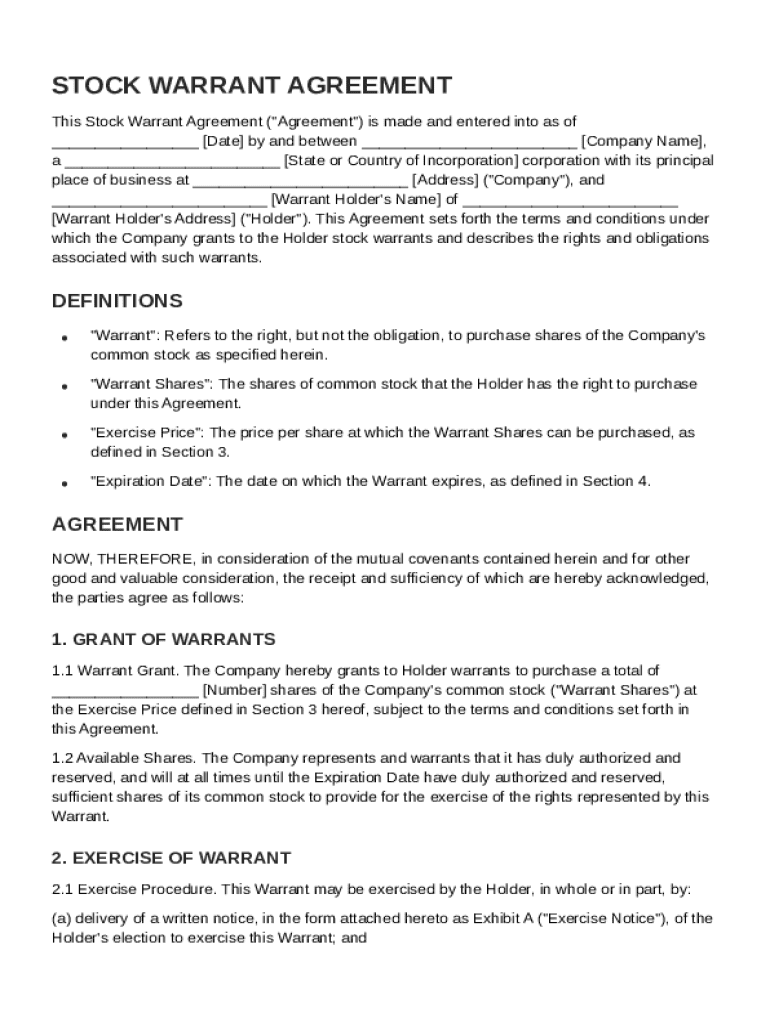
A Stock Warrant Agreement is a legal document granting an investor the right to buy a company's stock at a predetermined price before the warrant's expiration date. This agreement details all pertinent terms, including definitions, exercise procedures, parties' representations, and restrictions on transferability. The underlying intent is to provide potential equity participation without immediate investment, empowering holders to decide on stock acquisition based on business growth or favorable market conditions.
Key Components
- Exercise Price: The fixed price at which the stock can be purchased, typically set above the current stock market value to encourage future growth investment.
- Expiration Date: The deadline by which the holder must exercise their warrants, ensuring a defined timeframe for potential stock acquisition.
- Representations and Warranties: Statements from both parties guaranteeing factual and legal capacities, serving as legal assurance of compliance with the agreement.
How to Use the Stock Warrant Agreement Template
Leveraging a Stock Warrant Agreement Template involves several structured steps that facilitate the proper utilization of stock warrant agreements. Users should begin by customizing the template to reflect specific transaction details relevant to their specific circumstances.
Steps for Effective Use
- Customization: Adjust the template to match the company's or investor's pertinent financial details, aligning it with the intent behind issuing the warrants.
- Legal Review: Engage legal professionals to ensure the document's compliance with applicable laws, addressing any potential legal ambiguities or adjustments specific to varying business needs.
- Execution: Have authorized parties sign the completed template, validating the agreement's terms and enabling its directives.
Key Elements of the Stock Warrant Agreement Template
The effectiveness of a Stock Warrant Agreement depends significantly on its comprehensive and functional elements. This ensures clarity and enforceability across all scenarios concerning warrant issuance and use.
Vital Elements
- Definition of Terms: Clearly outlined terminology to remove ambiguities in the legal scope or intent of each term.
- Parties Identified: Detailed information regarding the issuer and holder, ensuring responsible parties are clearly distinguished.
- Governing Law: Jurisdictional specification to ascertain the specific legal framework governing dispute resolution or enforcement issues.
Legal Use of the Stock Warrant Agreement Template
When utilizing a Stock Warrant Agreement, legal compliance is crucial. The agreement must satisfy all applicable federal and state regulations related to securities and contract law.
Compliance Considerations
- Regulatory Adherence: Ensure the agreement aligns with the Securities Act and related regulatory guidelines, preventing illegal stock offerings or inadvertent regulatory breaches.
- Legal Counselling: Engage with corporate lawyers during drafting to avert typical legal pitfalls and adhere to the ESIGN Act regarding electronic signatures.
Important Terms Related to the Stock Warrant Agreement Template
Understanding relevant legal and financial terms within a Stock Warrant Agreement fortifies stakeholders against potential misunderstandings and equips them with the necessary concepts for informed decisions.
Crucial Terms
- Warrant Exercise: The action of executing the right to purchase stock, adhering to set conditions and market stipulations.
- Transferability Restrictions: Limitations on the warrant’s distribution to uphold issuer's control over stock allocations.
Who Typically Uses the Stock Warrant Agreement Template
Stock Warrant Agreements are predominantly utilized by various business and investment entities that engage in capital raising and equity sharing.


Common Users
- Start-Up Enterprises: Frequently use stock warrants as a tool to attract early-stage investors without immediate equity dilution.
- Investors: Leverage stock warrants for potential capital gains based on anticipated business growth and valuation increases.

State-Specific Rules for the Stock Warrant Agreement Template
State-specific legislation can influence the enactment and enforcement of Stock Warrant Agreements, necessitating awareness of local variations in corporate law.
Key Considerations
- Jurisdictional Variance: Analyze specific state laws that might add additional layers to securities or contractual interpretations, impacting enforceability or integration of specific terms.
- Compliance Obligations: Stay informed of any state-specific reporting or registration requirements affecting warrant issuance.
Software Compatibility with DocHub for Stock Warrant Agreements
DocHub enhances productivity through its compatibility with widely used software platforms, supporting efficient management of Stock Warrant Agreements.
Compatibility Features
- Google Workspace Integration: Directly import from and save documents to Google Drive, promoting seamless incorporation of edits or signatures.
- File Format Support: Broad compatibility with DOC, PDF, PPT, and other formats for hassle-free document uploads and manipulation.
Business Types That Benefit Most from Stock Warrant Agreement Template
Certain business models derive pronounced advantages from implementing Stock Warrant Agreements, providing strategic growth and equity feasibility.
Beneficial Business Models
- Biotechnology Firms: Attracting substantial R&D investments through potential future stock trades, without upfront capital repercussions.
- Tech Start-Ups: Issuing warrants as a funding mechanism, aligning growth trajectory with incremental investor participation.
Steps to Complete the Stock Warrant Agreement Template
Efficiently completing a Stock Warrant Agreement involves meticulous attention to detail, ensuring that each section accurately reflects the transaction's specifics.
Completion Guide
- Complete Information Sections: Insert comprehensive data for company details, warrant specifics, and involved parties' information.
- Review Terms and Conditions: Collaborate with legal experts to check the validity and relevance of each condition stated within the draft.
- Finalize Document: Verify all inputs, signatures, and submission channels as appropriate, completing the formalization of the agreement.