






Definition & Meaning
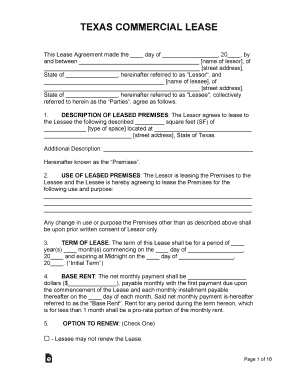
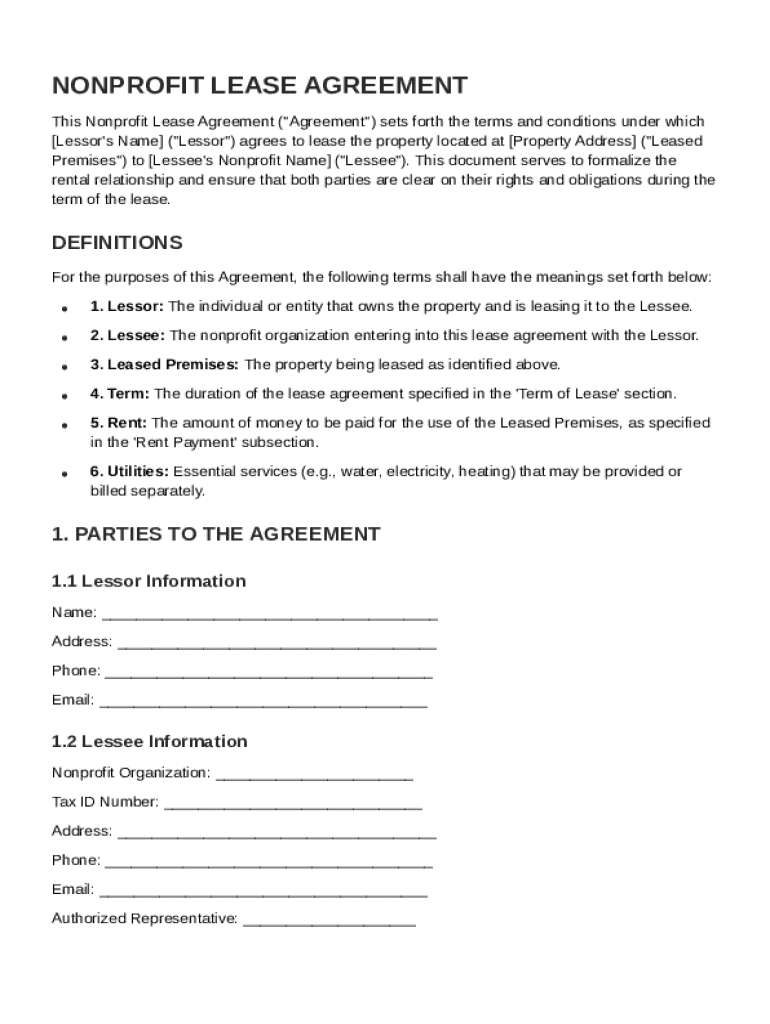
A Nonprofit Lease Agreement Template is a structured document used to outline the leasing terms between a property owner (Lessor) and a nonprofit organization (Lessee). This template helps clearly define responsibilities such as rent, maintenance, insurance, and the permissible use of the leased premises. The agreement is essential to ensure that both parties have a mutual understanding of their obligations, rights, and expectations, especially concerning the use of the property for nonprofit activities. Typical clauses include those related to maintenance duties, rent payment schedules, and lease termination conditions. For nonprofits, this form is invaluable for securing spaces that align with their mission without compromising legal or operational integrity.
Key Elements of the Nonprofit Lease Agreement Template
Rental Terms and Payment
- Rent Amount: Clearly define the rent amount, payment schedule, and acceptable payment methods.
- Late Fees: Specify any penalties for late payments to ensure timely rent collection.
- Renewal Options: Include terms that govern the renewal process and conditions, providing clarity on long-term planning.
Property Maintenance Obligations
- Lessee Responsibilities: Detail the maintenance duties assigned to the nonprofit tenant, such as regular cleaning or lawn care.
- Lessor Obligations: Outline the issues for which the property owner is responsible, like significant structural repairs or HVAC maintenance.
Insurance and Liability
- Insurance Requirements: Require the nonprofit to maintain liability insurance, ensuring protection against claims.
- Indemnification Clauses: Include clauses that protect both parties from liabilities arising from accidents or negligence on the premises.
Steps to Complete the Nonprofit Lease Agreement Template
- Identify Parties: Enter the full legal names of both the Lessor and Lessee along with contact information.
- Define Terms: Specify the lease term, including start and end dates, and any relevant options for extension.
- Describe the Premises: Provide a detailed description of the leased property, including address and any included amenities.
- Outline Financial Terms: Clearly document the rent amount, payment schedule, and consequences of late payment.
- Detail Responsibilities: Assign and agree upon maintenance and insurance responsibilities.
- Add Additional Clauses: Include necessary provisions for renewal, termination, or any special arrangements.
- Finalize and Sign: Ensure all parties read, understand, and agree to the terms before signing. Secure notarization if needed.
Legal Use of the Nonprofit Lease Agreement Template
Nonprofit Lease Agreements must be compliant with both local and federal laws to be valid and enforceable. The terms specified should reflect permissible uses under zoning laws and align with the nonprofit's operational scope. The template often includes a clause that subjects the agreement to the jurisdiction of the state where the property is located. Additionally, legal provisions in the template ensure that nonprofit activities conducted on the premises comply with tax-exemption laws. These agreements are typically tailored to protect the property’s use while allowing the nonprofit to carry out its mission legally and effectively.
Who Typically Uses the Nonprofit Lease Agreement Template
- Nonprofit Organizations: Charitable entities seeking space for offices, community services, or program activities.
- Property Owners: Landlords leasing commercial or residential spaces to nonprofits.
- Legal Practitioners: Attorneys drafting or reviewing lease agreements to ensure compliance with relevant laws.
- Property Managers: Individuals or firms managing leased properties for landlords who rent to nonprofits.


State-Specific Rules for the Nonprofit Lease Agreement Template
Ensure the lease complies with the state's landlord-tenant regulations, as these laws dictate specific rights and obligations that can vary significantly from one state to another. For instance, requirements for security deposits, rent control stipulations, and eviction processes can all be influenced by state laws. Nonprofits should consult legal advice to align the lease agreement with state-specific statutes and guidelines, which can also affect the nature of permissible non-profit activities within commercial or residential zones.
Examples of Using the Nonprofit Lease Agreement Template
- Community Centers: A lease agreement for a property serving as a community center, detailing public access hours and shared amenities.
- Shelters: Leasing a building as a temporary shelter, emphasizing unique space requirements like communal areas and kitchens.
- Educational Spaces: Schools or educational programs using a nonprofit lease to secure spaces for classes or workshops.
Important Terms Related to Nonprofit Lease Agreement Template
- Lessee: The nonprofit organization renting the property.
- Lessor: The property owner or landlord leasing the space.
- Premises Description: An explicit description of the property and its use.
- Zoning Compliance: Assurance that nonprofit activities comply with local zoning laws.
How to Obtain the Nonprofit Lease Agreement Template
To access a Nonprofit Lease Agreement Template, organizations can leverage platforms like DocHub, offering editable, fillable forms compatible with both digital and paper formats. This ensures that modifications suited to specific needs—like inserting signature fields or adding detailed terms—can be easily managed. Non-profits may also seek templates through their legal advisors or real estate contacts who can provide a draft aligned with current legal standards.