






Definition & Meaning
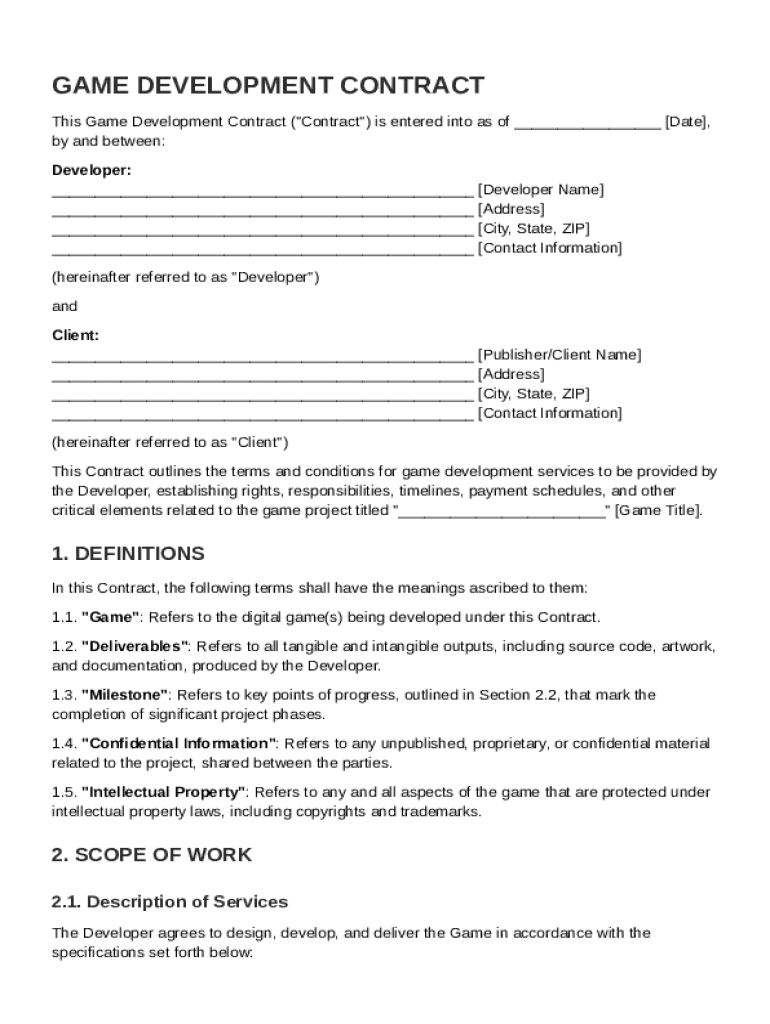
A Game Contract Template is a formal document that outlines an agreement between two primary parties: the Developer and the Client. This template serves as a comprehensive guide for converging on the essential elements required in the development of a digital game. It typically includes details on the work's scope, timelines for project milestones, payment terms, and ownership of deliverables. Furthermore, it deals with the confidentiality obligations, warranties, termination conditions, and indemnification clauses. This contract template is structured to provide clarity and expectation management, ensuring that both parties have mutual understandings and legal protections throughout the collaboration.
Key Elements of the Game Contract Template
Scope of Work and Responsibilities
Within a game development contract, the scope of work is critical. It specifies what will be developed, perhaps including game design documents, storyboards, or initial concept art. Responsibilities outline the division of tasks between the developer and the client.
- Developer's Role: Typically involves coding, graphic design, sound design, and other technical aspects required for the game's creation.
- Client's Role: Often includes providing necessary resources, feedback, and approval of project stages.
Timelines and Milestones
The contract should define clear timelines for the project's various phases, including specific milestones for completion. These timeframes ensure that both parties remain aligned and can track progress against agreed objectives.
- Proposal Stage: Submission of initial concepts.
- Developmental Milestones: Completion of alpha and beta versions.
- Final Delivery: Handover of the completed game product.
How to Use the Game Contract Template
Understanding how to use a Game Contract Template involves knowing where to input relevant project details and how to use the template's sections effectively.
- Review the Template: Ensure it includes all necessary sections as per your project's requirements.
- Customize Contact Information: Input names, addresses, and relevant contact details.
- Specify Project Details: Define the project scope, timeline, and developer-client responsibilities.
- Legal and Compliance Checks: Ensure terms meet necessary legal standards, focusing on confidentiality and intellectual property.
Important Terms Related to Game Contract Template
Familiarity with pertinent terms ensures both parties understand contractual implications. Key terms include:
- Intellectual Property: Covers ownership rights to game assets and code.
- Indemnification: Protection from legal responsibility for certain aspects.
- Confidentiality: Mandatory to protect proprietary information.
Legal Use of the Game Contract Template
The template must conform to legal standards applicable within the jurisdiction of use. Legal sections often include:
- Dispute Resolution: Specifies methods such as arbitration or mediation.
- Termination Clauses: Conditions under which the agreement may be nullified.
- Compliance with Laws: Adheres to local, state, and federal regulations.
Steps to Complete the Game Contract Template
- Initial Meeting: Discuss project requirements and expectations with all parties.
- Drafting the Contract: Fill out the template with all relevant information.
- Review and Revise: Ensure that both parties review and agree upon every clause.
- Finalization and Signing: Once finalized, both parties sign and date the contract.
Who Typically Uses the Game Contract Template
Typically, professionals involved in game development utilize this template. The primary users include:
- Game Developers: Indie developers or large studios managing the creation of game assets.
- Clients: Companies or individuals commissioning a game, often publishers or media producers.


State-Specific Rules for the Game Contract Template
Adherence to state-specific rules impacts how the contract is enforced and can differ significantly from one jurisdiction to another.
- Intellectual Property Laws: Vary state by state, impacting ownership disputes.
- Employment Regulations: Conditions surrounding freelance or contracted labor.
- Tax Obligations: Different states may have varied taxation strategies for payments.
Examples of Using the Game Contract Template
In practice, a game development contract template could be seen in diverse scenarios:
- An independent developer contracting with a startup firm to produce a mobile game within six months.
- A large game studio outsourcing particular elements, such as sound design, to a specialist contractor.
Real-world application underscores the utility and adaptability of the Game Contract Template in managing numerous aspects of game development projects efficiently.