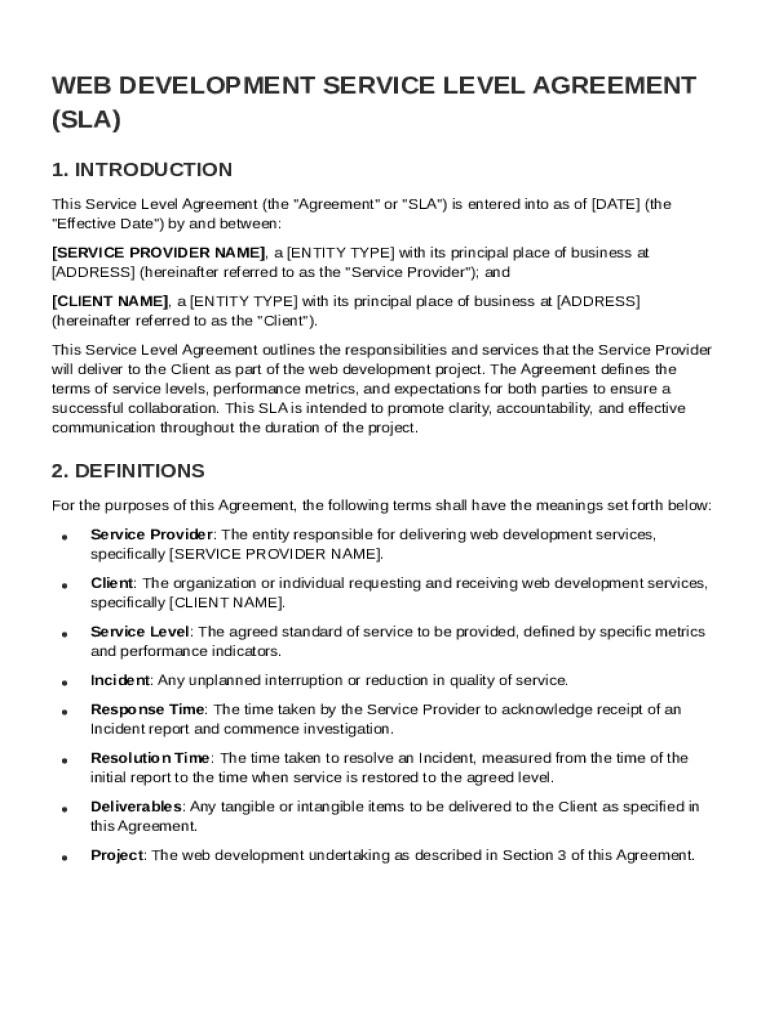







Definition and Meaning of the Web Development Service Level Agreement Template
The Web Development Service Level Agreement (SLA) Template is a formal document structured to define the relationship between a service provider and a client engaging in web development services. It serves as a contractual agreement that outlines the responsibilities, expectations, and service standards that both parties are obligated to adhere to. This document aims to promote clarity and establish a mutual understanding to ensure smooth collaboration and avoid potential disputes. Key terms within the document include definitions of service levels, expectations for performance metrics, and response times for various types of incidents.
How to Use the Web Development Service Level Agreement Template
Using the Web Development Service Level Agreement Template involves several steps to ensure the document is tailored to the specific needs of both the service provider and the client. Initially, both parties should review the template to understand the standard terms and conditions. After gaining a full understanding, they can start customizing sections such as the scope of services, specific service level goals, and performance metrics. This customization should be a collaborative process to reflect accurately the responsibilities and expectations of both parties effectively.
- Review the Template: Both parties should thoroughly review the entire document to understand all clauses and sections.
- Customize for Specific Needs: Edit sections of the template to match the specific services being provided.
- Agree on Service Levels and Metrics: Specify the performance metrics and service levels, such as response times for addressing issues.
- Formalize the Agreement: Once the template is customized to satisfaction, both parties should formally sign the document.
Key Elements of the Web Development Service Level Agreement Template
The Web Development SLA Template comprises several critical sections that detail the engagement between the service provider and the client. These key elements ensure clear communication of responsibilities and expectations:
- Scope of Services: Clearly defines the services being offered, including deliverables, milestones, and timelines.
- Service Levels and Performance Metrics: Lists expected standards, including response and resolution times for incidents.
- Support and Maintenance: Outlines ongoing support, including availability and processing of maintenance requests.
- Communication Plans: Describes how and when updates will be shared between parties.
- Confidentiality Obligations: Details how sensitive information and intellectual property will be protected.
- Dispute Resolution Processes: Provides mechanisms for resolving any conflicts or disagreements.
- Amendment Procedures: States how changes to the agreement can be made and under what conditions.
Important Terms Related to the Web Development Service Level Agreement Template
Understanding certain terminologies within the SLA is vital for correctly interpreting the document. Important terms include:
- Response Time: The duration taken to acknowledge an incident or request.
- Resolution Time: The timeframe in which a reported issue is expected to be resolved.
- Downtime: Periods when the service is unavailable and the parameters around acceptable durations affect payment terms.
- Milestone: Specific targets or deliverables that are to be completed within set deadlines.
Steps to Complete the Web Development Service Level Agreement Template
Completing the SLA template is a structured process designed to ensure both parties contribute to and approve its contents.
- Discuss and Define Scope: Collaboratively outline the service and expectations.
- Draft Custom Content: Using input from both parties, draft sections of the template to reflect agreed terms.
- Review and Refine: Check the draft for accuracy and completeness, gathering feedback for necessary adjustments.
- Finalize Agreement: Incorporate feedback, ensuring every aspect is agreed upon.
- Legal Review (Optional): Consider having a legal professional review the finalized document.
- Sign and Distribute: Upon agreement, both parties sign and retain copies for their records.
Who Typically Uses the Web Development Service Level Agreement Template
This SLA template is specifically employed by entities providing or receiving web development services. Common users include:
- Web Development Firms: To define terms with clients seeking their services.
- Businesses Hiring Developers: Companies seeking web development support and wanting clear terms of service.
- Freelancers and Contractors: Independent developers who need to formalize relationships with clients in a professional manner.
- Legal Departments: Corporate legal teams who prepare and review SLAs as part of their responsibilities.


Legal Use of the Web Development Service Level Agreement Template
The Web Development SLA plays a crucial legal role by clearly setting the terms of service and expectations for both parties. Legally, it is a binding agreement which can be enforceable in a court of law if either party fails to uphold their responsibilities as outlined in the document. Ensuring all terms are clearly defined helps prevent misunderstandings and disputes, and having a legal expert review the document can provide additional security that the agreement is robust and enforceable.
Examples of Using the Web Development Service Level Agreement Template
Real-world scenarios illustrate how the SLA template is utilized in practice:
- Startup Engaging a Web Developer: A new tech startup uses the template to hire a development firm for creating their website. They customize the SLA to include specific deliverables and quality standards, ensuring both parties have a clear understanding of expectations.
- E-commerce Platform Enhancements: An established e-commerce company seeks additional features for its site and uses an SLA to define deliverables, timelines, and support levels with a contracted developer.
- Agency-Client Relationship: A digital marketing agency employs the SLA template when outsourcing web development projects, defining collaboration standards with external developers to maintain a high service level.