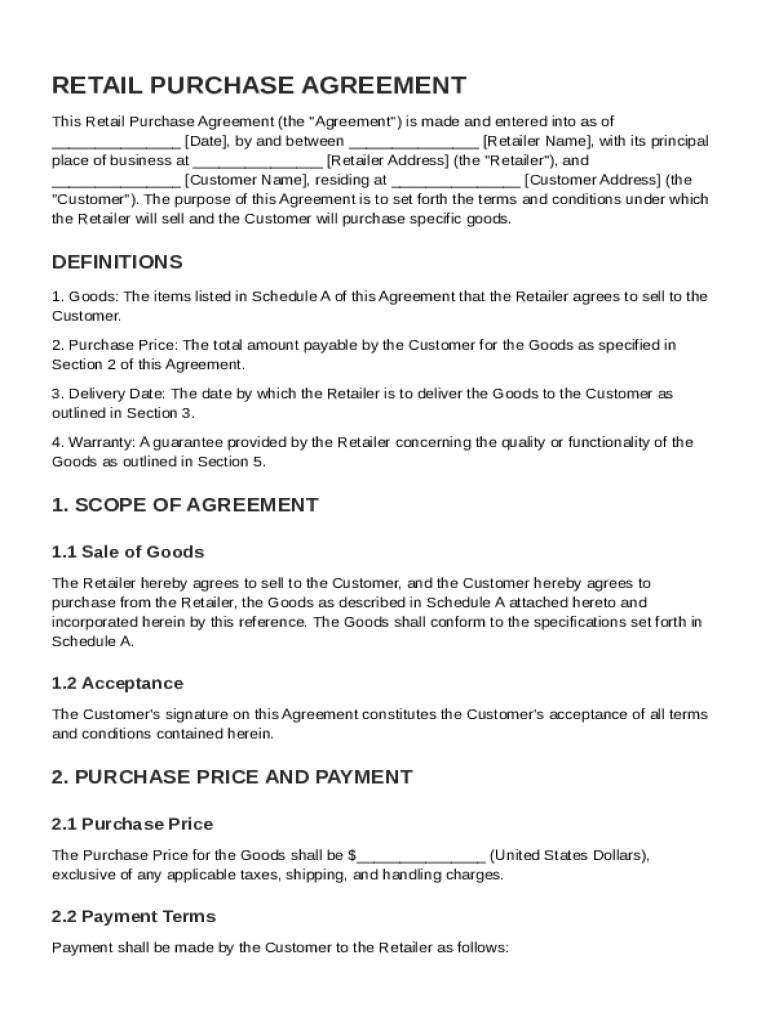







Definition and Meaning of a Retail Agreement Template
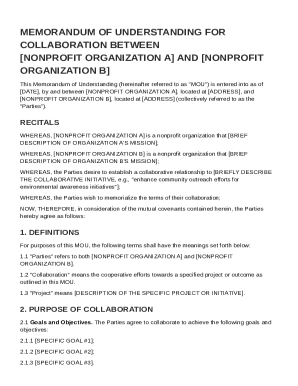
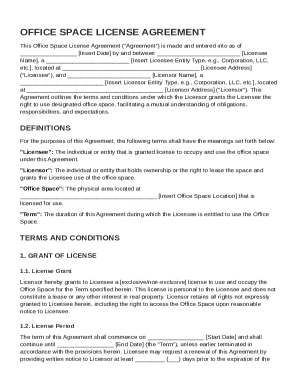
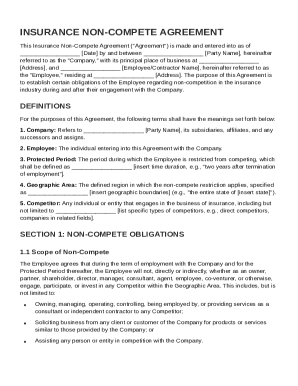
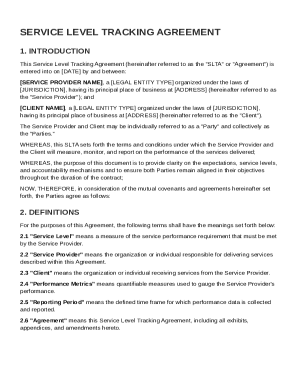
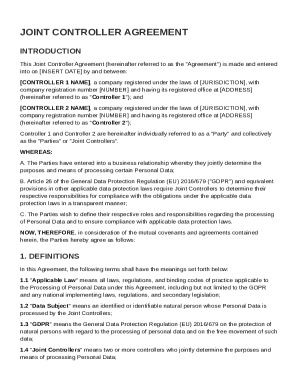
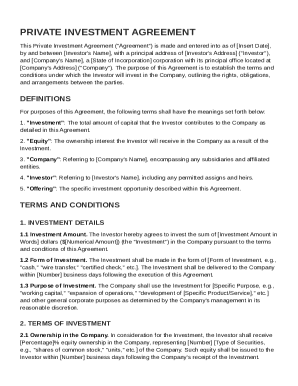
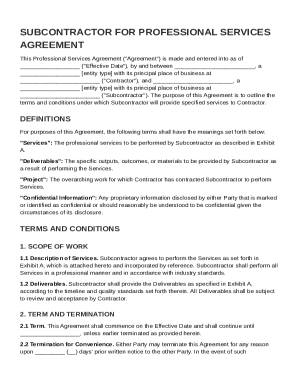
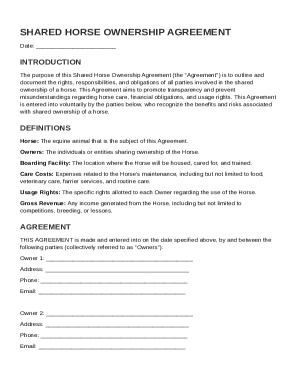
A Retail Agreement Template is a standardized legal document framework used to outline the terms of retail transactions between a retailer and a customer or vendor. This template acts as a guideline to ensure both parties understand their rights, responsibilities, and obligations. It typically includes sections on pricing, payment methods, delivery terms, return policies, warranties, and other pertinent details. A well-constructed Retail Agreement Template helps prevent misunderstandings and provides a solid legal foundation for retail operations.
Essential Components
- Terms and Conditions: Clearly defined rules governing the retail transaction.
- Pricing and Payment Structure: Details on the price of goods and payment methods.
- Delivery & Return Policies: Terms related to how and when products are delivered or returned.
- Warranties: Information regarding product guarantees and customer rights.
- Legal Terms: Terms like governing law and termination clauses.
Key Elements of the Retail Agreement Template
A Retail Agreement Template typically consists of several key elements designed to cover all aspects of the retail sale process. These elements ensure that both the retailer and the customer have a comprehensive understanding of the transaction details.
Common Sections
- Product Descriptions: Detailed information on what is being sold.
- Terms of Sale: Conditions under which the sale is made.
- Payment Terms: Accepted payment methods and payment schedule.
- Return and Exchange Policy: Procedures and conditions for returns or exchanges.
- Liability Clauses: Limitations of liability for the retailer and customer.
- Dispute Resolution: Procedures in case of disagreements.
How to Use the Retail Agreement Template
Utilizing a Retail Agreement Template ensures you cover all necessary aspects for a robust retail transaction. You can customize the template based on the specific needs of your business or the nature of your transactions.
Steps for Customization
- Identify Core Needs: Determine what specifics must be addressed for your transaction.
- Modify Sections: Adjust pricing, delivery, and return terms to reflect your business model.
- Include Branding: Add logos or branding elements for a professional touch.
- Review Legal Requirements: Ensure compliance with state and federal laws.
- Finalize and Deploy: Review the final document and integrate it into your sales process.
Examples of Using the Retail Agreement Template
Retail Agreement Templates are adaptable to various business scenarios and industries. Here are a few examples:
Practical Scenarios
- Online Retailers: Customize the template for digital product sales, adjusting terms for licensing.
- Brick-and-Mortar Stores: Use it to standardize transaction terms in physical stores.
- Wholesale Transactions: Adjust terms for bulk pricing and delivery specifics.
Legal Use of the Retail Agreement Template
It's crucial to ensure that the Retail Agreement Template is legally sound to prevent potential disputes. The template should comply with relevant state and federal regulations.
Legal Considerations
- Compliance: Align terms with consumer protection laws to avoid legal pitfalls.
- Governing Law: Specify the jurisdiction under which disputes will be handled.
- Dispute Resolution: Include arbitration or mediation clauses to handle conflicts efficiently.
Steps to Complete the Retail Agreement Template
Filling out a Retail Agreement Template involves detailed attention to ensure accuracy and relevance to your specific transaction.
Completion Process
- Input Parties' Details: Start by including full names, addresses, and contact details of involved parties.
- Detail the Goods/Services: Clearly describe the products or services being offered.
- Set Terms: Fill in agreed upon pricing, delivery, and return conditions.
- Include Signatures: Ensure both parties sign the document to make it legally binding.
State-Specific Rules for the Retail Agreement Template
Different states may have varying requirements for retail agreements, so it's important to align the template with these specifics.
State Variations
- Consumer Protection Laws: Reflect unique state regulations on consumer rights.
- Sales Tax Requirements: Include specifics on state-mandated sales taxes and exemptions.
- State-Endorsed Clauses: Adapt clauses that comply with local business regulations.
Software Compatibility for Retail Agreement Templates
Integrating Retail Agreement Templates with various software solutions can enhance efficiency and accuracy in managing retail transactions.
Compatible Platforms
- Document Management Software: Ensure compatibility with platforms like DocHub to manage editing and signing effortlessly.
- Accounting Software: Align templates with systems like QuickBooks for seamless financial tracking.
- CRM Systems: Integrate templates within customer relationship management platforms for streamlined operations.
Digital vs. Paper Versions
- E-commerce Integration: Use the digital version for online stores and paper for physical retail environments when required.