





Definition and Purpose of a Reseller Agreement
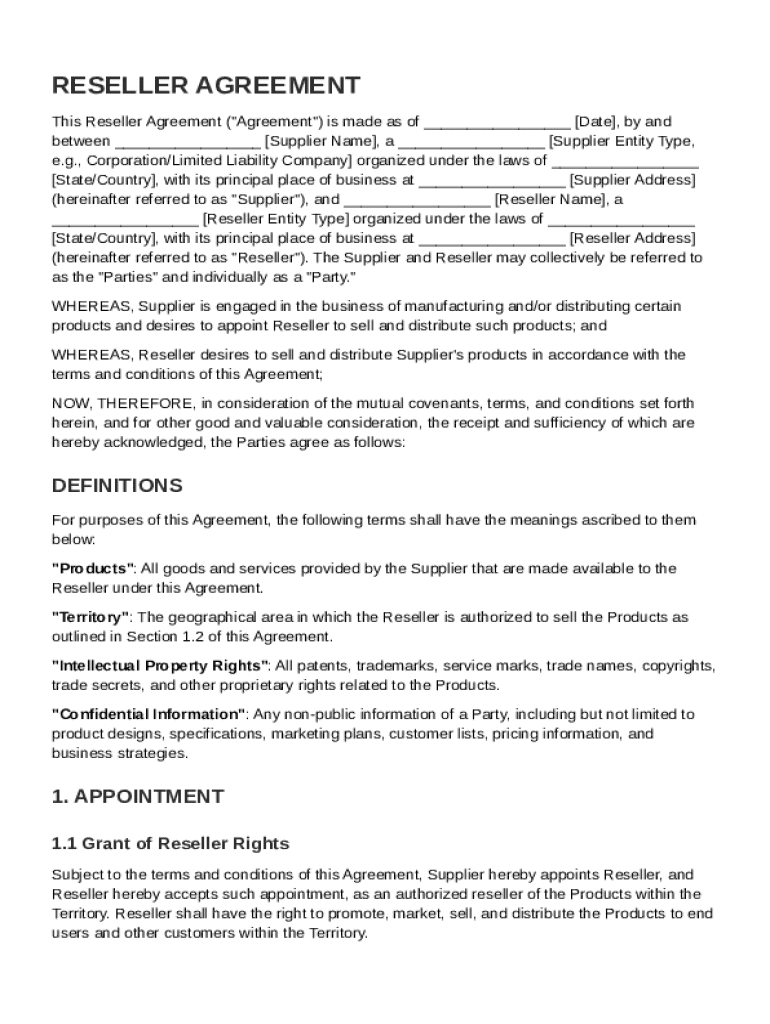
A Reseller Agreement outlines the terms and conditions under which a supplier designates a reseller to sell and distribute its products within a specified territory. This legally binding contract delineates the relationship between the supplier and the reseller as independent contractors. It helps define a range of essential elements, such as roles and responsibilities regarding marketing, sales performance, intellectual property usage, and dispute resolution processes. The agreement also covers compliance obligations and indemnification clauses, creating a foundation for ethical business engagements.
How to Use the Reseller Agreement Template
To effectively use a Reseller Agreement Template, first familiarize yourself with its structure and content. The template typically includes sections for defining key terms, outlining the scope of reselling activities, and detailing pricing and payment structures. When filling out the template, ensure that all necessary fields are completed accurately, including specifying the product offerings and designated territory. Customize sections as needed to address unique considerations pertinent to your business engagement.
Filling Out the Template
- Start by entering the full legal names and addresses of the supplier and reseller.
- Clearly state the products or services to be resold.
- Define the geographic territory and market segments where reselling is authorized.
- Specify the payment terms and any pricing arrangements.
- Include any promotional materials or marketing obligations.
- Set compliance standards and outline dispute resolution mechanisms.
By following these steps, you ensure the agreement reflects the specific arrangement between the parties involved.
Key Elements of the Reseller Agreement Template
A comprehensive Reseller Agreement Template should address several critical components to ensure clarity and prevent future disputes. These elements include:
- Term and Termination: Specify the duration of the agreement and conditions under which it can be terminated.
- Licensing Rights: Outline any intellectual property rights granted to the reseller, ensuring adherence to the supplier’s branding guidelines.
- Obligations of Parties: Detail the responsibilities of both the supplier and reseller, such as order processes and inventory management.
- Confidentiality: Establish confidentiality requirements to protect sensitive business information shared between parties.
These key elements ensure both parties understand their roles and responsibilities, minimizing misunderstandings and fostering a productive partnership.
Legal Use and Compliance
Legal compliance is a vital aspect of the Reseller Agreement. The document must adhere to applicable U.S. laws, including those related to competition and consumer protection. Ensure that clauses concerning liabilities, warranties, and indemnification are clearly articulated to mitigate legal risks. Engaging legal counsel to review the agreement can provide added assurance that all legal frameworks are observed and that the agreement is enforceable.
Important Terms Related to the Reseller Agreement
Understanding specific terms commonly used in reseller agreements can facilitate better comprehension and negotiation:
- Exclusive vs. Non-Exclusive Rights: Determine whether the reseller has the sole right to sell products within the designated territory.
- Minimum Purchase Requirements: Specify the minimum quantity of goods the reseller must purchase over a set period.
- Commission Structure: Define how commissions are calculated and distributed on sales generated by the reseller.
Familiarity with these terms can enhance negotiations and ensure all parties have a mutual understanding.
Steps to Complete the Reseller Agreement Template
Completing the Reseller Agreement Template involves several targeted actions:
- Review the template for any pre-filled information that requires customization.
- Gather relevant details from both the supplier and reseller.
- Amend clauses for unique business needs while maintaining legal coherence.
- Proofread the entire document to confirm accuracy in names, dates, and terms.
- Secure signatures from all involved parties, adhering to the legally binding nature of the contract.
Ensure each step is executed thoroughly to maintain the integrity and enforceability of the final agreement.
Who Typically Uses the Reseller Agreement
Businesses and individuals across various sectors can leverage a Reseller Agreement:
- Technology Firms: To distribute software and hardware solutions.
- Manufacturers: Seeking to expand their product reach through local sellers.
- Online Retailers: Looking to enhance their catalog by reselling third-party products.
Organizations utilize this template to clarify expectations and secure profitable partnerships.

Business Types That Benefit Most from a Reseller Agreement
Specific business types find the Reseller Agreement particularly advantageous:
- Small and Medium Enterprises (SMEs): Can quickly broaden their market presence through established reseller networks.
- Startups: Benefit from leveraging reseller expertise in target markets to accelerate growth.
- Established Corporations: Utilize agreements to consolidate market share while maintaining control over brand representation.
These scenarios illustrate how various entities can strategically harness reseller agreements to drive business objectives.