






Definition and Meaning
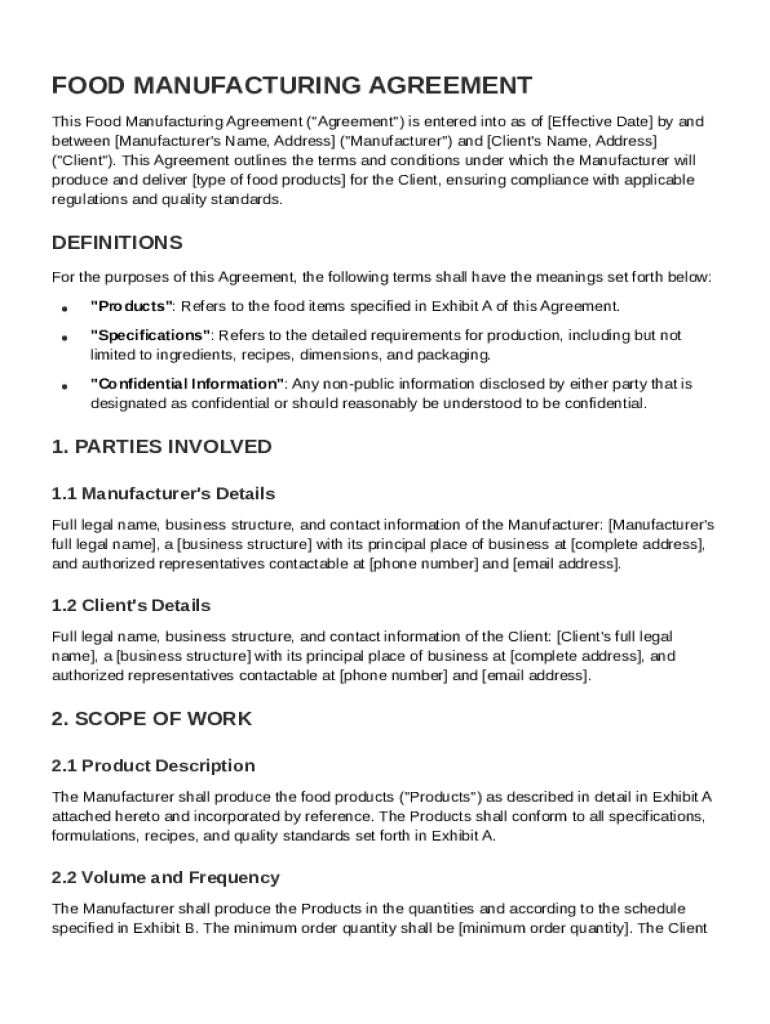
The Food Manufacturing Agreement Template serves as a legal contract outlining the obligations and expectations between a food Manufacturer and a Client. This document details critical components such as production schedules, quality assurance measures, and compliance with safety regulations. By employing such a template, both parties can clearly define the products to be manufactured and the timelines for delivery. This agreement ensures all parties are aligned in terms of expectations, reducing the room for misunderstandings and disputes.
Food Manufacturing Agreements are integral in industries such as packaged goods, where both quality and adherence to health regulations are non-negotiable. The terms incorporated help in establishing accountability, ensuring that the Manufacturer meets the Client's demand for product quality and quantity. An agreement of this kind reflects professionalism and is a testament to serious business commitments between the involved parties.
Important Terms Related to the Food Manufacturing Agreement Template
A comprehensive understanding of the Food Manufacturing Agreement Template necessitates familiarity with specific legal and industry terms. Several key terms typically included are:
-
Scope of Work: This clauses defines the extent of tasks, processes, and end products expected in the agreement, allowing both parties to have a clear understanding of deliverables.
-
Quality Assurance: This term covers the standards the Manufacturer must meet, ensuring products are safe and meet all regulatory requirements.
-
Confidentiality Obligations: Within such an agreement, clauses addressing confidentiality are crucial to protecting proprietary information and trade secrets.
-
Pricing and Payment Terms: These sections specify how the financial aspects, including cost calculations and payment schedules, will be handled.
Understanding these terms lays the groundwork for effective negotiations and mutual agreement on the contract details. Clarity in these areas aids in preventing potential legal issues and disputes.
Key Elements of the Food Manufacturing Agreement Template
Several critical elements form the backbone of a typical Food Manufacturing Agreement Template. These components ensure the smooth execution of the contract and provide protection for both parties involved:
-
Compliance with Regulations: Establishes that all manufactured products must comply with applicable laws and health standards.
-
Intellectual Property Rights: Protects the ownership of recipes, manufacturing processes, and other proprietary information.
-
Liability and Indemnification Clauses: This section addresses the responsibilities each party holds in the event of loss or harm resulting from the agreement.
-
Dispute Resolution Procedures: Outlines methods for resolving disagreements, commonly involving mediation or arbitration before resorting to legal action.
Each of these elements helps maintain a clear framework for the manufacture and delivery of food products, safeguarding interests on both sides.
Steps to Complete the Food Manufacturing Agreement Template
To effectively complete a Food Manufacturing Agreement Template, several critical steps must be followed:
-
Identify the Parties Involved: Start by clearly naming and defining the roles of both the Manufacturer and the Client.
-
Detail Product Specifications: Include comprehensive details about the product type, quality standards, and production quantities.
-
Develop a Production Timeline: Outline specific production and delivery dates to align with market demands.
-
Specify Pricing and Payment Terms: Establish how payments will be handled, including any deposit requirements and final settlement timelines.
-
Include Legal Provisions: Ensure coverage of intellectual property, confidentiality, and compliance with industry standards.
By systematically addressing each step, parties can create a structured and enforceable agreement.
Who Typically Uses the Food Manufacturing Agreement Template
Primarily, this template is utilized by manufacturers and clients involved in the mass production of food products. Businesses like consumer packaged goods companies, retailers, and wholesalers frequently employ this document. Entrepreneurs entering the food industry and looking to scale production can also benefit significantly from such a template. It assists in creating transparent, legally-binding commitments and ensuring compliance with industry standards. Furthermore, legal personnel and consultants in the food sector may use this agreement when advising their clients on contract formation and negotiations.


Examples of Using the Food Manufacturing Agreement Template
The template is pertinent in various contexts within the food industry. For instance, a large retail chain might use it when commissioning a manufacturer to produce a line of private-label food items. Another example could involve a start-up producing customized snacks for corporate clients, employing the agreement to ensure customized product attributes are maintained.
In case of product launches, the agreement can outline rapid distribution requirements, assuring market-ready products get delivered on time. Using this template prevents costly delays and helps avoid business disruptions, making it an essential tool for streamlined operations.
Legal Use of the Food Manufacturing Agreement Template
Legally, the Food Manufacturing Agreement Template must be comprehensive to avoid ambiguities that could lead to disputes. It is crucial that it adheres to contractual laws and incorporates all required clauses regarding liability, indemnification, and dispute resolution. Compliance with applicable regional and national health regulations also forms an essential legal consideration. The agreement must be drafted, reviewed, and aligned with standard contract law practices to ensure enforceability.
Legal professionals often review these agreements to ensure that they meet jurisdictional requirements, protecting the parties against potential litigation or regulatory penalties.
State-Specific Rules for the Food Manufacturing Agreement Template
Food manufacturing agreements must adhere to state-specific regulatory environments in the U.S. For example, the health and safety standards outlined in the document must align with the Food and Drug Administration (FDA) regulations, which vary slightly by state. Likewise, intellectual property considerations and labor law requirements might differ depending on state laws. Understanding these nuances ensures that the agreement is not only comprehensive but also legally empowered across different jurisdictions. Businesses should consult with legal experts familiar with state-specific legislation to tailor the agreement appropriately.