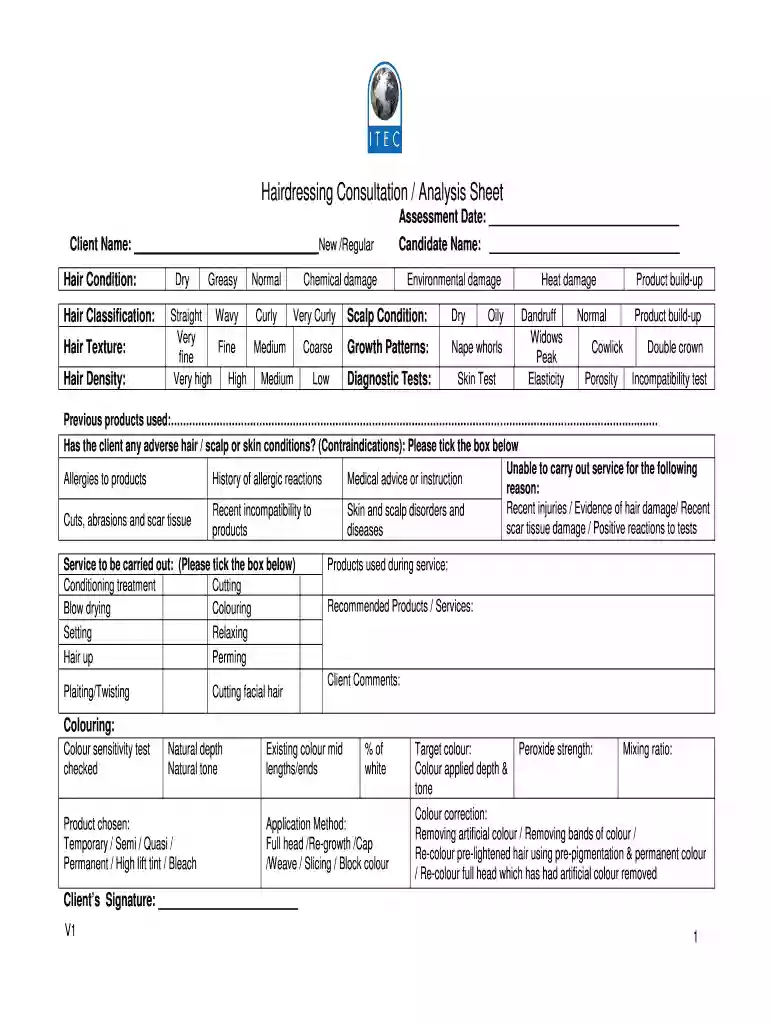
Understanding the Hairdressing Consultation Analysis Sheet
The Hairdressing Consultation Analysis Sheet is a structured document used to assess a client's specific hair and scalp needs prior to initiating hair services. It is essential for ensuring a tailored and effective salon experience. This form typically involves several key sections that facilitate a comprehensive understanding of the client's hair health.
Key Sections of the Consultation Sheet
- Client Information: This section gathers personal details such as the client’s name, contact information, and hair history, including previous treatments and services. Accurate data collection is crucial for personalized service.
- Hair Classification: Here, the stylist categorizes the client’s hair type—such as straight, wavy, curly, or coily—and its texture (fine, medium, or coarse). This classification helps to recommend appropriate styling techniques and products.
- Damage Assessment: A detailed evaluation of the hair's current condition is essential. The sheet allows the stylist to note signs of damage, such as split ends, dryness, or color fading, influencing treatment recommendations.
- Contraindications: This section identifies any existing conditions or allergies that may impact the choice of services. Documenting these details safeguards client health and ensures safe treatment practices.
- Service Options: Based on the gathered information, the stylist can provide tailored service recommendations, including cuts, colors, treatments, and styling techniques aligned with the client's hair type and condition.
- Product Recommendations: Post-service, this section includes a tailored list of recommended products for home maintenance. Suggested products may address specific concerns like hydration, color preservation, or volume enhancement.
- Aftercare Advice: Essential after completing hair services, the aftercare advice section details best practices for maintaining hair health post-treatment, emphasizing long-term care strategies.
How to Use the Hairdressing Consultation Analysis Sheet
Using the Hairdressing Consultation Analysis Sheet effectively relies on thoroughness in documentation.
Step-by-step Process to Utilize the Sheet
- Initial Interaction: Begin by introducing the purpose of the consultation to the client. Explain that this form helps personalize their experience.
- Complete Client Information: Ensure all personal details are accurately filled. Discuss the client's hair history to set a foundation for the consultation.
- Assess Hair Type and Condition: Collaboratively classify the hair type and assess current damage. Use visual and tactile examinations to provide informed insights.
- Identify Contraindications: Discuss any allergies or sensitivities with the client. Document these findings carefully to avoid complications during service.
- Recommend Services and Products: Based on your assessments, suggest appropriate services and products that align with the client’s hair goals and health status.
- Provide Aftercare Tips: Ensure that the client understands the importance of at-home care and provide actionable aftercare instructions that suit their hair type.
Importance of the Hairdressing Consultation Analysis Sheet
The Hairdressing Consultation Analysis Sheet serves several vital functions in a salon setting:
- Personalization: The document allows stylists to provide customized treatment plans, enhancing client satisfaction and loyalty.
- Safety: By highlighting contraindications and current hair conditions, the sheet minimizes the risk of adverse reactions or poor treatment outcomes.
- Professionalism: Utilizing a structured approach signals professionalism to clients, reinforcing trust in the stylist’s expertise.
- Documentation: Maintaining thorough records of consultations aids future interactions, allowing stylists to track progress and make informed treatment adjustments.
Who Uses the Hairdressing Consultation Analysis Sheet?
The Hairdressing Consultation Analysis Sheet is widely used by professionals in the beauty industry.
Typical Users Include:
- Hair Stylists: Often the primary users, stylists utilize the sheet to ensure that services align with client needs while documenting important details for future reference.
- Salon Managers: Managers may review completed sheets to ensure service quality and customer satisfaction within the salon.
- Beauty Schools: Educational institutions incorporate the consultation sheet into training modules to help students learn client interaction and assessment skills.
- Mobile Stylists: Freelance or on-demand hair professionals use these sheets to maintain professional standards while operating in various client environments.
Examples of Using the Hairdressing Consultation Analysis Sheet
Several scenarios illustrate the practical application of the Hairdressing Consultation Analysis Sheet in real-world settings:
- Scenario 1: A client with previously colored hair expresses interest in a balayage technique. The stylist uses the consultation sheet to assess the current condition of the hair, documenting dryness and recommending hydration treatments to complement the color service.
- Scenario 2: A new client visits a salon with documented allergies to certain chemicals. The stylist closely examines the contraindications section of the sheet, ensuring that no harmful products are used during their service.
- Scenario 3: After styling, the stylist recommends a specialized product for curly hair based on the consultation sheet findings. The client leaves with tailored aftercare advice designed to enhance their new look and maintain hair health.