
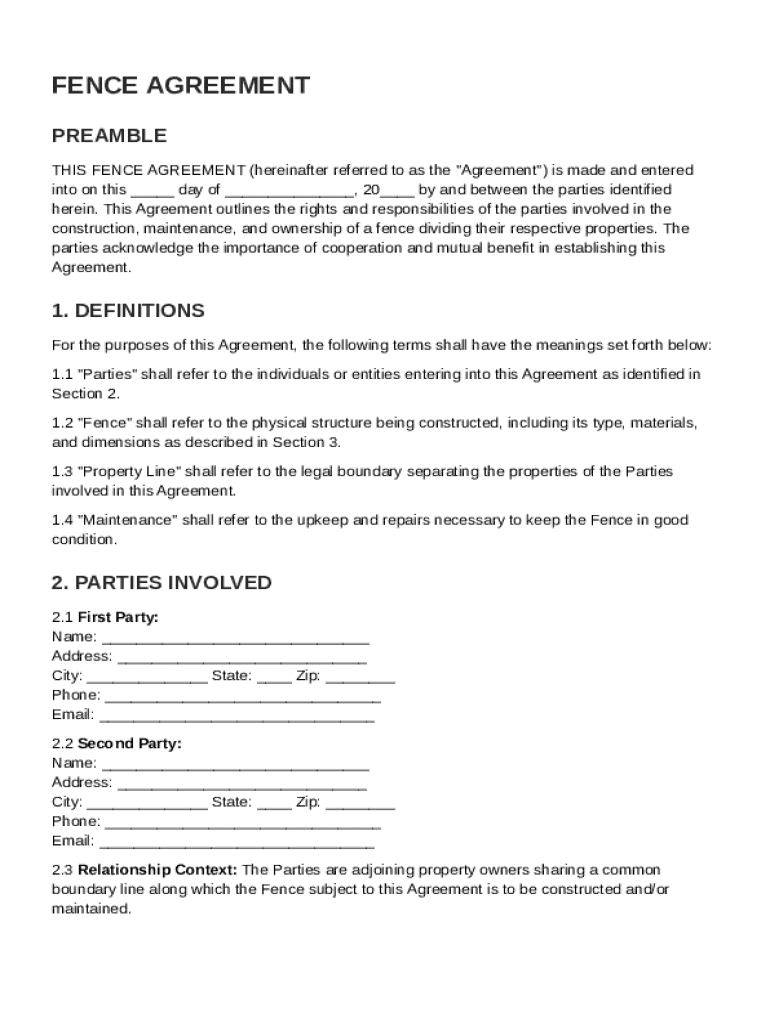







Understanding the Fence Agreement Template
A Fence Agreement Template is a legal document that outlines the specific terms and conditions between two adjoining property owners regarding the construction, maintenance, and ownership of a fence. This template ensures clarity and mutual understanding by defining each party’s responsibilities. It typically includes descriptions of the fence, cost allocations, and guidelines for dispute resolution. By formalizing these aspects in writing, the agreement promotes cooperation and helps prevent conflicts.
Key Elements of the Agreement
- Description of the Fence: Detailed specifications such as material, height, and style.
- Responsibilities: Clearly assigned duties for construction, maintenance, and repairs.
- Cost Sharing: Specifics on how costs will be split between the parties.
- Dispute Resolution: Procedures for handling disagreements related to the fence.
- Modification and Termination: Conditions under which the agreement can be changed or terminated.
- Liability Clauses: Protection for parties in case of damage or injury related to the fence.
How to Use the Fence Agreement Template
Using a Fence Agreement Template involves a few key steps to ensure all aspects of the agreement are customized to fit the specific situation. Start by downloading a template that suits your needs. Tailor each section to accurately represent the agreement between the parties involved. Pay careful attention to legal language to ensure that the template is comprehensive and clear. Once completed, both parties should review and agree to the terms before signing.
Steps to Complete the Fence Agreement Template
- Download the Template: Obtain a customizable Fence Agreement Template that aligns with your jurisdiction's legal requirements.
- Fill in Property Details: Include the legal descriptions of both properties involved.
- Define Fence Specifications: Detail the fence type, materials, and construction plan.
- Assign Responsibilities: Clearly outline maintenance roles and financial responsibilities.
- Draft Legal Clauses: Add terms for liability, modifications, and dispute resolution.
- Review and Amend: Both parties should review for accuracy and clarity, then make necessary adjustments.
- Sign the Agreement: All involved parties sign the document in the presence of a witness or notary if needed.
- Store Safely: Keep copies of the signed agreement in a secure location for future reference.
Who Typically Uses the Fence Agreement Template
Fence Agreement Templates are commonly used by residential property owners who share a boundary. This includes homeowners seeking to erect new fences, replace existing structures, or clarify responsibilities for ongoing maintenance. Landlords and property management companies also employ these templates to formalize agreements with tenants or neighboring property owners. In rural areas, farmers may use them to establish property boundary lines critical for livestock management.


Legal Use of the Fence Agreement Template
The Fence Agreement Template is legally binding once signed by all parties. It should comply with local zoning laws and property codes. The agreement may need to be notarized depending on jurisdictional requirements. Property owners should ensure that the terms do not conflict with any neighborhood association rules or local ordinances. Legal advice is recommended if any complexities arise during drafting to ensure full compliance and enforceability under the law.
Important Terms Related to Fence Agreement Template
Understanding the terminology within a Fence Agreement Template is crucial:
- Easement: The right to cross or use someone else's land for a specified purpose.
- Encroachment: An intrusion on another person’s property without permission.
- Boundary Line: The officially recognized dividing line between two properties.
- Arbitration: A form of dispute resolution involving a neutral third party.
By familiarizing yourself with these and other terms, you ensure that all parties have a clear understanding of the agreement's legal context.
Examples of Using the Fence Agreement Template
Consider a scenario where two neighbors in a suburban area decide to erect a new privacy fence. They download a Fence Agreement Template and detail specifics such as the fence type and shared maintenance costs. This proactive approach clarifies responsibilities, reduces potential disputes, and provides legal recourse if disagreements occur. Similarly, in an urban setting, property management companies might use these templates when managing joint properties to ensure clear communication about shared spaces and costs.
State-Specific Rules for the Fence Agreement Template
Fence Agreement rules can vary significantly between states due to differing local laws and zoning regulations. In California, for instance, the law may require specific permits or adherence to neighborhood guidelines. In Texas, there might be regional considerations affecting materials or allowable heights. Property owners must research and incorporate state-specific laws into their Fence Agreement to ensure compliance and minimize legal challenges. Consulting with a local attorney or expert in property law is advisable for navigating state-specific nuances.




