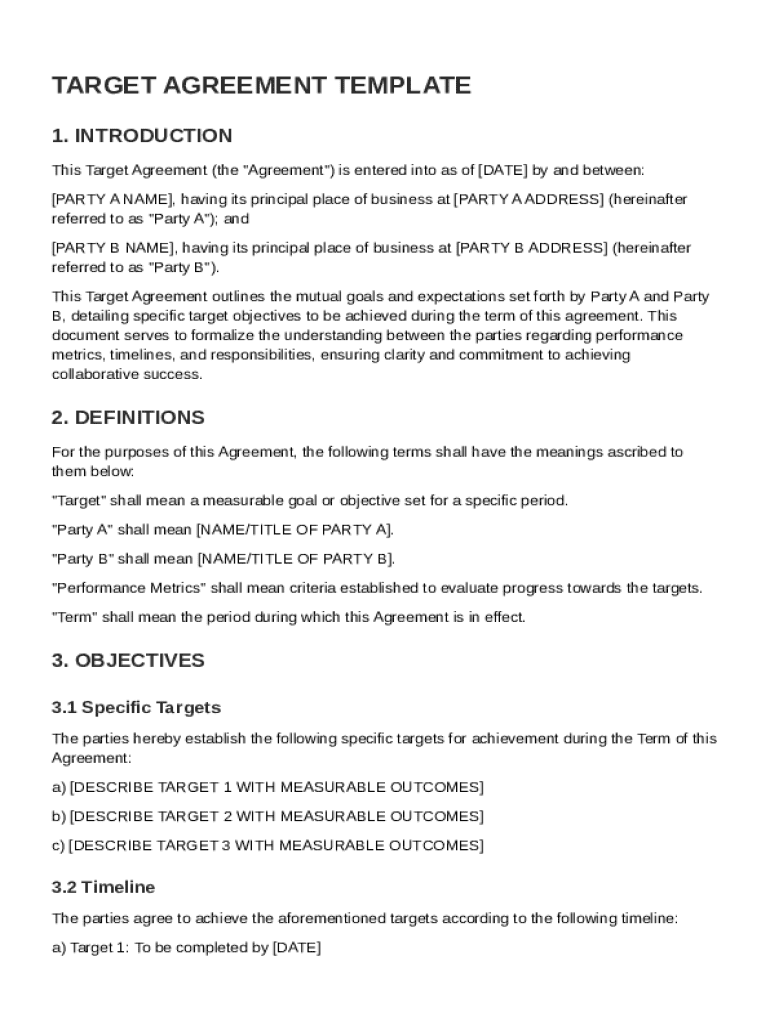







Definition & Meaning
The Target Agreement Template is a formal document designed to outline mutual goals, responsibilities, specific targets, and performance metrics between two parties, typically referred to as Party A and Party B. This agreement serves as a roadmap for collaborative success, clearly defining the expectations and commitments of each party involved over a specified term. It includes details such as reporting schedules and dispute resolution processes to facilitate smooth interaction and accountability.
Key Elements of the Target Agreement Template
A comprehensive Target Agreement Template comprises several essential sections:
- Objective Setting: Clearly defined goals that both parties aim to achieve within the agreement period.
- Performance Metrics: Specific criteria used to measure the success of the objectives, allowing both parties to assess progress realistically.
- Responsibilities: Detailed obligations of each party to ensure accountability and efficiency in meeting the agreement's objectives.
- Reporting Schedules: Regular intervals at which progress is evaluated and reported, providing transparency and regular updates.
- Dispute Resolution Process: Mechanisms in place to resolve any disagreements that may arise, ensuring a constructive approach to conflict management.
Steps to Complete the Target Agreement Template
- Define Objectives: Begin by identifying the precise goals each party wants to achieve.
- Set Performance Standards: Establish measurable metrics to track the fulfillment of these objectives.
- Assign Responsibilities: Clearly delineate the responsibilities of each party involved in meeting the agreed-upon goals.
- Determine Reporting Frequency: Decide on a schedule for progress assessment and documentation.
- Outline Conflict Resolution: Specify the methods and processes to address potential disputes.
- Review and Finalize: Both parties should thoroughly review the agreement before signing to ensure mutual understanding and consent.
Who Typically Uses the Target Agreement Template
The Target Agreement Template is widely used by various business and organizational entities, including:
- Corporations: To align departmental goals with company-wide strategies.
- Small Businesses: For partnerships or collaborations with external vendors or suppliers.
- Project Teams: To establish clear targets and roles for team members in specific projects.
- Nonprofits: When working joint ventures with other nonprofits or governmental organizations.


Legal Use of the Target Agreement Template
In the United States, the Target Agreement Template holds legal value as long as it is properly executed with the signatures of both parties. It is essential for the agreement to include clear, specific terms to be legally enforceable. Both parties are advised to consult legal advisors during drafting to ensure compliance with relevant laws and regulations.
State-Specific Rules for the Target Agreement Template
Some states may have specific legal stipulations affecting how Target Agreements are structured and enforced. For instance:
- California: Requires a clear definition of objectives and measurable targets to avoid interpretational disputes under employment law.
- New York: Has stringent guidelines on performance metrics in employment-related agreements to protect employee rights.
Digital vs. Paper Version
The Target Agreement Template exists in both digital and paper formats.
- Digital Format: Offers flexibility and ease of modification, supporting electronic signatures for secure, rapid execution.
- Paper Format: May be preferred for its traditional approach, ideal for parties that favor physical documentation.
Both formats must include identical content to ensure consistency and legality across different viewing mediums.
Software Compatibility
The Target Agreement Template is designed for compatibility with document processing software like Microsoft Word, Google Docs, and PDF editors such as Adobe Acrobat. This compatibility ensures that users can easily edit, share, and collaborate on the agreement using tools they are familiar with, improving overall accessibility and efficiency.