







Definition & Meaning
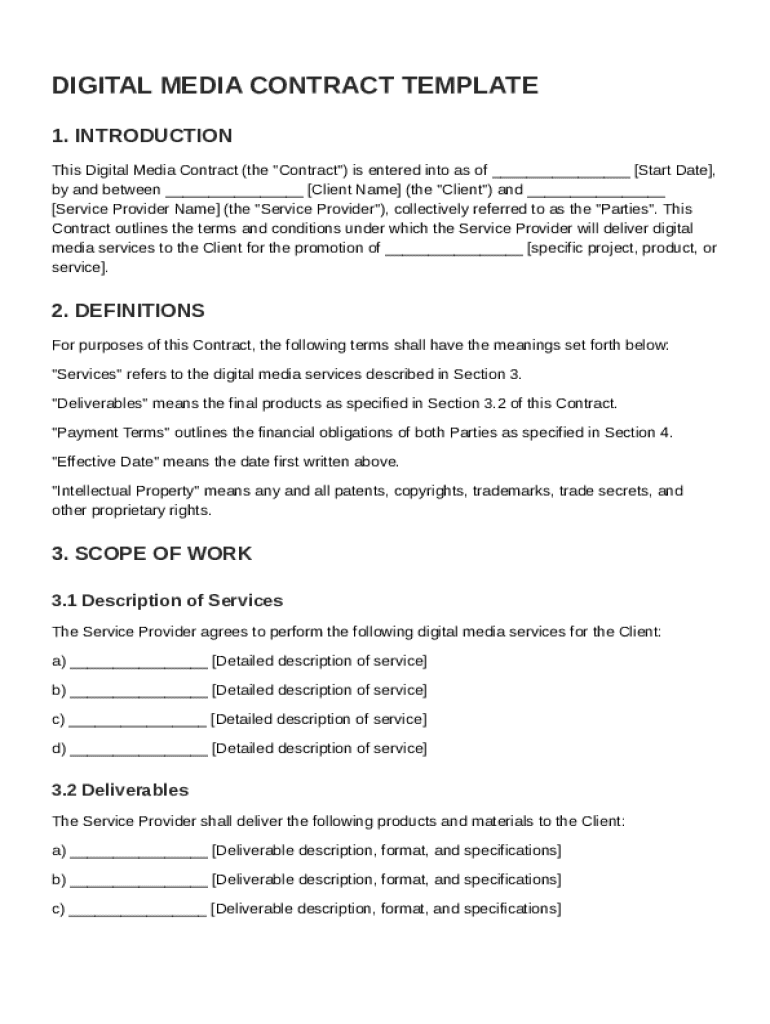
The Digital Media Contract Template is a crucial document that outlines the agreement terms between a Client and a Service Provider for digital media services. This template serves as a comprehensive framework detailing the specific responsibilities and expectations of both parties involved. It carefully defines the services to be provided, along with other critical components, establishing clear guidelines for professional engagements. These elements ensure that both parties understand their roles and the scope of work, which helps in reducing misunderstandings and potential disputes.
Scope of the Contract
- Parties Involved: Identifies the Client and Service Provider.
- Services: Describes the specific digital media services offered.
- Duration: Specifies the term during which the services will be provided.
Importance of Definitions
Clear definitions within the Digital Media Contract Template help avoid ambiguities. By establishing precise terminology, both parties can align their understanding and expectations. This section typically outlines what constitutes digital media services, such as content creation, marketing strategies, or specific deliverables.
How to Use the Digital Media Contract Template
Using the Digital Media Contract Template involves a systematic approach to ensure all necessary aspects are covered. This process begins with customizing the template to fit the specific needs of the Client and Service Provider. Proper use of the template ensures that the document is legally binding and adequately reflects the agreed terms.
Steps to Follow
- Customize: Tailor the template to include specific services and payment structures.
- Review: Ensure both parties review the contract for accuracy and completeness.
- Sign: Once finalized, have both parties sign the agreement to make it legally binding.
Importance of Customization
Customization is crucial to reflect individual arrangements and specific service expectations. It is vital to update sections like compensation, intellectual property rights, and confidentiality obligations to match the specific project's context.
Steps to Complete the Digital Media Contract Template
Completing the Digital Media Contract Template requires attention to detail and a clear understanding of each section's purpose. This process ensures a thorough contractual base for the business relationship.
Key Steps
- Fill in Basic Information: Enter the names and contact details of the involved parties.
- Define the Scope of Work: Clearly outline the services to be rendered.
- Set Compensation Terms: Specify the payment terms, including amount and payment schedule.
- Review and Revise: Carefully review the filled-in template to ensure all sections are accurate and complete.
- Finalize and Sign: Obtain signatures from the Client and Service Provider to formalize the agreement.
Importance of Clarity and Accuracy
Ensuring that all entries match what has been agreed upon is paramount. This avoids future disputes and ensures smooth collaboration between the Client and the Service Provider.
Key Elements of the Digital Media Contract Template
The template is structured to cover all essential aspects of the business relationship, protecting both the Client and the Service Provider.
Major Sections
- Compensation: Details regarding payment and any conditions tied to it.
- Intellectual Property Rights: Dictates the rights over the created content or media.
- Confidentiality: Obligates both parties to preserve the confidentiality of sensitive information.
- Dispute Resolution: Procedures for resolving any disagreements that arise.
- Termination Clause: Conditions under which the contract can be terminated by either party.
Importance of Comprehensive Coverage
Each of these sections plays a vital role in ensuring that the agreement is equitable and provides protection for both parties. This comprehensive structure helps to mitigate risks and strengthen the contractual relationship.
Legal Use of the Digital Media Contract Template
The legal usage of the Digital Media Contract Template is grounded in ensuring that the contract adheres to relevant laws and regulations. The objective is to create a binding agreement that upholds the interests of both parties under the law.
Compliance Considerations
- Adhering to the ESIGN Act: Ensuring electronic signatures are legally binding.
- State Regulations: Being aware of and complying with state-specific laws pertinent to contract terms.
Staying Legally Safe
By following legal guidelines and incorporating robust terms, the agreement can withstand legal scrutiny, providing peace of mind to both the Client and the Service Provider.
Who Typically Uses the Digital Media Contract Template
The Digital Media Contract Template is versatile and can be adapted to a variety of industries. It caters predominantly to those involved in digital services and content creation.


Primary Users
- Digital Marketing Agencies: To outline digital campaign deliverables.
- Freelance Content Creators: For projects requiring content development and media services.
- Business Consultants: Who offer digital transformation services.
Utility for Different Sectors
Businesses outside of typical digital media fields might also adopt this template for digital components of larger contracts. Its adaptability makes it beneficial for any entity involved in digital services.
Important Terms Related to the Digital Media Contract Template
Understanding the legal and professional jargon associated with the template is essential for effective utilization.
Core Terminologies
- Deliverables: Specific outcomes expected from service completion.
- Non-Disclosure Agreement (NDA): A clause aimed at protecting confidential information.
- Intellectual Property (IP) Assignment: Transfers ownership of created content to the Client.
Decoding Complex Terms
Demystifying terms like these helps all parties involved, aiding in smoother negotiations and clearer understanding of each clause's implications.
Examples of Using the Digital Media Contract Template
Practical scenarios demonstrate how diverse entities utilize the contract to facilitate seamless operations.
Case Studies
- Creative Agencies: Use the template to define project parameters for ad campaigns.
- Tech Startups: Employ it to delineate services for app development and digital design.
- E-commerce Platforms: Outline content creation for product descriptions and marketing materials.
Learning from Examples
By examining how different sectors implement the contract, users can tailor their agreements to align with best practices and industry standards.




