
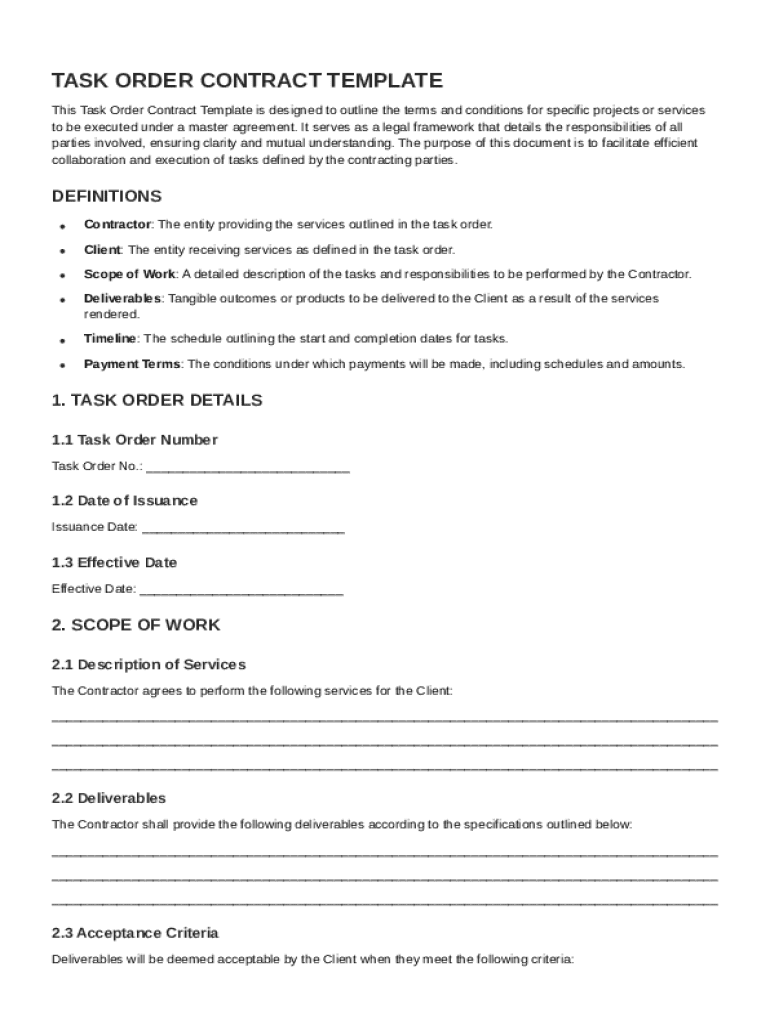







Definition & Meaning
The Task Order Contract Template is a structured legal document that outlines the specifics of individual projects or services under a larger master agreement. This template provides a detailed framework for both the contractor and client, ensuring clarity in roles, responsibilities, and expectations. It encompasses sections on the scope of work, timelines, payment terms, and dispute resolution, giving a comprehensive understanding of the task at hand. By standardizing these elements, it facilitates smoother collaboration and minimizes misunderstandings.
Key Components
- Scope of Work: Details the tasks to be completed and services to be provided.
- Timelines: Specifies the start and end dates, along with significant milestones.
- Payment Terms: Outlines the compensation structure and schedule for payments.
How to Use the Task Order Contract Template
To effectively use the Task Order Contract Template, follow a structured approach that ensures all necessary details are captured:
- Define Roles: Clearly state the roles and responsibilities of each party involved in the contract.
- Detail the Scope of Work: Specify the exact work to be completed, including any expectations or deliverables.
- Set Timelines: Establish realistic start and completion dates to manage expectations.
- Outline Payment Terms: Include billing rates, payment schedules, and any necessary financial arrangements.
- Include Legal Provisions: Incorporate any applicable legal terms to safeguard both parties’ interests.
Practical Tips
- Customization: Tailor the template to reflect specific project requirements.
- Regular Updates: Revisit and update terms as necessary to accommodate any project changes.
Steps to Complete the Task Order Contract Template
Filling out a Task Order Contract Template involves several methodical steps to ensure comprehensiveness:
- Gather Information: Collect all relevant data concerning the project, including client details and contractor credentials.
- Populate Template Sections: Enter project-specific details into respective sections, ensuring clarity and accuracy.
- Review and Confirm: Carefully review the document for any omissions or errors.
- Obtain Signatures: Facilitate signing by authorized representatives from both parties to legalize the agreement.
Step-by-Step Breakdown
- Contractor Information: Fill out the contractor's name, address, and contact details.
- Task Details: Input project objectives, deliverables, and any special instructions.
- Finalize and Archive: Once signed, distribute copies to all parties and retain one for your records.
Key Elements of the Task Order Contract Template
The core elements of a Task Order Contract Template are designed to provide a comprehensive and enforceable agreement:
- Task Order Details: Brief description and reference number of the task order.
- Scope of Work: Detailed explanation of the work to be performed, including goals and expectations.
- Timeline: Specific deadlines and phases for the project's completion.
- Payment Terms: Method, amounts, and schedule of payments.
- Terms and Conditions: Legal terms governing the agreement, including confidentiality and liability clauses.
Additional Elements
- Change Management: Protocols for managing scope changes or project adjustments.
- Dispute Resolution: Mechanisms for resolving any conflicts that may arise.
Legal Use of the Task Order Contract Template
Legal considerations are a critical part of the Task Order Contract Template.
Key Legal Aspects
- Contractual Obligation: Once signed, all parties are legally required to fulfill their obligations as outlined.
- Dispute Mechanisms: Includes processes such as mediation or arbitration to resolve disagreements.
- Compliance: Ensure the template complies with local and national laws to prevent legal complications.
Legal Scenarios
- Breach of Contract: Define consequences for non-compliance or incomplete task fulfillment.
- Intellectual Property: Protects the ownership rights of any work produced under the contract.
Examples of Using the Task Order Contract Template
The Task Order Contract Template can be adapted to a variety of scenarios, providing a flexible tool for different industries:
Use Cases in Various Industries
- Construction Projects: Define the scope and timeline for building projects, providing clarity on deliverables.
- Software Development: Specify functionality, milestone completion, and payment terms for technology services.
- Consulting Services: Set expectations for advice and reports, including timelines for deliverable submission.
Case Studies
- Real Estate Management: Utilizing the template to engage property managers for maintenance tasks.
- Marketing Campaigns: Collaborate with agencies specifying campaign objectives and expected deliverables.
Software Compatibility
Integration with Other Platforms
The use of task order contract templates can be optimized through integration with various software:
- DocHub Compatibility: Seamless operations with cloud platforms such as Google Drive help streamline document management.
- Third-party Software: Ensure compatibility with financial management or project tracking software for enhanced productivity.
Real-life Applications
- Cloud Storage: Easily import and work on documents saved in cloud services for maximum flexibility.
- E-signature Integration: Use leading e-signature technologies for secure and legal sign-offs on documents.
Important Terms Related to Task Order Contract Template
Understanding the essential terms associated with Task Order Contracts is vital for ensuring all parties are on the same page:
Glossary of Terms
- Contractor: The party responsible for executing the work detailed in the contract.
- Client: The entity requiring the services and agreeing to the payment terms.
- Deliverable: A tangible or intangible output of a task as documented in the contract.
Terminology Explanations
- Master Agreement: A broader agreement that the task order persists under, defining overarching terms.
- Billable Hours: Work time that can be invoiced to the client under the task order terms.




