




01. Edit your form online
Type text, add images, blackout confidential details, add comments, highlights and more.

Type text, add images, blackout confidential details, add comments, highlights and more.

Draw your signature, type it, upload its image, or use your mobile device as a signature pad.

Send it via email, link, or fax. You can also download it, export it or print it out.
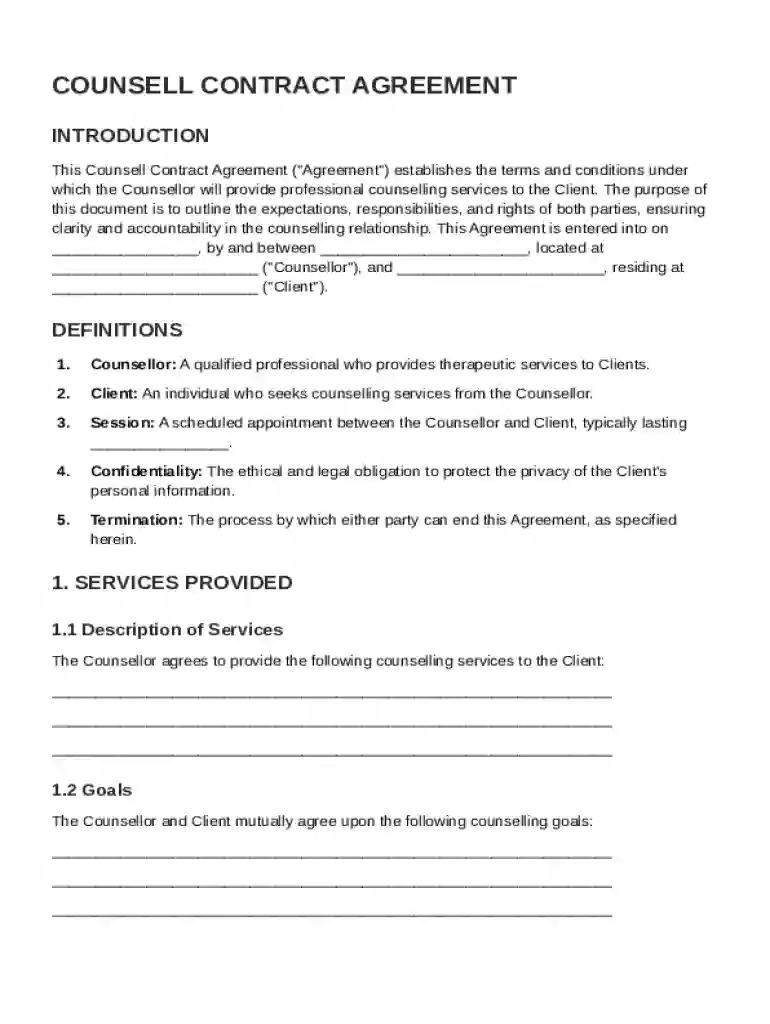
The Counsell Contract Template acts as a formal agreement detailing the terms for professional counseling services between a counselor and a client. It lays out the roles and responsibilities of both parties, session particulars, and financial arrangements. This template ensures a mutual understanding and establishes clear expectations, which promote accountability and a professional relationship. Key components such as session frequency, payment terms, and cancellation policy typically form the backbone of the agreement.
The Counsell Contract Template must comply with pertinent legal requirements to be enforceable. In the U.S., such contracts need to align with state laws governing professional counseling. Familiarity with laws such as the Health Insurance Portability and Accountability Act (HIPAA) for confidentiality can be crucial for ensuring compliance and legal protection for both parties.
Certain states may have specific requirements or variations in law regarding counseling services that must be reflected in the template. These can include additional privacy regulations, mandatory disclosures, or specific termination rights. Practitioners must be conversant with their state’s unique legislative landscape to ensure their contracts are valid.
Using a structured Counsell Contract Template streamlines the documentation process, ensuring all relevant details are covered to avoid future misunderstandings. It serves as a reference point throughout the professional relationship. Having a well-drafted contract can assure clients of a professional standard and builds trust.
Counsell Contract Templates find application in various counseling contexts:
Each scenario would require specific adjustments to the generic template to reflect the nuanced needs of the counseling service provided.
At DocHub, your data security is our priority. We follow HIPAA, SOC2, GDPR, and other standards, so you can work on your documents with confidence.



Please note: this outside counsel contract is a TRS-specific template and is not the standard template used by the Attorney General. The Attorney General is
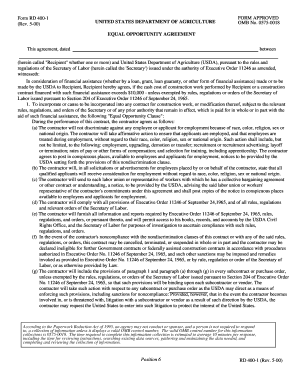
Sep 5, 2015 A comprehensive examination of an organisations policies and practices to identify and permit removal of systemic and attitudinal barriers to employment
The Office of the General Counsel (OGC) has developed templates for use by the University community. Consult with the OGC to determine whether the approved


