
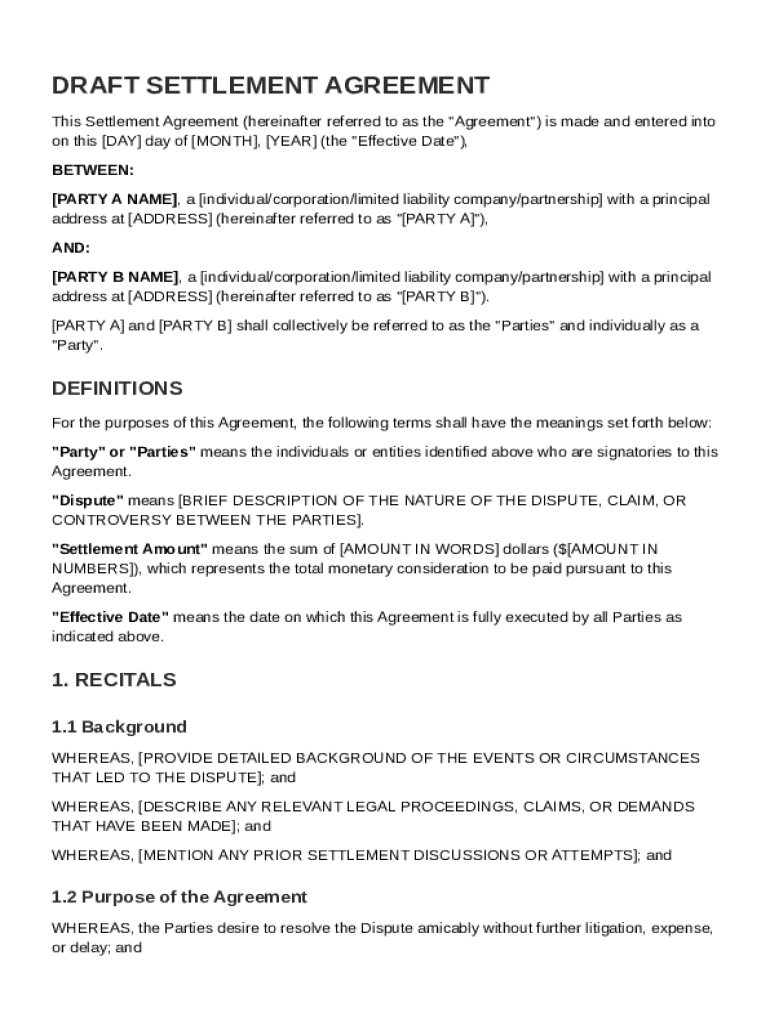







Definition and Meaning of a Draft Settlement Agreement
A draft settlement agreement is a preliminary version of a formal agreement used to resolve a dispute between two parties without pursuing further litigation. It outlines the terms, conditions, and responsibilities each party agrees to in order to settle the conflict amicably. The agreement aims to provide clarity, prevent misunderstandings, and facilitate a peaceful resolution by setting clear expectations on both sides.
Key Features:
- Clarity and Structure: A well-organized document with clear sections detailing the obligations and expectations of each party involved.
- No Admission of Liability: Emphasizes that the agreement does not imply any admission of liability or wrongdoing by the parties.
- Flexibility: Serves as a draft, allowing parties to negotiate and modify terms before finalizing the agreement.
Key Elements of the Draft Settlement Agreement Template
The draft settlement agreement template typically includes several crucial elements to ensure both parties are protected and their interests represented fairly.
Mandatory Components:
- Definitions of Key Terms: Providing clear definitions for crucial terms used throughout the document ensures mutual understanding.
- Payment Details: Outlines any financial agreements, such as lump-sum payments or installment schedules, agreed upon by the parties.
- Mutual Releases of Claims: Describes how each party will release the other from any further claims related to the dispute, reinforcing the intention to avoid future litigation.
Additional Elements:
- Confidentiality Provisions: Specifies whether the terms of the agreement or the circumstances leading to it must remain confidential.
- Governing Law: Identifies which jurisdiction’s laws will govern the interpretation and enforcement of the agreement.
- Dispute Resolution Processes: Includes mechanisms such as mediation or arbitration to resolve any disputes that might arise from the agreement.
Steps to Complete the Draft Settlement Agreement Template
Completing a draft settlement agreement involves several steps to ensure accuracy and compliance with legal standards.
- Gather Necessary Information: Collect all relevant details, such as party names, the nature of the dispute, and any verbal agreements previously made.
- Fill Out the Template: Complete each section of the template carefully, ensuring that all terms are specific and comprehensive.
- Review and Negotiate: Share the draft with the other party or their legal representatives to review, suggest revisions, and negotiate any terms.
- Finalize and Sign: Once both parties agree on the terms, the final document is prepared, signed, and executed. It may also require notarization, depending on jurisdictional requirements.
Legal Use of the Draft Settlement Agreement Template
The draft settlement agreement template serves as a tool for structuring settlements within the bounds of legal frameworks. Its aim is to assist in enforcing a fair resolution while complying with applicable laws.
Considerations for Legal Use:
- Adherence to ESIGN Act: Ensures electronic signatures are valid and legally binding.
- State-Specific Modifications: Tailors sections according to state law variations regarding settlement agreements.
- Consultation with Legal Counsel: Advisable to consult with attorneys to verify that the agreement’s terms are legally sound and enforceable.
Who Typically Uses the Draft Settlement Agreement Template
This template is a valuable resource for various individuals and entities seeking to resolve disputes efficiently and amicably.


Common Users:
- Individuals: Resolving personal disputes, such as familial disagreements or landlord-tenant issues.
- Businesses: Settling contractual disputes, employee grievances, or partnership disagreements.
- Legal Professionals: Attorneys and mediators facilitate settlements for their clients using streamlined, structured documents.

State-Specific Rules for the Draft Settlement Agreement Template
While the fundamental structure of a draft settlement agreement is consistent, some clauses may vary based on the state of jurisdiction.
Considerations:
- Modifications for Execution: Each state has specific requirements regarding the execution of settlement agreements, such as notarization or witness requirements.
- Local Governing Laws: Differing state laws may impact aspects of the agreement, such as age of consent for signing or specific clauses related to dispute resolution.
- Enforcement Variations: States may differ in their enforcement mechanisms, particularly concerning confidentiality or arbitration clauses.
Important Terms Related to Draft Settlement Agreement Template
Understanding specific terms related to settlement agreements is crucial for drafting effective and enforceable documents.
Glossary:
- Mediation: A process where a neutral third party assists disputing parties in reaching a mutually satisfactory agreement.
- Arbitration: A dispute resolution process where an arbitrator makes binding decisions.
- Release of Claims: A provision in which one party relinquishes any right to pursue further legal action against the other.
- Consideration: An essential component requiring both parties to provide something of value for the agreement to be binding.
Why You Should Use a Draft Settlement Agreement Template
Utilizing a draft settlement agreement template can be beneficial for several reasons, ensuring clarity, efficiency, and mutual satisfaction.
Advantages:
- Streamlined Process: Simplifies complex negotiations by providing a clear and organized framework.
- Cost Efficiency: Reduces legal expenses by minimizing the need for prolonged litigation.
- Flexibility and Adaptability: Allows for easy adjustments and customization according to the specifics of the dispute and agreement.
Each of these sections offers comprehensive insights into utilizing a draft settlement agreement template effectively, ensuring that parties can resolve disputes with confidence and efficiency.




