
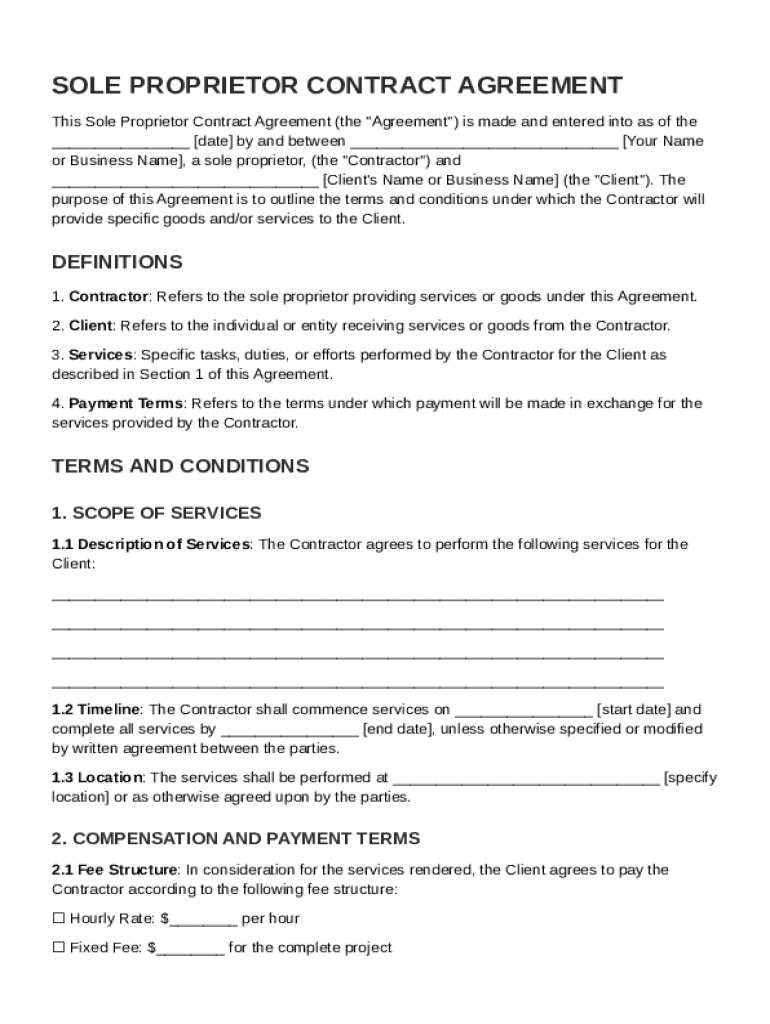







Definition & Meaning
A Sole Proprietor Contract Template is a legally binding document used to outline the relationship between a sole proprietor (often referred to as an independent contractor) and a client. This form establishes the terms and conditions under which services or goods are provided. The contract typically details each party's roles and responsibilities, compensation arrangements, confidentiality norms, and procedures for conflict resolution. It emphasizes the independence of the contractor, setting clear boundaries and expectations for both parties involved.
Core Components
- Identification of Parties: Clearly defines the involved parties, including the sole proprietor and the client.
- Scope of Services: Specifies the services or goods to be provided, including project deliverables.
- Compensation Structure: Details payment terms, amounts, and schedules.
- Confidentiality Clauses: Protects sensitive information exchanged during the engagement.
- Termination Conditions: Outlines conditions for ending the contract and consequences thereof.
How to Use the Sole Proprietor Contract Template
The Sole Proprietor Contract Template serves as a foundation for drafting precise and customized agreements between individual service providers and their clients. To effectively utilize the template, follow these steps:
-
Customization: Tailor the template to fit the specific service or product being offered. Modify sections to reflect the unique aspects of your agreement.
-
Review and Revise: Have both parties meticulously review the terms outlined in the contract. Ensure clarity and consensus in all clauses.
-
Legal Consultation: Seek advice from a legal professional to confirm that the contract adheres to applicable laws and effectively protects your interests.
-
Agreement Formalization: Obtain signatures from both parties, making the contract officially binding. Consider using digital signature solutions for efficiency.
Key Elements of the Sole Proprietor Contract Template
Identification of Parties
- Sole Proprietor Information: Full name, business name (if applicable), and contact details.
- Client Information: Full name, company name (if applicable), and contact information.
Project Scope and Deliverables
- Detailed Services Descriptions: Specify tasks and responsibilities.
- Timeline: Start and completion dates, including key milestones.
Payment Terms
- Rate and Payment Schedule: Define hourly or project rate and payment frequency.
- Payment Method: Options for bank transfer, check, etc.
Confidentiality and Non-Disclosure Clauses
- Confidential Information Definition: Types of information to be kept confidential.
- Duration: Timeframe for which confidentiality is maintained after contract termination.
Steps to Complete the Sole Proprietor Contract Template
- Drafting: Fill in basic identifying information and tailor sections relevant to services or goods offered.
- Detailing Terms: Specify the agreed-upon details for project scope, timelines, deliverables, and payment terms.
- Verification: Cross-check all information for accuracy and completeness.
- Reviewing: Have both parties review the document to confirm understanding and consent.
- Signing: Use electronic or physical means to sign the contract, making it official.
Who Typically Uses the Sole Proprietor Contract Template
The Sole Proprietor Contract Template is most commonly used by freelancers, consultants, or self-employed individuals who provide specialized services. Clients who typically engage with such contracts include:
- Small Businesses: Owners seeking specialized skills for short-term projects.
- Startups: Companies in need of temporary expertise without long-term employment commitments.
- Consultancy Firms: Engaging external consultants for niche advice or input.


Legal Use of the Sole Proprietor Contract Template
Compliance with U.S. Laws
- Contractual Validity: Must comply with federal and state laws to be enforceable.
- Contract Restrictions: Limits specific restrictive covenants that may be deemed unlawful.
Contract Enforcements
- Rights Protection: Outlines legal remedies for breach of contract.
- Dispute Resolution: Includes arbitration or mediation processes as means to resolve potential disputes.
Important Terms Related to Sole Proprietor Contract Template
Common Legal Terms
- Independent Contractor Status: Clearly differentiates the contractor from employees.
- Indemnification: Protects parties from potential legal liabilities resulting from the other's actions.
- Force Majeure: Covers unforeseeable events affecting contract fulfillment.
State-Specific Rules for the Sole Proprietor Contract Template
Variations in State Laws
- Tax Obligations: States may have unique tax reporting or withholding requirements.
- Regulatory Differences: Varying regulations around freelancer and contractor classifications across states.
For readers seeking more detailed guidance on drafting or using a Sole Proprietor Contract Template, consulting legal professionals or business advisors well-versed in state-specific nuances and industry-specific contractual needs is recommended. This ensures the creation of robust, compliant, and effective contracts tailored to specific business transactions.




