






Definition & Meaning
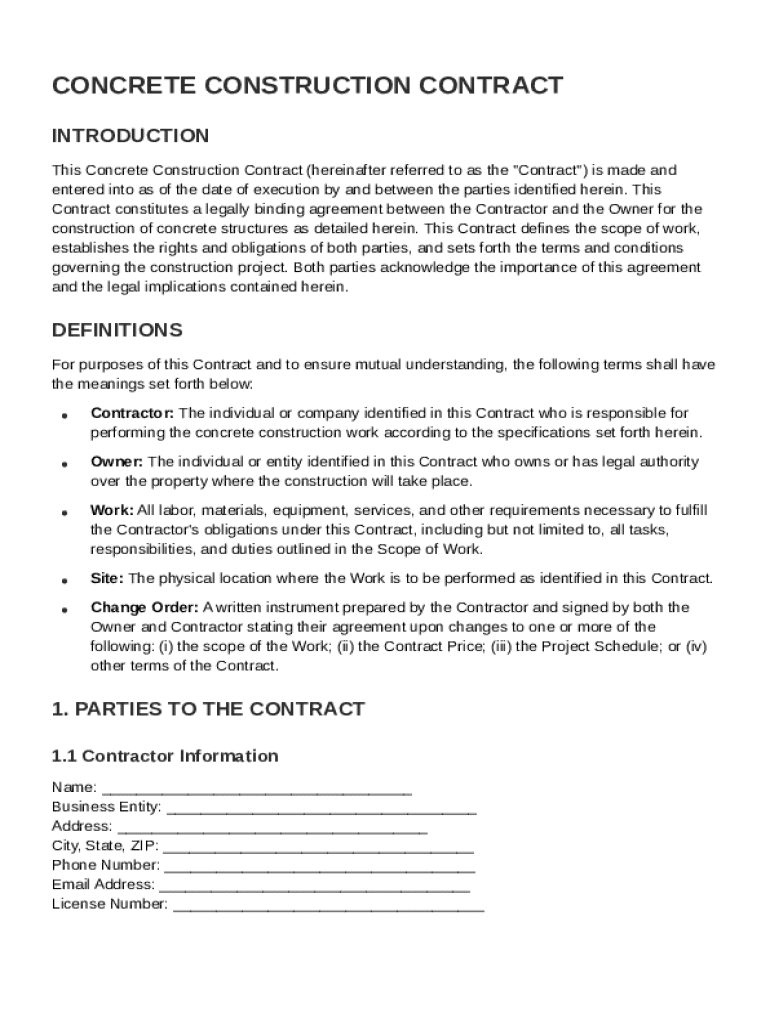
A Concrete Construction Contract Template is a formal agreement used to establish the terms and conditions between a contractor and an owner for the construction of concrete structures. It legally binds both parties to the responsibilities and obligations outlined within the document. This contract template serves as a guide to ensuring clarity on the scope of work, payment milestones, timelines, and other critical aspects of the construction project. The contract streamlines the collaboration between all parties involved, minimizing disputes and misunderstandings during the construction process. This template can be customized to fit specific needs while maintaining essential legal principles, making it a versatile tool in the construction industry.
How to Use the Concrete Construction Contract Template
The Concrete Construction Contract Template is designed to streamline the drafting and execution of a construction agreement. To use the template effectively, begin by downloading it in a compatible format, such as DOCX or PDF, using services like DocHub, which offers integration with cloud storage solutions like Google Drive. Once downloaded, review each section carefully, ensuring that all details specific to your project are accurately filled out. These include sections like the project scope, responsibilities of each party, and financial details. When all necessary information is complete, utilize DocHub's electronic signature feature to sign the contract. This ensures that the agreement is legally binding. Finally, securely share the finalized contract with other involved parties, leveraging secure sharing options and password protection features when necessary.
Key Elements of the Concrete Construction Contract Template
The Concrete Construction Contract Template contains several crucial components to facilitate its use in legal agreements:
- Scope of Work: Clearly defines the tasks, processes, and deliverables expected from the contractor.
- Payment Terms: Outlines the payment schedule, methods, and any conditions related to financial transactions between the parties.
- Project Timeline: Specifies the deadlines for project milestones and the final completion date.
- Insurance Requirements: Details the insurance policies that must be in effect to protect against potential project-related risks.
- Change Order Procedures: Describes the protocol for requesting and approving changes to the contract or project scope.
- Termination Clauses: Establishes the conditions under which the contract may be terminated by either party.
Legal Use of the Concrete Construction Contract Template
The Concrete Construction Contract Template is designed to be legally robust, ensuring compliance with applicable laws. Before finalizing a contract, it is wise for both parties to review the document with legal counsel to confirm that all clauses meet current legal standards and address specific project needs. The inclusion of legally binding terms such as dispute resolution and indemnification clauses helps protect both contractor and owner. Additionally, parties should ensure the contract adheres to local, state, and federal regulations, including safety standards and building codes specific to the jurisdiction where construction is taking place.
Who Typically Uses the Concrete Construction Contract Template
This template is primarily utilized by contractors and project owners within the construction industry. It is also used by project managers needing a structured approach to contract development, ensuring that all involved parties are aligned on expectations and responsibilities. Legal advisors often employ the template as a starting point to draft customized contracts tailored to individual client needs. Architects, engineers, and other stakeholders involved in large construction projects may use this contract to ensure that their roles and liabilities are clearly articulated and agreed upon.


Examples of Using the Concrete Construction Contract Template
In practice, the Concrete Construction Contract Template has been used in scenarios such as:
- Residential Projects: Agreements for constructing driveways, patios, or home foundations, ensuring timelines and budgets align.
- Commercial Developments: Contracts for creating concrete structures like multi-level parking garages or office foundations.
- Public Infrastructure: Used by government bodies to engage contractors for constructing roadways, bridges, or public plazas.
- Industrial Construction: Establishing agreements for complex structures such as warehouses or manufacturing facilities with specific load requirements.
Steps to Complete the Concrete Construction Contract Template
- Download the Template: Obtain the document in a suitable format from an online platform like DocHub.
- Input Project Details: Fill out essential information including project objectives, contractor and owner details, and timeline specifics.
- Define Financial Terms: Specify the agreed payment structure, include any upfront payments, and schedule milestones.
- Review Legal Clauses: Ensure clauses like insurance, dispute resolution, and termination align with project needs and legal requirements.
- Sign the Agreement: Use an electronic signature feature to validate the contract legally.
- Distribute the Document: Share the signed contract with all parties, ensuring that access is secure and restricted to authorized individuals.
Important Terms Related to the Concrete Construction Contract Template
Understanding the terminology used in the Concrete Construction Contract Template is crucial. Key terms include:
- Change Order: A document that outlines modifications to the original scope of work agreed upon in the contract.
- Indemnity: A clause that protects defined parties from legal liability or financial loss.
- Performance Bond: A surety bond issued to ensure satisfactory completion of a project by the contractor.
- Liquidated Damages: Predetermined damages predefined in the contract for failing to meet contracted obligations or deadlines.
State-specific Rules for the Concrete Construction Contract Template
While using the Concrete Construction Contract Template, it is important to consider state-specific regulations that may affect its terms. Different states may have varying requirements concerning licenses, permits, or labor practices in construction. For instance, some states have particular standards for environmental sustainability or impose construction-related taxes. Evaluating these rules is necessary to avoid legal complications and ensure compliance with local laws. Adjusting the contract to include these considerations demonstrates due diligence and aligns the agreement with all jurisdictional mandates.