






Definition and Meaning
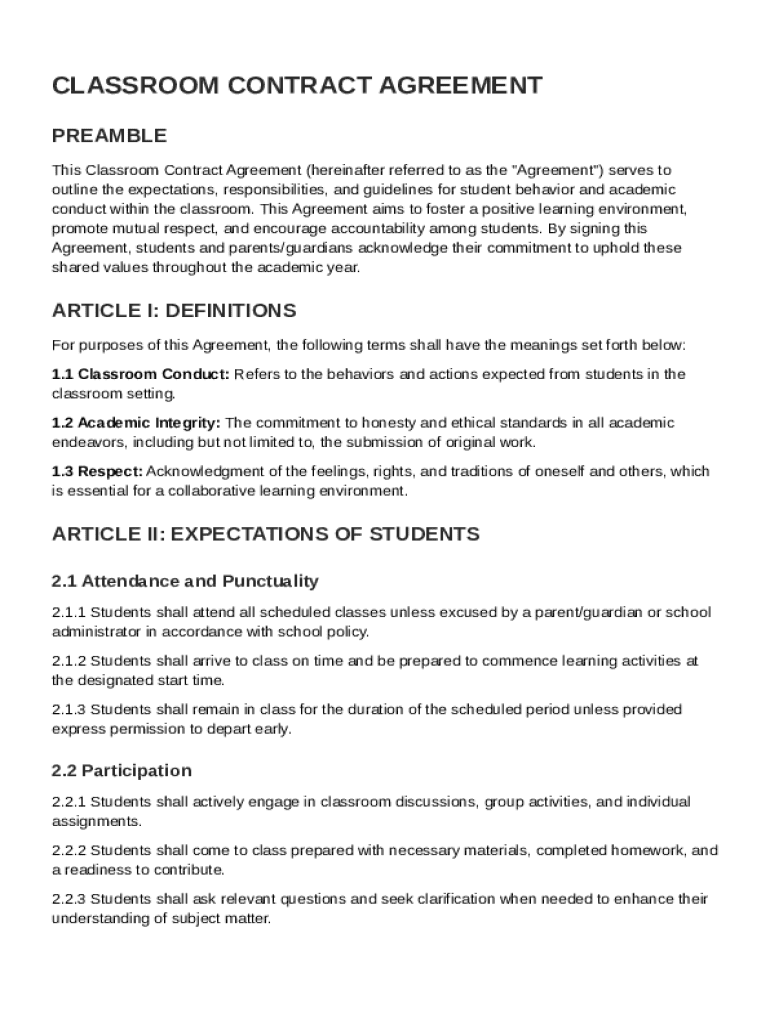
The Classroom Contract Template serves as a structured agreement outlining expectations, responsibilities, and guidelines within a classroom setting. This document is pivotal in fostering a well-organized and respectful learning environment by clearly defining the roles and conduct expected from students, teachers, and, in some cases, parents. It typically covers aspects such as attendance, participation, academic integrity, and communication principles. The contract specifies both the behavioral standards and academic expectations to ensure consistency and fairness, while also detailing potential consequences for breaches of the outlined guidelines.
Examples of Usage
- Student Behavior Management: Teachers utilize the template to set clear expectations for student conduct, addressing scenarios like tardiness or classroom disruptions.
- Parental Involvement: Parents can be required to sign the contract, underscoring their role in supporting their child's adherence to school policies.
- Special Programs: The template can be adapted for specific programs that might have unique guidelines or requirements, such as extracurricular activities or special education.
Key Elements of the Classroom Contract Template
A comprehensive Classroom Contract Template includes several critical components that collectively contribute to a constructive educational setting. These elements are essential for clarity and accountability:
Attendance and Participation
- Expectations: Details on required attendance levels and participation in class discussions or activities.
- Consequences: Clear articulation of penalties for absenteeism, such as grade deductions or mandatory make-ups.
Academic Integrity
- Guidelines: Definitions of plagiarism, cheating, and other forms of academic dishonesty.
- Consequences: Disciplinary actions for violations, which might include grade penalties or school-level disciplinary measures.
Communication and Respect
- Behavioral Expectations: Mandates regarding respectful interaction between students and staff.
- Protocol for Issues: Steps for addressing misunderstandings or conflicts, ensuring a supportive resolution approach.
Steps to Complete the Classroom Contract Template
Filling out a Classroom Contract Template involves a series of systematic steps to guarantee accuracy and completeness. These steps facilitate the coherent execution of the contract:
- Review Basic Information: Ensure that all personal and class-specific details are correct.
- Understand Expectations: Thoroughly read each section to grasp the responsibilities and norms being agreed upon.
- Identify Key Signatures: Students, teachers, and possibly parents should sign areas that confirm their understanding and agreement.
- Discuss and Clarify: Prioritize having a discussion between students and educators to address any ambiguities or concerns.
- Final Review and Submission: Confirm that all sections are duly signed and dated before returning the document to the relevant authority.
Who Typically Uses the Classroom Contract Template
The Classroom Contract Template finds diverse applicability across various educational stakeholders. Understanding who uses this template facilitates its more effective implementation:
- Teachers: Primary users who set class-specific rules and expectations for students.
- Students: Integral participants who agree to comply with the stipulated norms to ensure their developmental and academic success.
- Administrators: Often involved in drafting more generalized templates that are tailored to specific classroom needs by educators.
- Parents or Guardians: Occasionally, their involvement is required to foster a collective reinforcement of educational standards from both school and home.


Legal Use of the Classroom Contract Template
While not legally binding like a contract in a judicial sense, the Classroom Contract Template carries significant weight within an educational context, ensuring compliance and accountability among all parties. Understanding its legal stance and uses can be crucial:
- Enforcement: Lends authority to disciplinary actions taken based on breaches, though ultimate legal action rarely follows educational misconduct directly.
- Documentation: Acts as a formal record of agreed-upon standards, often referenced in disputes or disciplinary situations.
- Protection: Shields educational institutions by establishing clear expectations that mitigate potential liabilities or claims of arbitrary enforcement.
Important Terms Related to the Classroom Contract Template
Familiarity with the vocabulary used in a Classroom Contract Template enhances comprehension and effective utilization. Some terms of particular significance include:
- Accountability: The obligation of students to adhere to the agreed-upon behavior and academic guidelines.
- Policy: Refers to the specific rules and procedures established within the contract.
- Compliance: Meeting the provisions and standards laid out in the contract.
Examples of Using the Classroom Contract Template
Various case studies demonstrate how this template has been successfully utilized within educational settings:
Real-World Scenarios
- Case Study: The ABC School: Instituted a Classroom Contract Template that reduced behavioral incidents by 30% by clearly stating the penalties for disruptions.
- High School Students: Engaged in a peer-review program where older students mentor younger ones in understanding and committing to the contract.
Scenarios in Different Educational Levels
- Elementary Schools: Adapt simpler versions that focus more on behavior than on academic integrity, to suit a younger audience.
- Higher Education: Utilizes more detailed contracts that include clauses for academic rigor and peer respect.
Digital vs. Paper Version
In today's digital age, the choice between digital and paper Classroom Contract Templates significantly impacts their accessibility and usage. Understanding the merits of both formats ensures optimal application:
Advantages of Digital Versions
- Ease of Access: Facilitates distribution and signing through electronic platforms, which can be more practical for widespread implementation.
- Amendability: Simplifies updates and modifications, which can be crucial in dynamic educational environments.
- Environmentally Friendly: Reduces paper usage, supporting eco-friendly initiatives in schools.
Paper Version Considerations
- Tangibility: Some educators and parents may prefer physical copies for records or due to comfort with traditional documentation.
- Certainty: Ensures that documents are not overlooked in digital clutter, potentially leading to more intentional engagement from recipients.