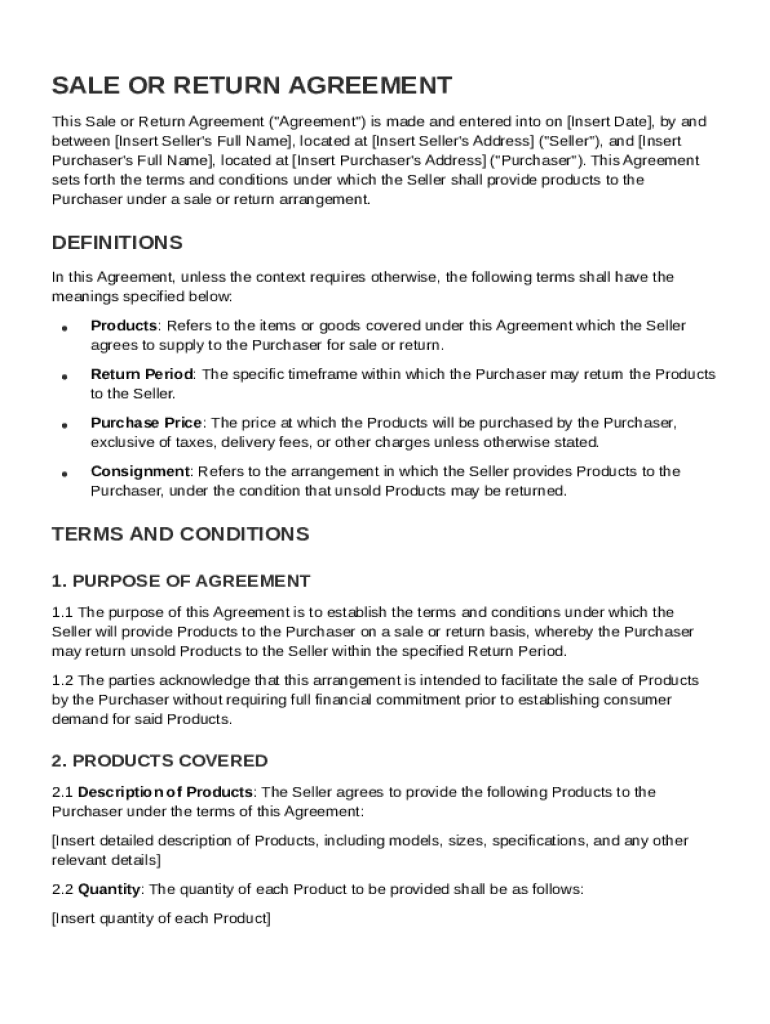







Key Elements of the Sale or Return Contract Template
A comprehensive understanding of the primary elements in the Sale or Return Contract Template is essential for effective utilization. Key components include:
- Definitions: Terms such as Seller, Purchaser, Products, and Return Period must be clearly outlined to ensure there is no ambiguity regarding roles and responsibilities.
- Product Return Conditions: The contract specifies the circumstances under which products can be returned. Conditions may include the timeframe for returns, acceptable product conditions, and any required documentation.
- Payment Terms: Payment schedules, methods, and any penalties for late payments are included to safeguard financial interests.
- Risk of Loss: Details who is responsible for product losses or damages during transit or storage.
- Intellectual Property Rights: Provisions protecting proprietary rights related to any trademarks, designs, or branding associated with the products.
- Liability Limitations: Outlines the extent of each party’s liability, emphasizing limitation clauses that protect against excessive claims.
- Governing Law and Dispute Resolution: States which jurisdiction’s laws apply and the preferred method for resolving potential disputes, whether through arbitration or litigation.
By clearly defining these elements, the contract ensures mutual understanding and cooperation between the Seller and Purchaser.
Steps to Complete the Sale or Return Contract Template
To complete the Sale or Return Contract Template effectively:
- Gather Information: Collect all necessary details about the products, parties involved, and specific terms you intend to include.
- Define the Terms: Enter relevant definitions, ensuring all parties understand their roles and rights.
- Specify Return Conditions: Clearly describe the terms under which products can be returned, including deadlines and conditions of goods.
- Document Payment Terms: Outline payment schedules and methods and specify any penalties for late payments.
- Assign Risk of Loss: Detail the responsibilities for risk and damages incurred during shipment and storage.
- Clarify Intellectual Property Rights: Include clauses for protection of trademarks or proprietary designs.
- Determine Liability Limitations: Specify any limitations on financial liability for damages or losses.
- Select Governing Law: Specify which state’s laws apply and preferred dispute resolution methods.
Ensuring each step is followed meticulously will lead to an enforceable and clear agreement.
Legal Use of the Sale or Return Contract Template
When utilizing the Sale or Return Contract Template, it is important to understand its legal context:
- U.S.-Centric Compliance: Ensure compliance with United States laws and regulations, which may differ significantly from those in other jurisdictions.
- ESIGN Act: Utilize electronic signatures as permitted by law, ensuring they meet the standards set forth by the ESIGN Act for legally binding agreements.
- Customization for State Laws: Adjust the template to reflect any specific legal requirements of the state in which the transaction is conducted.
- Dispute Resolution: Include clear processes for handling disputes in a legally compliant manner and secure legal advice when necessary to strengthen terms.
By adhering to these legal considerations, users can ensure their contracts hold up in court and effectively protect their interests.
Who Typically Uses the Sale or Return Contract Template
The Sale or Return Contract Template is a versatile tool often utilized by:
- Retailers: Businesses that need flexibility in stock levels without the commitment of outright purchase.
- Manufacturers: Producers providing consignment stock to retailers.
- Distributors: Companies providing goods to multiple points of sale, often benefiting from returned unsold inventory.
- Artists and Craftspeople: Individuals supplying galleries or shops wishing to return unsold pieces post-exhibition.
- Small Businesses: Entities with uncertain inventory turnover looking to manage cash flow efficiently.
These users typically require agreements facilitating inventory fluidity and risk mitigation.


Examples of Using the Sale or Return Contract Template
Real-world scenarios demonstrate the practical application of this contract:
- Fashion Retail: A retailer provides seasonal clothing to stores under a sale or return arrangement, managing surplus halfway through the season.
- Publishing: A publisher supplies bookstores with a new book, allowing unsold copies to be returned post-launch.
- Consumer Electronics: A distributor places new tech gadgets in various outlets, retrieving unsold items to optimize stock levels post-launch.
These scenarios highlight how the contract can accommodate business needs across diverse industries, ensuring aligned business goals and streamlined processes.
Important Terms Related to Sale or Return Contract Template
Understanding specific terminologies is crucial for effective application:
- Consignment Stock: Products supplied for sale where unsold items return to the supplier.
- Return Period: The designated timeframe for returning unsold items.
- Title Transfer: Ownership transfer happens only upon sale, not during shipment.
- Defective Returns: Provisions detailing how damaged goods are managed and returned.
- Chargebacks: Financial adjustments due to returns or cancellations impacting payment processing.
Grasping these terms ensures accurate preparation and fulfillment of the contract.
State-Specific Rules for the Sale or Return Contract Template
State-specific regulations may affect the contract’s implementation:
- Differences in Retail Law: Individual states may have varying retail compliance requirements affecting return conditions.
- Consumer Protection: Certain consumer rights laws impact permissible contract terms, requiring adjustments for customer returns.
- Electronic Commerce Laws: Varying digital signature acceptance standards may necessitate distinct electronic signing clauses.
Reviewing local state laws and consulting legal professionals can help adapt the contract appropriately to comply with regional differences.
Business Types That Benefit Most from Sale or Return Contract Template
Certain business types see significant advantages from employing this contract format:
- Brick-and-Mortar Retailers: Physically stocked locations with variable demand benefiting from flexible inventory arrangements.
- Online Retailers: E-commerce platforms managing digital inventories needing agreements for physical shipments and returns.
- Seasonal Vendors: Businesses contingent upon time-specific sales, like holiday decorations or summer gear, benefit from managing unsold inventory.
Adaptability and cash-flow management make the contract especially beneficial to these business types.