Definition & Meaning
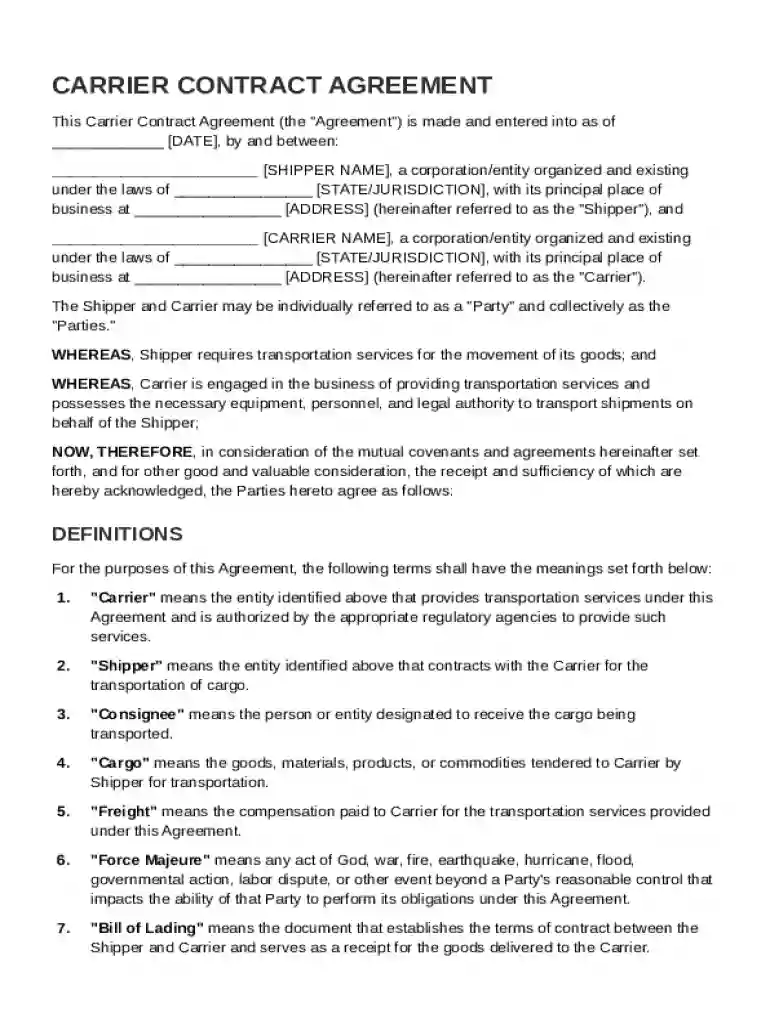
The Carrier Contract Template is a formalized document used to define the terms and conditions agreed upon between a Shipper and a Carrier. This agreement outlines key responsibilities and obligations each party has in the process of transporting goods. It specifies important aspects such as service scope, payment terms, liability limitations, and dispute resolution procedures. This legal framework ensures that all involved parties comply with relevant laws and regulations, reducing potential conflicts and enhancing collaboration in shipping operations.
Key Elements of the Carrier Contract Template
The Carrier Contract Template is comprised of several crucial elements which are central to its function. These include:
- Service Description: Details the transportation services to be provided, including types of goods, delivery schedules, and methods of transport.
- Payment Terms: Specifies how and when the Carrier will be compensated, including any conditions for payment such as delivery milestones or invoicing procedures.
- Liability Clauses: Outlines liability in case of loss, damage, or delay of shipments, including any insurance requirements.
- Compliance Requirements: Emphasizes adherence to relevant regulations and laws pertaining to transportation and safety standards.
A clear understanding of these elements helps both parties to anticipate their roles and obligations, ensuring a smoother transactional relationship.
How to Use the Carrier Contract Template
Utilizing the Carrier Contract Template effectively involves several steps aimed at ensuring all sections are accurately filled out and agreed upon. Here's a breakdown:
- Review and Customize: Start by reviewing the template and tailoring it to meet specific business needs. Focus on aligning service descriptions and responsibilities with what has been negotiated.
- Include All Parties: Clearly identify and list all parties involved in the agreement, including contact information and any relevant identification details.
- Clarify Specific Terms: Detail specific terms of service, including loading and unloading procedures, transit times, and delivery points.
- Legal Review: Have a legal expert review the completed contract to ensure compliance with local transportation laws and industry regulations.
- Finalize and Sign: Once both parties are satisfied with the terms, signatures are needed to make the contract legally binding.
Steps to Complete the Carrier Contract Template
Completing the Carrier Contract Template requires attention to detail and adherence to the following procedure:
- Gather Information: Collect necessary information from both the Shipper and Carrier, ensuring all details are complete and up-to-date.
- Fill Out Contact Details: Enter the complete contact details for all parties, making sure names, addresses, and contact numbers are correctly filled in.
- Describe Services: Clearly describe the transportation services being agreed upon, including any special handling or equipment requirements.
- Define Payment and Terms: Clearly state the agreed payment terms, including any upfront fees, payment timelines, and penalties for late payment.
- Include Liability and Compliance Clauses: Ensure all liability clauses and compliance requirements are completed accurately.
- Review and Amend: Thoroughly review the contract for any errors or omissions that could impact its validity. Amend as necessary before sharing with involved parties for signature.
Who Typically Uses the Carrier Contract Template
The Carrier Contract Template is primarily used by businesses and individuals engaged in the shipping and logistics industry. Key users include:

- Logistics Companies: Who frequently require transportation services for moving goods between locations.
- Freight Brokers: Who act as intermediaries arranging transportation services for third parties.
- Manufacturers and Distributors: Who need reliable shipping solutions for distributing their products to retailers or consumers.
- Small Business Owners: Engaged in commerce activities that require the movement of goods from one point to another.
Important Terms Related to Carrier Contract Template
Understanding the "Carrier Contract Template" involves familiarization with several key terms, including:
- Shipper: The party responsible for initiating the shipment of goods.
- Carrier: The transporter of goods who takes on the responsibility of delivering the cargo.
- Bill of Lading: A document issued by the Carrier acknowledging the receipt of goods for shipment.
- Freight: Goods transported by truck, train, ship, or plane.
These terms often form the basis of discussions surrounding contracts, helping all parties to clearly understand their roles and responsibilities.
Legal Use of the Carrier Contract Template
Legally, the Carrier Contract Template serves as a binding contract that enforces the terms agreed upon by the Shipper and Carrier. This document must comply with:
- Transportation Laws: It should adhere to the laws and regulations governing cargo transit in the jurisdiction where services are rendered.
- Contractual Law: Ensuring that all clauses are lawful and enforceable under relevant contractual legislation.
- Liability Coverage: It must detail the liability of parties and include any necessary insurance coverages to protect against loss or damage.
Employing the Carrier Contract Template appropriately within these legal frameworks is crucial for maintaining its legitimacy and enforceability.
Examples of Using the Carrier Contract Template
Instances where the Carrier Contract Template proves useful include:
- International Shipments: Where clear contractual terms are vital due to varying international shipping laws and practices.
- Seasonal Shipping Needs: Businesses needing to rapidly set up transport agreements during peak seasons.
- High-Volume Transactions: Companies with consistent transport requirements necessitating recurring contracts.
These practical examples highlight the utility of using the Carrier Contract Template in varying business and logistic scenarios.