






Definition and Meaning
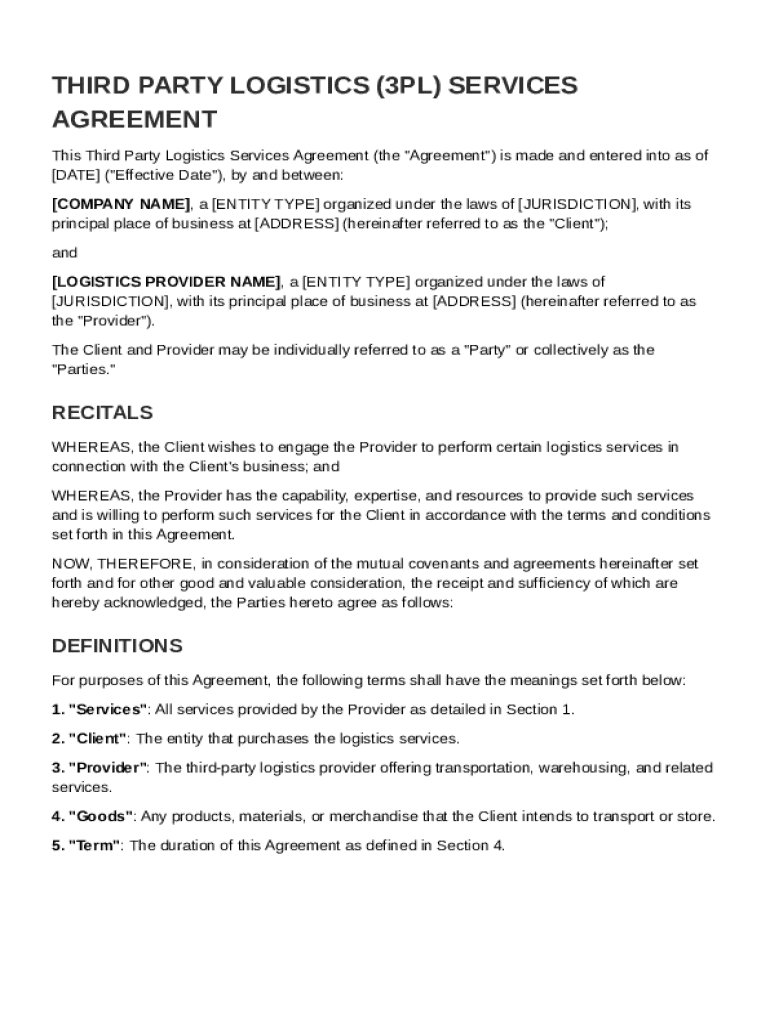
A Third Party Logistics (3PL) Contract Template serves as a comprehensive framework for establishing business relationships between companies seeking logistics services and providers offering these services. The template outlines essential components, including service descriptions, pricing, liability terms, and responsibilities. It standardizes obligations and expectations between parties to prevent disputes and maintain smooth operations. Using a template ensures clarity in service agreements, facilitating mutual understanding and collaboration.
Key Elements of the Third Party Logistics Contract Template
The 3PL Contract Template includes several vital elements that form the backbone of the agreement:
- Services Provided: A detailed list of services the 3PL will supply, such as warehousing, transportation, inventory management, and order fulfillment.
- Pricing and Payment Terms: Clear pricing structures and payment schedules, including any additional fees or charges.
- Liability and Indemnification: Descriptions of liability limitations and indemnification clauses protecting both parties from unforeseen damages.
- Confidentiality Obligations: Obligations to protect sensitive information exchanged between parties.
- Termination Conditions: Conditions under which either party can terminate the agreement, including notice periods and potential penalties.
Steps to Complete the Third Party Logistics Contract Template
Completing a 3PL Contract Template involves several steps to ensure that every element is accurately captured:
- Identify Parties Involved: Include names, addresses, and contact information for both the client and provider.
- Define Service Scope: Clearly state the logistics services to be provided and any specific requirements or exclusions.
- Establish Payment Terms: Detail the payment process, including any upfront costs or installment plans.
- Draft Liability Clauses: Define the limits of liability and responsibilities regarding damages or losses.
- Outline Confidentiality Measures: Determine the protocols for handling confidential information.
- Specify Contract Duration: State the start date, contract length, and terms for renewal or termination.
- Review and Sign: Both parties should thoroughly review the contract details before signing to ensure mutual understanding.
Legal Use of the Third Party Logistics Contract Template
Legally using a 3PL Contract Template requires compliance with federal, state, and local regulations. The contract should:
- Align with U.S. Legal Standards: Ensure compliance with relevant logistics and transportation laws, such as the Warehouse Act and the Transportation Safety and Cybersecurity requirements.
- Include Binding Clauses: Incorporate legally binding clauses that protect both parties.
- Allow for Customization: Adapt the template to specific business needs while retaining standard legal protections.
- Seek Legal Counsel: Parties should consult with legal professionals to validate the contract's enforceability and legal standing.
Important Terms Related to Third Party Logistics Contract Template
Understanding specific terms in a 3PL Contract Template is crucial for clear communication:
- Fulfillment Services: Activities related to receiving, processing, and delivering orders to customers.
- Indemnity Clause: A section of the contract that outlines the process for resolving damage claims.
- Force Majeure: Clauses that free both parties from liability or obligation when an extraordinary event or circumstance occurs.
- Freight Forwarding: The organization and shipment of goods from a manufacturer or producer to a market, customer, or final point of distribution.
State-Specific Rules for the Third Party Logistics Contract Template
State laws in the U.S. can impact how a 3PL Contract Template is applied:
- California: Requires compliance with stringent environmental and labor laws affecting warehousing and transportation operations.
- New York: May impose specific insurance requirements for 3PL providers operating within the state.
- Texas: Often has more relaxed regulations but might require particular vehicle and safety standards for transport services.
Who Typically Uses the Third Party Logistics Contract Template
A range of businesses utilize 3PL Contract Templates:
- Retailers and E-commerce: Companies that need efficient and scalable logistics solutions for order fulfillment.
- Manufacturers: Businesses that require robust supply chain management, inventory control, and distribution services.
- Small to Medium Enterprises (SMEs): Organizations seeking to outsource logistics to focus on their core competencies.
- Corporates: Large enterprises looking to streamline logistics operations across diverse geographic regions.


Examples of Using the Third Party Logistics Contract Template
Practical applications of a 3PL Contract Template include:
- Seasonal Retailers: A clothing retailer relies on a 3PL to manage increased inventory needs during peak shopping seasons.
- E-commerce Platforms: An online marketplace partners with a logistics provider to handle shipping and returns for international customers.
- Food and Beverage Industry: A beverage company uses a 3PL for climate-controlled warehousing and distribution to temperature-sensitive products.
Versions or Alternatives to the Third Party Logistics Contract Template
While the 3PL Contract Template provides a standard framework, variations exist to suit specific business models:
- Inbound Logistics Contracts: Focus on receiving and warehousing tasks.
- Outbound Logistics Contracts: Emphasize distribution and fulfillment operations.
- Freight Broker Agreements: Tailored for companies acting as intermediary agents in transporting goods.
Understanding which version best fits the business's operational needs ensures effective and efficient logistics management.