
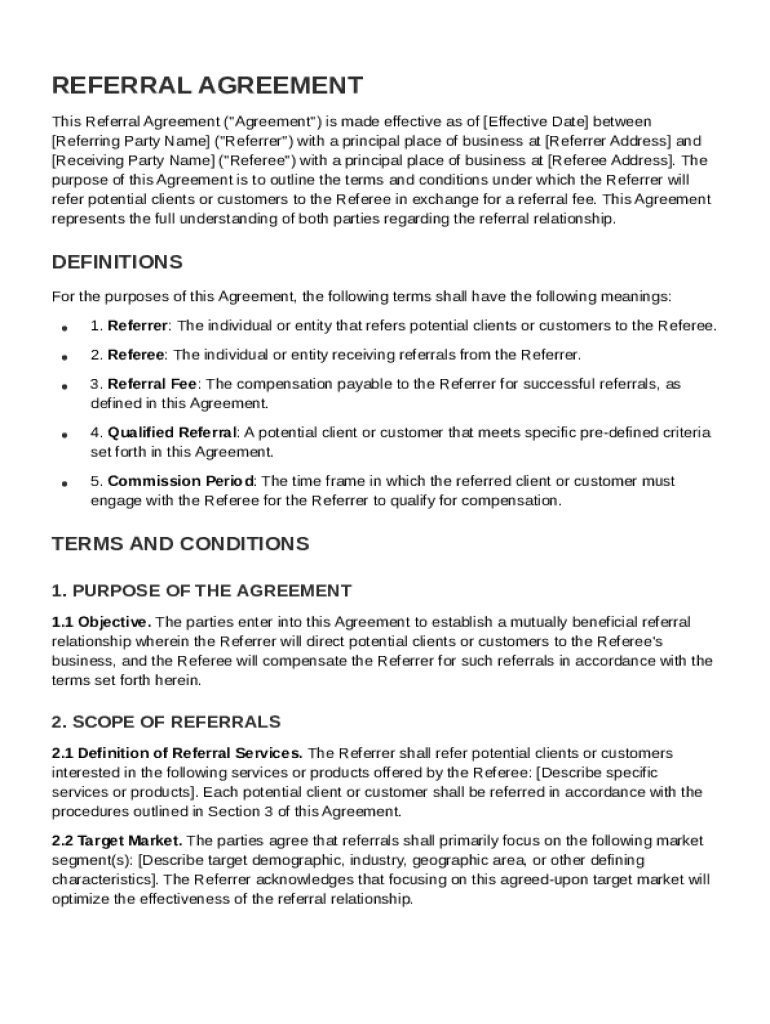







Definition and Meaning of a Referral Contract Template
A Referral Contract Template serves as a pre-drafted document designed to outline the terms of a referral relationship between two parties, typically a referrer and a referee. The primary purpose of this template is to establish clear guidelines regarding the referral process, responsibilities, and compensation for client referrals in a formal, written agreement. These contracts are crucial in various industries that rely on building networks to acquire clients. For instance, real estate agents and consultants often use referral contracts to formalize their agreements. By using a standard template, businesses can ensure that all parties understand their obligations and entitlements, minimizing the potential for disputes.
Key Terms and Their Importance
Proper comprehension of terminology within the Referral Contract Template is essential. Common terms include "referrer," who provides potential client leads, and "referee," who receives these leads. Other important terms relate to the "referral fee," agreed upon as compensation, and "confidentiality clauses," which protect sensitive information exchanged during the referral process. Understanding these definitions ensures that the agreement adheres to industry standards and protects both parties' interests. Clear use of terminology also facilitates precise communication, reducing legal misunderstandings down the line.
Key Elements of the Referral Contract Template
The Referral Contract Template should include several core components essential to defining a successful partnership between the referrer and the referee.
Referral Process
Specifying the referral process is critical to a well-structured contract. The process could include steps like how leads will be communicated, the expected follow-up procedures, and timeframe stipulations. For example, referrals might need to be reported within seven days, with follow-ups within fourteen days.
Payment Structure and Schedule
The compensation framework should clarify whether fees will be a fixed amount or a percentage of the transaction. For instance, a real estate agent might offer a fixed $500 fee per successful client acquisition, or a 10% commission on closed sales.
Dispute Resolution Mechanism
Having a dispute resolution mechanism in place helps manage conflicts that might arise. This may involve specifying arbitration or mediation as preferred methods before pursuing litigation. This prevents extended legal battles and provides an agreed path towards resolving disagreements.
Legal Use of Referral Contract Template
Legal enforceability of the Referral Contract Template is paramount. Contracts must comply with legal requirements to be binding. For instance, under the ESIGN Act, electronic signatures on such documents are recognized as legally equivalent to handwritten signatures. This reduces paperwork and expedites processing. Moreover, the contract should consider any state-specific legal considerations, such as commissioning in certain business dealings, ensuring it follows local laws.
State-Specific Rules
Each state may have unique rules regarding referral agreements. For instance, certain jurisdictions may impose specific licensing requirements for individuals or entities involved in transactions involving real estate referrals. Understanding these variations is essential for maintaining contract legality and avoiding regulatory breaches.
Steps to Complete the Referral Contract Template
-
Review and Customize: Start by reading the template thoroughly. Ensure that the language and terms align with the specific needs of both parties involved.
-
Insert Key Details: Fill in fields such as names, contact details, and specific referral terms. This could include outlining how leads shall be tracked.
-
Define Compensation: Clearly understand and document the payment terms. This should account for when fees are due and any conditions that must be met.
-
Legal Review: It may be wise to consult a legal expert to review the terms, ensuring compliance and coverage of all necessary areas.
-
Signatures: Secure signatures from both parties to solidify the agreement. This can be efficiently done using DocHub's electronic signature feature.
Who Typically Uses the Referral Contract Template
The Referral Contract Template is widely utilized across various professional sectors.
-
Real Estate Agents: Often use it to make formal agreements when clients are transferred to fellow agents.
-
Consulting Firms: Consultants frequently use such contracts to ensure clarity when referring clients for specialized expertise.
-
Service Providers: Industries like financial planning and accounting use these contracts to formalize introductions leading to client engagements.


State-by-State Differences in Referral Contract Template Usage
Referral contracts are subject to state laws and regulations, which can vary considerably.
-
California: Enforces specific privacy laws affecting how referral information is shared.
-
New York: May have stringent disclosure requirements ensuring all parties understand the referral's implications.
Understanding these differences helps in tailoring the contract to comply with local legal standards, ensuring enforceability without unwelcome surprises.
Software Compatibility with Referral Contract Template
DocHub offers seamless integration, making it easy to use the Referral Contract Template within digital ecosystems.
Integration and Usability
-
Google Workspace: Directly import or export contracts from Google Drive, ensuring easy editing and sharing.
-
Cloud Storage Services: Compatible with Dropbox and OneDrive, facilitating storage and retrieval from multiple platforms.
This compatibility enhances flexibility in managing documents, catering to diverse business needs efficiently.
Through such comprehensive coverage of the Referral Contract Template, businesses can understand deeply the nuances of creating, using, and managing such contracts, ensuring successful referral relationships.




