



01. Edit your 9 player netball rotation online
Type text, add images, blackout confidential details, add comments, highlights and more.

Type text, add images, blackout confidential details, add comments, highlights and more.
Draw your signature, type it, upload its image, or use your mobile device as a signature pad.

Send netball rotation sheet for 9 players via email, link, or fax. You can also download it, export it or print it out.
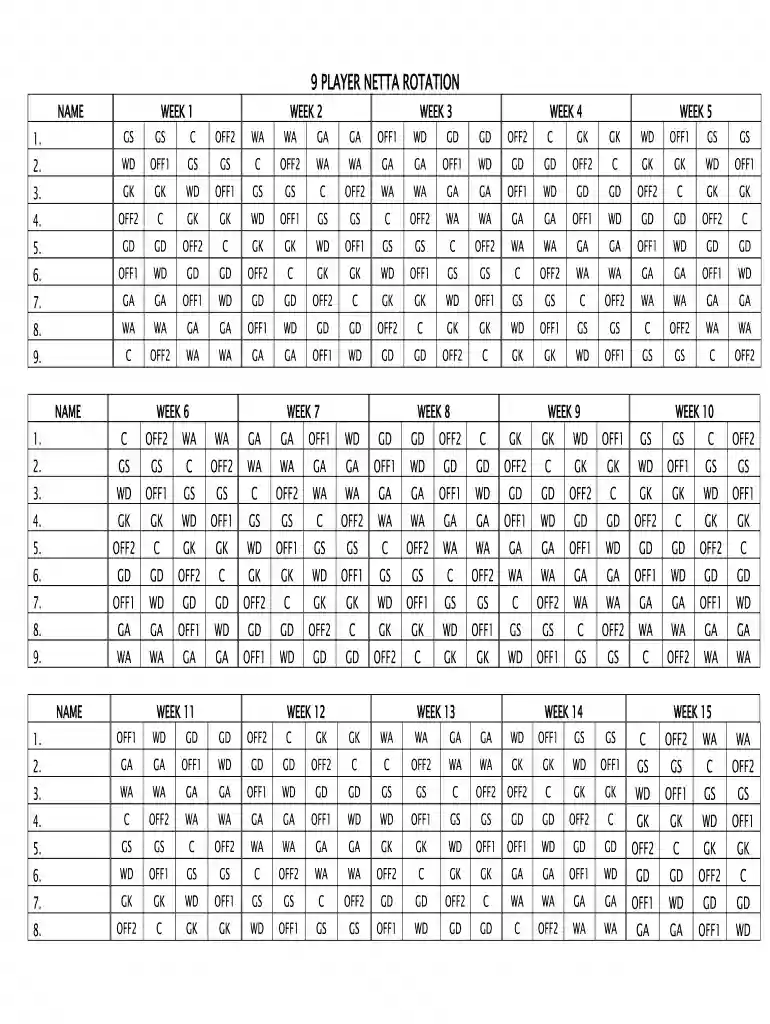
The "9 player netta rotation" refers to a structured schedule designed to allocate playing positions among nine players in a netball team. This system organizes players into various positions, ensuring fairness and balanced play throughout the season. Roles commonly included in this rotation may consist of Goal Shooter (GS), Goal Attack (GA), Wing Attack (WA), Center (C), Wing Defense (WD), Goal Defense (GD), and Goal Keeper (GK).
The primary purpose is to develop player skills by exposing them to multiple positions, while also allowing for rest periods. Each player's assigned position can change weekly or bi-weekly, depending on the specific schedule set by the coach or team manager. This rotation is particularly beneficial in developing a well-rounded skill set among players while optimizing team performance during matches.
Using the 9 player netta rotation effectively involves a clear understanding of each team member's skills and the strategic goals of the team. Here are the steps involved in utilizing this rotation:
Assess Player Skills: Evaluate the strengths and weaknesses of each player. This assessment can include prior experience, specific skill sets, and positional preferences.
Create a Rotation Schedule: Develop a comprehensive rotation sheet that specifies which player will occupy each position for every week of the season. This schedule should account for:
Communicate the Schedule: Share the rotation schedule with players, ensuring they understand how it works and what is expected of them in each role.
Monitor Performance: Track each player's performance in different positions. Use this data to refine the rotation based on performance metrics and player feedback.
Provide Feedback: Regularly offer constructive feedback to players. Highlight areas of improvement and recognize accomplishments in unfamiliar positions, fostering confidence and skill development.
Acquiring a 9 player netta rotation sheet can be achieved through several methods, depending on whether you prefer digital formats or printed resources. Options include:
Online Templates: Many websites offer free or paid templates that can be modified to create a rotation schedule that suits your team. Search for “netball rotation sheet templates” for quick results.
Spreadsheet Software: Utilize software like Microsoft Excel, Google Sheets, or other spreadsheet applications to create a custom rotation schedule. These tools allow for easy modifications and sharing with team members.
Team Management Apps: Several mobile and desktop applications are specifically designed for sports teams, providing features for rotations, scheduling, and communication. Examples include TeamSnap or Heja.
Consult with Coaches: Experienced coaches often have templates or can provide insight into how to create an effective rotation schedule based on their experiences.
Completing the 9 player netta rotation requires a systematic approach that involves creating, implementing, and reviewing the rotation process. Follow these steps:
Establish Goals for the Rotation:
List the Players and Their Skills:
Develop the Rotation Schedule:
Communicate the Plan:
Implement the Rotation:
Gather Feedback and Adjust:
Employing the 9 player netta rotation offers several key benefits to a netball team:
Understanding the key elements of the 9 player netta rotation is essential for successful implementation. These elements include:
Effective management of these elements will help maximize the benefits associated with the 9 player netta rotation, leading to enhanced team performance and individual development.
We've got more versions of the 9 player netball rotation form. Select the right 9 player netball rotation version from the list and start editing it straight away!
| Versions | Form popularity | Fillable & printable |
|---|---|---|
| 2015 | 4.6 Satisfied (43 Votes) |
Sure, electronically drawing your signature is appropriate, but only if you utilize a tool that complies with industry regulations and policies. Try DocHub, which guarantees eSignature validity under ESIGN and UETA requirements. All you need to eSign your netball player rotation spreadsheet is an account with DocHub and an internet connection. Once you open your paperwork in our editor, click Sign and select the Draw option.
You can complete and sign your 9 player netta rotation online, even on a tight deadline. All you need to access high quality editing instruments on any device is a DocHub profile, which you can register in a few moments. When you sign up, add your file or find what you are looking for in our catalog, complete it using the editing instruments you want, and put your electronic signature on it at the end.
At DocHub, your data security is our priority. We follow HIPAA, SOC2, GDPR, and other standards, so you can work on your documents with confidence.
Nineteen professional outfield male players were divided into two teams of 10 and 9 players, respectively. rotation of the players elbow and forearm joints.Read more
Courses Biomedical Studies and Molecular Biology Climate Change and Energy Educational Studies Environmental Law Politics Farming Food Systems FieldRead more


