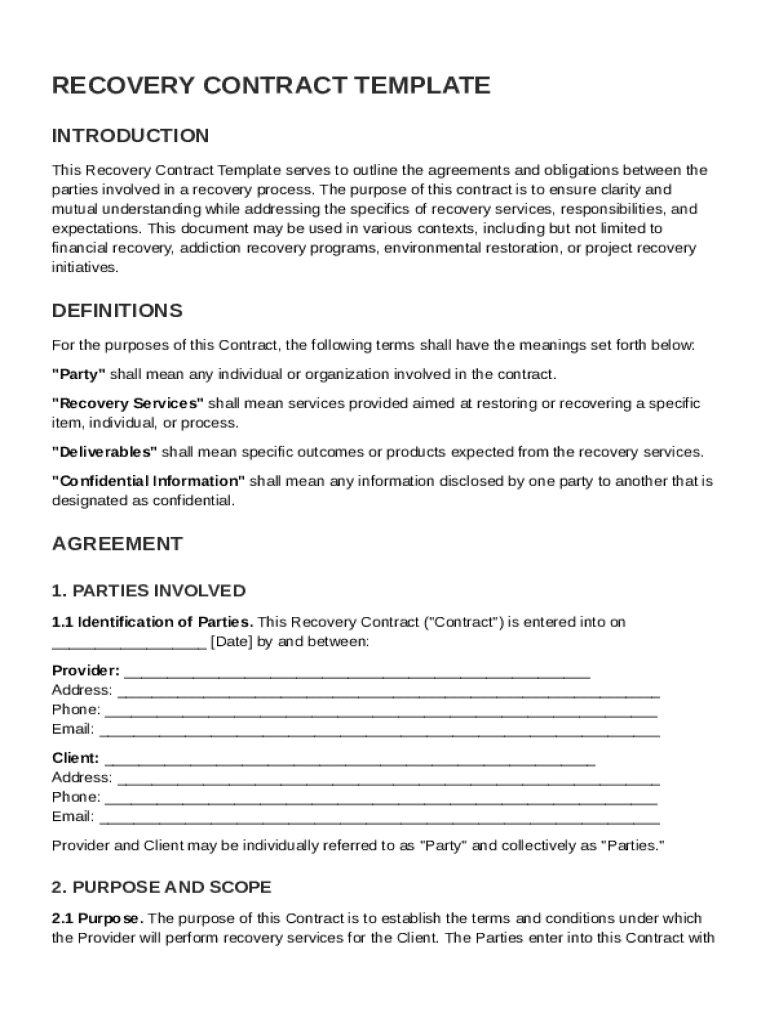







Definition and Meaning of Recovery Contract Template
The Recovery Contract Template is a structured document that outlines the terms and obligations of parties involved in a recovery process. It serves to formalize arrangements in various recovery contexts, such as financial restitution or recovery from addiction programs. The template specifies essential clauses, including the purpose and scope of services, responsibilities of involved parties, compensation structures, confidentiality agreements, termination rights, dispute resolution mechanisms, and other miscellaneous provisions. This ensures clarity and mutual understanding, reducing the likelihood of disputes during the recovery process.
How to Use the Recovery Contract Template
When utilizing the Recovery Contract Template, it is essential to follow a structured approach to ensure all necessary details are accurately captured. Start by identifying the parties involved and outlining the recovery objectives. Ensure the scope of services is clearly defined, detailing who is responsible for each component of the recovery process. Determine compensation terms, payment schedules, and any performance metrics required to evaluate progress. Clarify confidentiality obligations and circumstances under which information may be disclosed. Finally, establish clear dispute resolution procedures, termination conditions, and any jurisdictional preferences for legal matters.
- Identify parties and recovery objectives
- Define the scope of services and responsibilities
- Determine compensation and performance metrics
- Clarify confidentiality obligations
- Establish dispute resolution and termination conditions
Steps to Complete the Recovery Contract Template
Completing the Recovery Contract Template involves several key steps that ensure comprehensive coverage of all required elements. The process begins with gathering relevant information about the parties and the recovery plan. Next, fill out the template sections sequentially, ensuring that each clause is customized to reflect the specific context and needs of the parties involved. Pay particular attention to legal language regarding responsibilities and confidentiality. Once the contract is completed, review it thoroughly to confirm accuracy and completeness. It is often advisable to seek legal consultation to ensure compliance with applicable laws before final signing.
- Gather necessary information
- Fill out each section of the template sequentially
- Customize clauses to fit specific contexts
- Review for accuracy and completeness
- Consult legal professionals if necessary
Key Elements of the Recovery Contract Template
Within the Recovery Contract Template, several key elements are crucial for creating a robust and enforceable agreement. These typically include:
- Purpose and Scope: Clearly articulate the objectives of the recovery process and outline the services to be provided.
- Responsibilities: Define the roles and duties of each party, detailing the actions required to support the recovery efforts.
- Compensation: Specify payment terms, including amounts, schedules, and any conditions for payment.
- Confidentiality: Include clauses that protect sensitive information, determining who may access this data and under what circumstances.
- Termination Rights: Outline the terms under which the agreement may be terminated early by either party.
- Dispute Resolution: Detail procedures for resolving conflicts, including mediation or arbitration agreements.
- Miscellaneous Provisions: Cover additional terms, such as amendments, notices, and governing law.
Important Terms Related to Recovery Contract Template
Understanding key terms within the Recovery Contract Template is essential for all parties. Common terms include:
- Obligor/Obligee: Referring to the party responsible for actions/services and the party benefiting from them.
- Indemnity: Protection against losses or damages incurred during the recovery process.
- Force Majeure: Conditions under which obligations may be suspended due to uncontrollable circumstances.
- Breach of Contract: A violation of any agreement term, potentially leading to legal consequences.
- Non-Disclosure Agreement (NDA): Terms preventing the sharing of confidential information outside the specified purposes.
These terms provide a foundation for understanding rights and duties within the contract, ensuring informed decision-making.
Digital vs. Paper Version of the Recovery Contract Template
The choice between a digital or paper version of the Recovery Contract Template depends on several factors, including accessibility, security, and integration with other systems. Digital formats offer the advantage of easy storage, sharing, and editing, promoting seamless collaboration among parties. They also facilitate the use of tools such as electronic signatures to simplify the signing process. However, paper versions can be preferred in cases where traditional record-keeping or physical signatures are necessary or required by legal stipulations. Assessing organizational needs and preferences will guide the decision towards the most appropriate format for all parties involved.
- Digital Advantages: Easy storage, sharing, editing, use of electronic signatures
- Paper Advantages: Compliance with specific legal or organizational requirements, traditional record-keeping
Examples of Using the Recovery Contract Template
Recovery Contract Templates are versatile and applicable to various scenarios:
- Financial Recovery: Used when a business experiences a financial setback, detailing creditors' expectations and repayment plans.
- Addiction Recovery Programs: Formalize participation in programs, outlining available services, participant responsibilities, and confidentiality standards.
- Disaster Recovery for Businesses: Establishes responsibilities and compensations after natural disasters to restore operations.
- Settlement Agreements: Facilitate negotiations between parties in a dispute, documenting agreed-upon resolutions and future actions.
These examples illustrate the diverse applications of Recovery Contract Templates, underscoring their importance in ensuring structured agreements tailored to specific recovery efforts.
Legal Use of the Recovery Contract Template
For the Recovery Contract Template to serve its purpose effectively, it must comply with legal standards relevant to the agreed jurisdiction. In the United States, this involves ensuring that all terms meet state-specific contractual laws. Parties must verify that signatures are duly captured via legally recognized methods, like electronic signatures that comply with ESIGN and UETA acts. Contracts must also contain clear definitions of penalties for breaching or non-compliance and outline procedures for legal disputes. Engaging legal expertise during the drafting and review stages enhances compliance and minimizes the risk of enforceability issues.
- Compliance with state-specific laws
- Use of recognized signature methods
- Defined penalties and legal procedures
Who Typically Uses the Recovery Contract Template
The Recovery Contract Template is utilized by a diverse range of stakeholders involved in recovery-oriented processes. Businesses and financial institutions employ it during restructuring or recovery proceedings to delineate creditor arrangements and payment plans. Legal professionals and mediators use these templates when drafting settlement agreements, ensuring clarity for all parties involved in legal disputes. In healthcare, addiction recovery centers employ these contracts to formalize program participation and expectations. Non-profit organizations also use such templates to structure recovery efforts in community projects. Each user group relies on the contract to achieve resolution and progress in recovery initiatives.