




01. Edit your form online
Type text, add images, blackout confidential details, add comments, highlights and more.

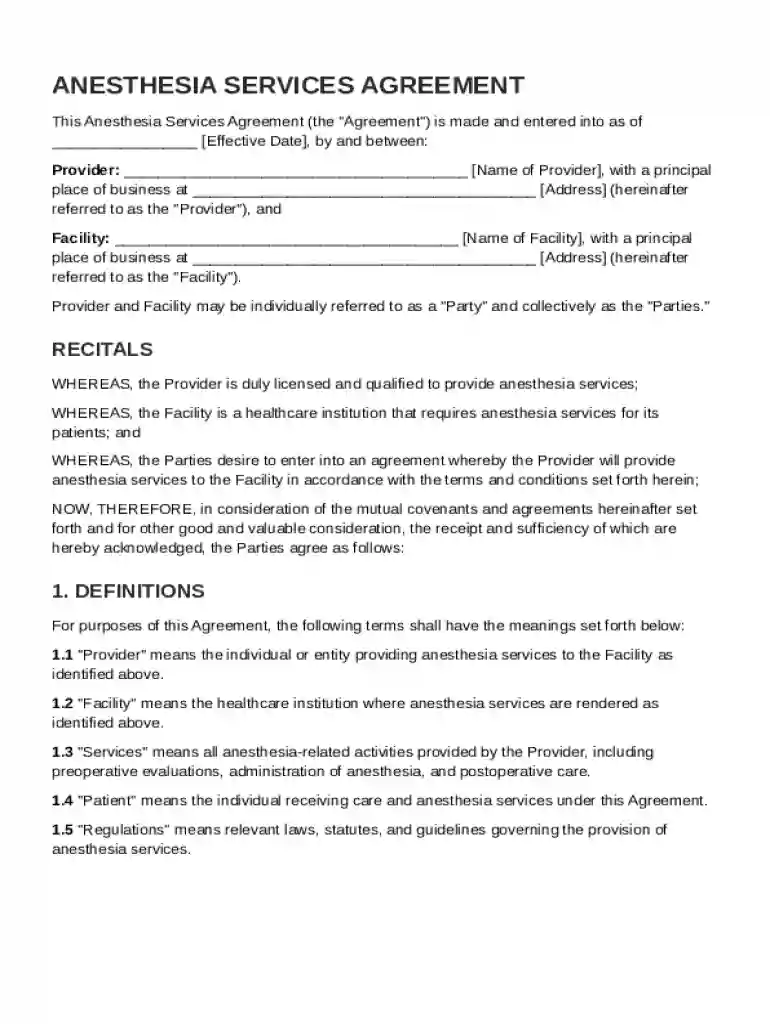
Type text, add images, blackout confidential details, add comments, highlights and more.

Draw your signature, type it, upload its image, or use your mobile device as a signature pad.

Send it via email, link, or fax. You can also download it, export it or print it out.
The Anesthesia Contract Template serves as a formal agreement outlining the expectations and responsibilities between an anesthesia provider and a healthcare facility. This document plays a crucial role in defining the scope and terms of the anesthesia services provided. It typically includes detailed sections on the scope of services, compensation structures, confidentiality clauses, and liability provisions. The template ensures that both parties have a clear understanding of their obligations, which is essential for maintaining professional standards and compliance with regulations.
Utilizing the Anesthesia Contract Template involves a series of steps to customize the document to suit the specific needs of the agreement. Start by reviewing each section to ensure it covers all required elements, such as service details, payment terms, and confidentiality agreements. Modify the template to include specific information about the parties involved, the duration of the contract, and any unique requirements or conditions. Collaborate with legal advisors to ensure the contract meets all regulatory and legal standards. Finally, both parties should thoroughly review and approve the final version before signing to confirm mutual agreement.
The template comprises several critical components that should be accurately addressed:
The contract template can be legally binding if it meets the required legal standards. It should comply with federal and state regulations governing anesthesia services and healthcare contracts. Legal use demands careful customization to ensure no conflicts with existing laws and that all clauses are enforceable. Consulting a legal professional during the drafting process can help navigate complex legal requirements and ensure full compliance.
This template is primarily used by anesthesia providers and healthcare facilities, such as hospitals and clinics, establishing a formal relationship for the provision of anesthesia services. It can also be utilized by legal teams and healthcare administrators who manage contractual agreements in healthcare settings. These entities rely on the template to standardize contract creation processes, ensuring consistency and legal compliance.


Due to varying regulations, state-specific adjustments might be necessary when using the Anesthesia Contract Template. Each state has its own healthcare-related laws that can impact the terms of the contract, particularly around healthcare practice standards, patient privacy, and lawful disclosures. It is essential to incorporate any state-specific requirements into the contract, which might involve consulting with local legal experts to align the document with each jurisdiction’s regulatory framework.
Failing to adhere to the established terms within the Anesthesia Contract Template can lead to several consequences. Potential penalties include legal disputes, financial liabilities, and damage to professional reputations. Healthcare providers may also face regulatory actions if non-compliance leads to violations of healthcare laws or patient safety standards. Ensuring all clauses are fulfilled as agreed can prevent disputes and the associated repercussions.
Several business types can benefit from using an Anesthesia Contract Template:
At DocHub, your data security is our priority. We follow HIPAA, SOC2, GDPR, and other standards, so you can work on your documents with confidence.





This transmittal introduces Chapter 40, Hospital and Hospital Health Care Complex Cost Report,. Form CMS-2552-10, which contains instructions for the completion
Aug 17, 2017 Contract opportunities on SAM.gov Search current federal contract opportunities and procurement notices. Forms Search for a government form.
Aug 6, 2024 The University agrees to appoint the Trainee(1), and the Trainee accepts appointment, as a Trainee under the following terms and conditions.


