






Definition and Meaning of a Research Collaboration Agreement Template
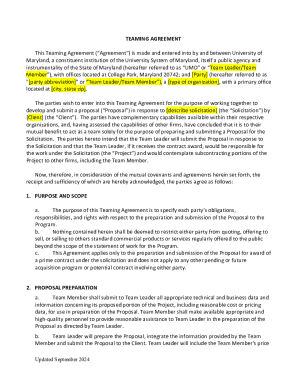
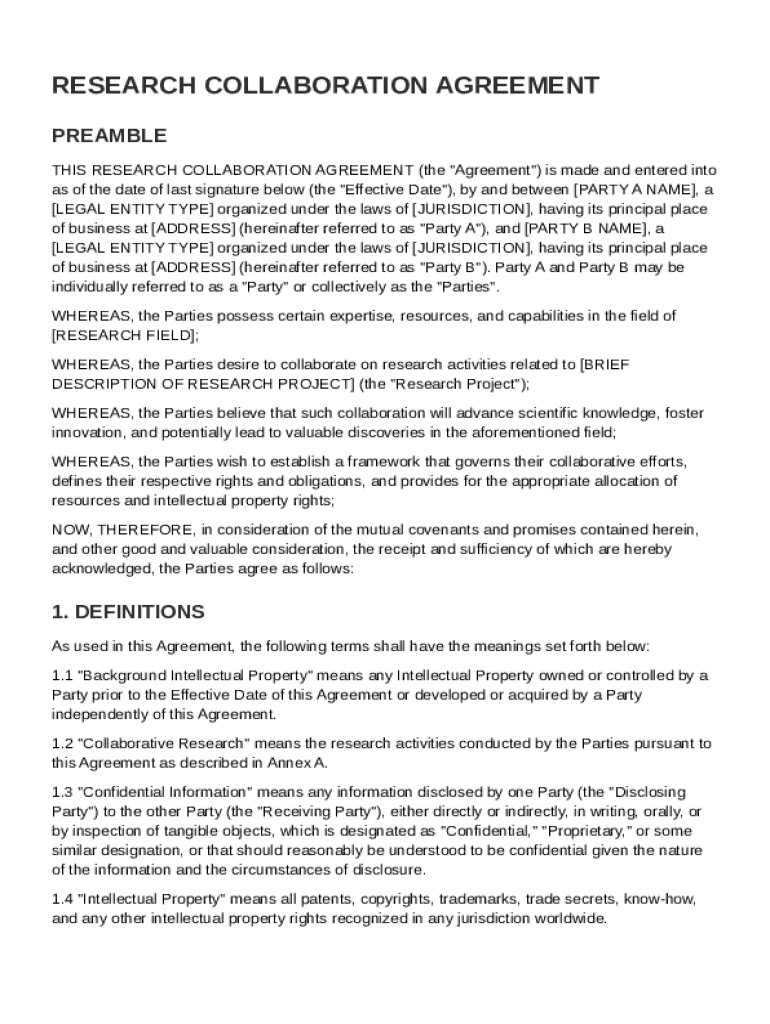
A Research Collaboration Agreement Template serves as a foundational document between parties wishing to collaborate on a specific research project. This template defines the scope of the collaboration, outlining roles, responsibilities, and contributions of each party involved. The template serves not merely as a contractual obligation but as a roadmap for seamless cooperation, facilitating scientific advancement and innovation through structured partnership. It typically covers financial commitments, intellectual property rights, confidentiality, and dispute resolution mechanisms.
Essential Components
- Roles and Responsibilities: Clarifies individual duties and expectations.
- Financial Contributions: Outlines budgetary commitments for each party.
- Intellectual Property Rights: Defines ownership and usage rights for research results.
How to Use the Research Collaboration Agreement Template
Navigating the Research Collaboration Agreement Template involves understanding its sections and customizing them to fit the specific needs of the collaborative project. This template is generally pre-structured to ensure that crucial aspects of the collaboration are covered.
Step-by-Step Guide
- Identify Collaborating Parties: Clearly state the entities involved in the agreement.
- Define Project Scope: Outline the objectives and timelines of the research project.
- Resource Allocation: Specify contributions such as funding and personnel.
- Customize Terms and Conditions: Adjust clauses related to intellectual property and confidentiality.
- Review and Finalize: Both parties should examine the document thoroughly before signing.
Practical Examples
- Academic Collaborations: Universities might use this template to formalize partnerships with research organizations.
- Corporate Research: Companies integrating with external institutes for product development.
Steps to Complete the Research Collaboration Agreement Template
Completing the Research Collaboration Agreement Template involves some key steps that ensure the document is comprehensive and legally binding. Each section of the agreement must be filled out accurately to reflect the specifics of the collaboration.
Detailed Process
- Gather Necessary Information: Compile all relevant details about the project and parties involved.
- Draft Initial Agreement: Use the template to draft the initial terms, capturing specific project requirements and expectations.
- Consult Legal Expertise: Seek legal advice to ensure all clauses comply with applicable laws.
- Negotiate Terms: Discuss and mutually agree upon terms, facilitating adjustments as needed.
- Finalize Agreement: Review the finalized document in detail before signing to ensure mutual understanding.
Important Considerations
- Termination Clauses: Include conditions under which the agreement can be ended.
- Dispute Resolution: Establish a mechanism for resolving disagreements amicably.
Key Elements of the Research Collaboration Agreement Template
Understanding the key elements of a Research Collaboration Agreement Template is critical for ensuring smooth and effective cooperation among collaborating entities. Each element serves a specific function in the agreement, providing clarity and reducing the potential for conflicts.
Main Components
- Introduction: Sets out the purpose of the collaboration and the project scope.
- Contributions of Parties: Details what each party will contribute, including personnel, funding, and resources.
- Management Structure: Defines how the project will be coordinated and managed.
- Rights and Obligations: Emphasizes each party's rights in relation to the intellectual property and their obligations towards confidentiality.
- Duration and Termination: Specifies the agreement duration and conditions for termination.
Real-World Scenarios
- Pharmaceutical Testing: Joint ventures between pharmaceutical companies and research labs could specify drug testing responsibilities.
- Technology Research: Collaborations in developing new tech products may include hardware and software contributions.
Legal Use and Implications
The legal application of a Research Collaboration Agreement Template ensures that all research activities are conducted within a well-defined and lawful framework. Legal guidance helps in avoiding potential disputes or issues that could arise during the collaboration.
Legal Framework
- Compliance: Ensures adherence to relevant laws and regulations applicable to the research domain.
- Contractual Obligations: Legally binds parties to the agreed terms.
- Enforcement of Rights: Protects intellectual property and other collaborative outcomes.
Complex Legal Terms
- Indemnity Clauses: Protect parties against losses due to potential legal actions.
- Governing Laws: Specifies jurisdictional laws applicable to the agreement.
Examples of Using the Research Collaboration Agreement Template
The practical utility of a Research Collaboration Agreement Template is apparent in a variety of collaborative scenarios. Examples illustrate how different sectors use this template to facilitate cooperation on research projects.
Academic Partnerships
- University and Research Institute Collaborations: Universities frequently partner with specialized research institutes to advance scientific understanding, requiring structured agreements to outline each party's role and contribution.
Corporate Joint Ventures
- Technology Companies Collaborating: Tech firms might engage in joint ventures to accelerate innovation in areas such as artificial intelligence, with careful allocation of resources and responsibilities through a formal agreement.
Software Compatibility and Integration
The Research Collaboration Agreement Template, being a document that can exist in multiple formats, often needs integration with document management systems for easy editing and sharing.
Digital Platform Usage
- Compatibility with DocHub: Easily integrate the template into systems like DocHub for seamless editing and collaboration.
- Cloud Storage Support: Use Google Drive or Dropbox for storing and sharing draft agreements to ensure all parties have access to the latest version.
Technical Considerations
- File Formats: Ensure compatibility with commonly used formats such as DOC and PDF for easy distribution and signing.
- Electronic Signing: Utilize platforms that support electronic signatures for convenience and legality adherence.
State-Specific Rules for Research Collaboration Agreements
When drafting a Research Collaboration Agreement Template, it is crucial to take into account state-specific laws and regulations. Different states may impose unique requirements concerning intellectual property, confidentiality, and other elements.
Overview of Variations
- State Intellectual Property Laws: Some states have distinct stipulations regarding the ownership of research outcomes, especially for publicly funded projects.
- Confidentiality Agreements: Varying rules may exist on what constitutes confidential information and how it should be protected.
Application for U.S. Entities
- California: Known for stringent privacy laws which could impact collaboration agreements involving personal data.
- Texas: Generally has more flexible business laws, which might affect agreement structuring differently than in other states.
Understanding these aspects ensures that the collaboration remains legally sound across different jurisdictions.