






Definition & Meaning
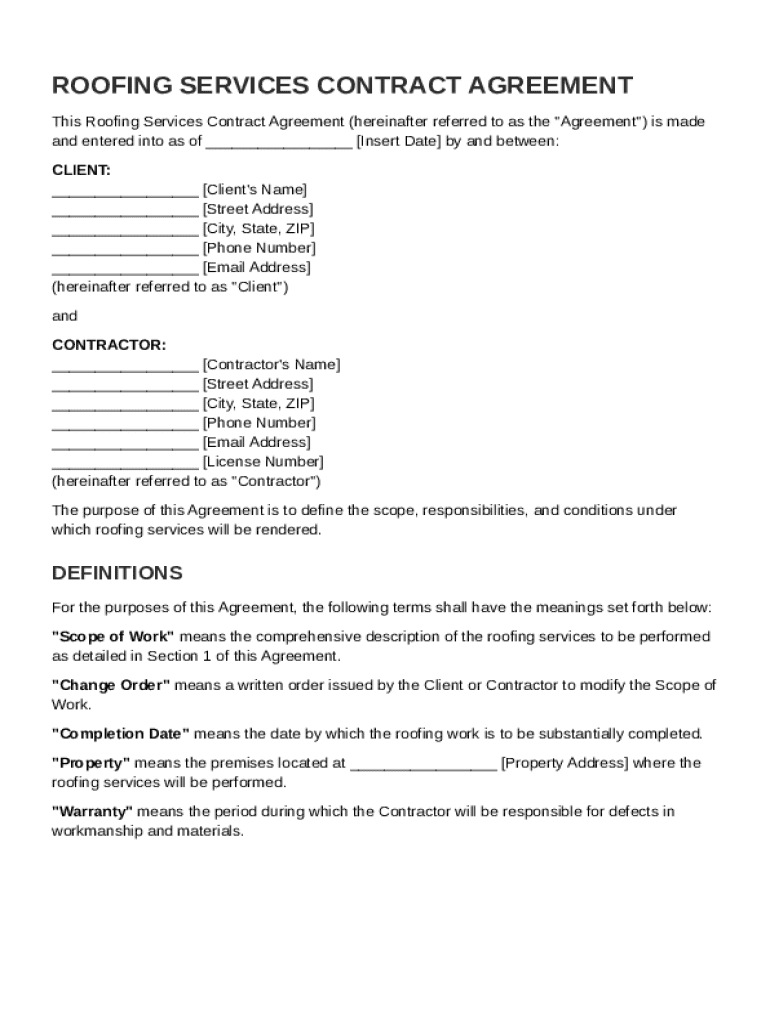
The Roofing Contract Template is a predefined document format utilized to establish clear agreements between a client and a roofing contractor. This template lays out the critical elements of a roofing services agreement including the scope of work, timelines, payment terms, and responsibilities of each party. It acts as a legal framework to prevent misunderstandings by ensuring all involved parties have a mutual understanding of the contract's provisions. This document is essential in the roofing industry as it helps in formalizing the relationship and expectations between the contractor and the client.
Key Elements of the Roofing Contract Template
Understanding the components of a Roofing Contract Template is crucial for constructing a comprehensive agreement. Key elements include:
- Scope of Work: Detailed description of the tasks to be completed, including materials and techniques to be used.
- Payment Terms: Outline of the payment schedule, including deposit, progress payments, and final payment.
- Responsibilities: Clear delineation of duties for both the contractor and the client, such as site access or preparation.
- Change Orders: Procedures for any alterations in the original work plan, including how costs will be managed.
- Completion and Acceptance: Criteria for project completion and client acceptance, often linked to inspection and approval processes.
- Warranties: Details about any warranties on labor or materials, specifying duration and coverage.
- Dispute Resolution: Methods for addressing disagreements, such as mediation or arbitration.
- Termination Clause: Conditions under which the contract can be prematurely ended by either party.
Steps to Complete the Roofing Contract Template
Completing a Roofing Contract Template requires following several essential steps for accuracy and compliance. A step-by-step breakdown includes:
- Review the Template: Ensure the template meets local regulatory requirements and captures all necessary project details.
- Fill Out Project Specifics: Include client and contractor names, project address, and start and end dates.
- Define the Scope of Work: Clearly outline all roofing activities, materials to be used, and any special considerations.
- Set Payment Schedules: Establish timelines for deposits, progress payments, and conditions for the final payment.
- Establish Duties: Assign responsibilities like site accessibility or clean-up duties to the appropriate parties.
- Address Change Orders: Specify how changes to the project will be handled and financially reconciled.
- Solidify Dispute Resolution Methods: Choose a method for resolving disputes and include it within the contract.
- Finalize with Signatures: Obtain signatures from both parties to validate the contract legally.
Legal Use of the Roofing Contract Template
The Roofing Contract Template serves as a legally binding document when properly executed. It ensures all parties are clear about their obligations, significantly reducing the potential for disputes. Legal facets include adhering to state-specific contract laws, ensuring all contractual obligations are legally enforceable, and adhering to the ESIGN Act for any electronic versions. This also encompasses ensuring the document remains compliant with regulations concerning warranties and consumer rights protection, which vary state-by-state.
State-Specific Rules for the Roofing Contract Template
While the Roofing Contract Template standardizes the agreement process, each state might have specific rules that influence its contents:
- License Requirements: Some states require roofing contractors to be licensed or registered.
- Insurance Provisions: States like California mandate contractors to carry specific insurance coverage.
- Cancellation Clauses: Potentially differing between states, some areas offer clients specific time windows to cancel contracts without penalty.
- Statutory Warranties: State-mandated warranty durations could affect contractual terms extending beyond the contractor's offered warranty.
Who Typically Uses the Roofing Contract Template
The template is mainly used by:
- Contractors: Roofing contractors draft these agreements to outline expected services and protect their interests.
- Homeowners and Commercial Clients: Customers who seek to have clear terms documented before the commencement of roofing services.
- Project Managers: Involved in larger remodeling or construction efforts, ensuring all subcontractor terms are documented.


Software Compatibility
The Roofing Contract Template can be managed seamlessly on digital platforms like DocHub, which allows for dynamic editing, signing, and sharing without needing additional conversion. Compatibility with formats such as PDF, DOC, and cloud-based platforms like Google Drive ensures that users can efficiently work with documents from almost any device or software environment — streamlining the process of managing contractual agreements. This cross-platform operability assures that users can avoid hurdles related to software inconsistencies.
Examples of Using the Roofing Contract Template
In practical scenarios, the Roofing Contract Template proves invaluable across various contexts:
- Residential Projects: Homeowners entering into agreements with local contractors for roof installation or repair.
- Commercial Developments: Use in large-scale building projects requiring clear delineation of roofing work specifics.
- Subcontract Coordination: General contractors coordinating with roofing subcontractors to ensure work aligns with broader project goals.
In each instance, the template ensures that all parties are aligned regarding their roles, responsibilities, and the overall project workflow.