






Definition and Meaning
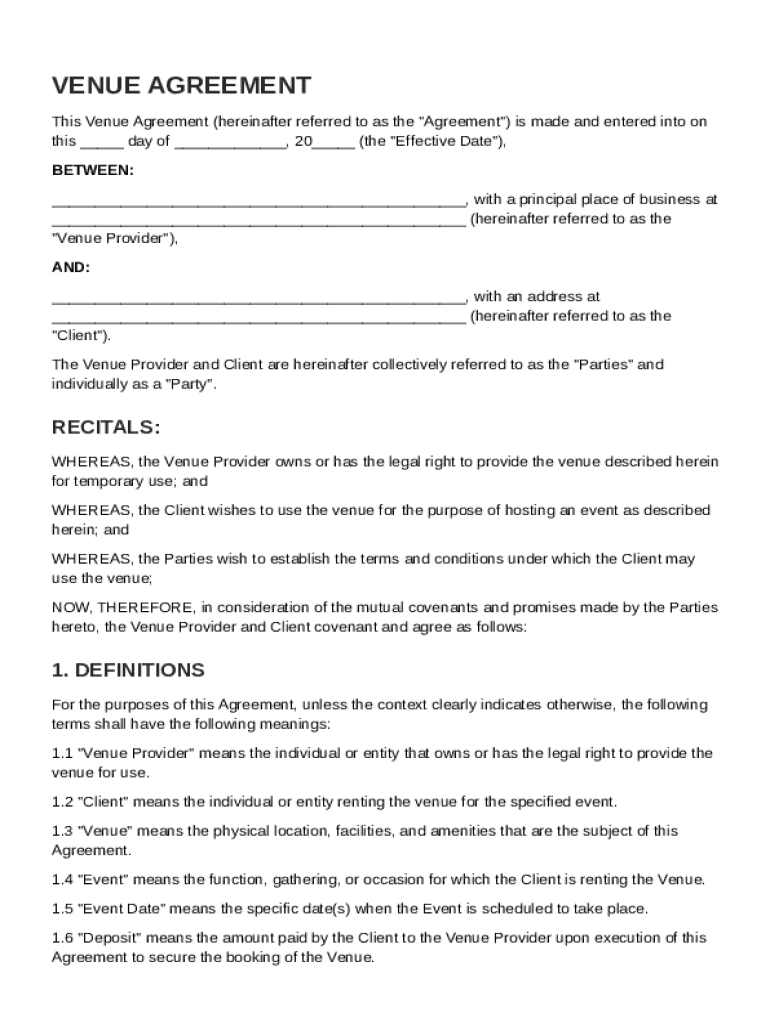
The Venue Agreement Template is a formal document outlining terms and conditions between a venue provider and a client. This agreement governs the rental of a venue for events, ensuring both parties have a clear understanding of their responsibilities and expectations. Typically, it includes details about the venue, event specifics, payment terms, and much more to prevent potential disputes. It serves to protect the interests of both parties involved by providing clarity and a detailed framework for the contractual relationship.
Components of a Venue Agreement
- Defining Parties: The agreement identifies the venue provider and the client, clearly outlining their roles.
- Event Details: This includes the event's date, time, and type, ensuring all details are covered.
- Payment Terms: Clear terms for deposits, final payments, and any additional costs are set out.
- Venue Use and Restrictions: Specifies how the venue can be used and any restrictions in place, such as capacity limits.
Key Elements of the Venue Agreement Template
The template encompasses several critical elements that both parties must agree upon before the venue rental takes place. These elements provide a comprehensive framework that governs the entire transaction.
Main Provisions
- Definitions and Interpretations: Clarifies key terms used throughout the agreement to avoid any potential misunderstandings.
- Insurance Requirements: Often requires the client to provide proof of insurance, including liability coverage, to protect against any incidents during the event.
- Cancellation Policy: Details the conditions under which the agreement can be canceled, what refunds will be provided, or penalties incurred.
- Force Majeure: Addresses unforeseen events like natural disasters, and how they may affect the agreement, typically excusing both parties from obligations without liability.
How to Use the Venue Agreement Template
Utilizing the venue agreement template involves several steps to ensure it's filled out correctly and effectively serves its purpose.
Steps to Completion
- Identify Parties Involved: Clearly state the names and addresses of the venue provider and the client.
- Complete Event Details: Specify the date, duration, and nature of the event within the template.
- Agree to Terms: Both parties should review and agree on the payment terms and usage conditions of the venue.
- Review Legal Obligations: Ensure that all necessary insurance and licensing requirements are fulfilled.
- Sign the Agreement: After confirming all terms, both parties should sign the document to solidify the agreement legally.
Legal Use of the Venue Agreement Template
The legal framework of the venue agreement ensures that both parties are legally protected. This agreement adheres to relevant laws and regulations, providing security and peace of mind for everyone involved.
Compliance with Legal Standards
- Governing Law Clause: Specifies which state’s laws will govern the agreement, which is typically useful in case of disputes.
- Terms of Liability: Outlines each party's liability, limiting unreasonable claims and setting legal boundaries for responsibilities.
- Severability Clause: Ensures that if part of the agreement is found invalid or unenforceable, the remainder of the contract still stands.
Examples of Using the Venue Agreement Template
Various scenarios highlight the application of a venue agreement template. These examples emphasize its effectiveness in diverse settings.
Real-World Scenarios
- Corporate Events: A company renting a conference hall for its annual meeting uses this agreement to outline terms including AV requirements and specific seating arrangements.
- Weddings: Couples use the template to secure a venue for their wedding, detailing catering setup, decoration rules, and timing for each segment of the event.
- Community Gatherings: A non-profit organization planning a fundraising event ensures all regulatory compliance and insurance obligations are met through the agreement template.
State-Specific Rules for the Venue Agreement Template
Though a venue agreement template offers a general framework, state laws can influence specific clauses. Understanding these variations is crucial to ensure compliance.
Factors Influencing State Compliance
- Regulatory Differences: Some states may have distinct insurance or liability requirements pertaining to public events.
- Tax Implications: States may impose varying taxes on venue rentals that need to be addressed within the agreement.
- Local Licensing Laws: States and municipalities might require different licenses for events which should be part of the agreement to avoid penalties.
Important Terms Related to the Venue Agreement Template
Understanding key terms within a venue agreement template is essential for effective utilization and management.
Glossary of Terms
- Deposit: An initial payment made to reserve the venue, often non-refundable.
- Indemnification: A provision where one party agrees to compensate the other for harm or losses arising from the agreement.
- Default: Failure to meet the obligations within the agreement, potentially leading to termination or penalties.
Software Compatibility
Essential to the modern use of venue agreements is compatibility with document management and editing software. This compatibility ensures users can efficiently process and modify agreements digitally.
Supported Software Platforms
- DocHub: Enables comprehensive form editing and management through integration with cloud services like Google Drive.
- Adobe Acrobat: Provides robust PDF editing tools necessary for modifying complex documents.
- Microsoft Word: Useful for initial drafting and template customization features, allowing flexibility in form adjustments.