







Definition and Meaning
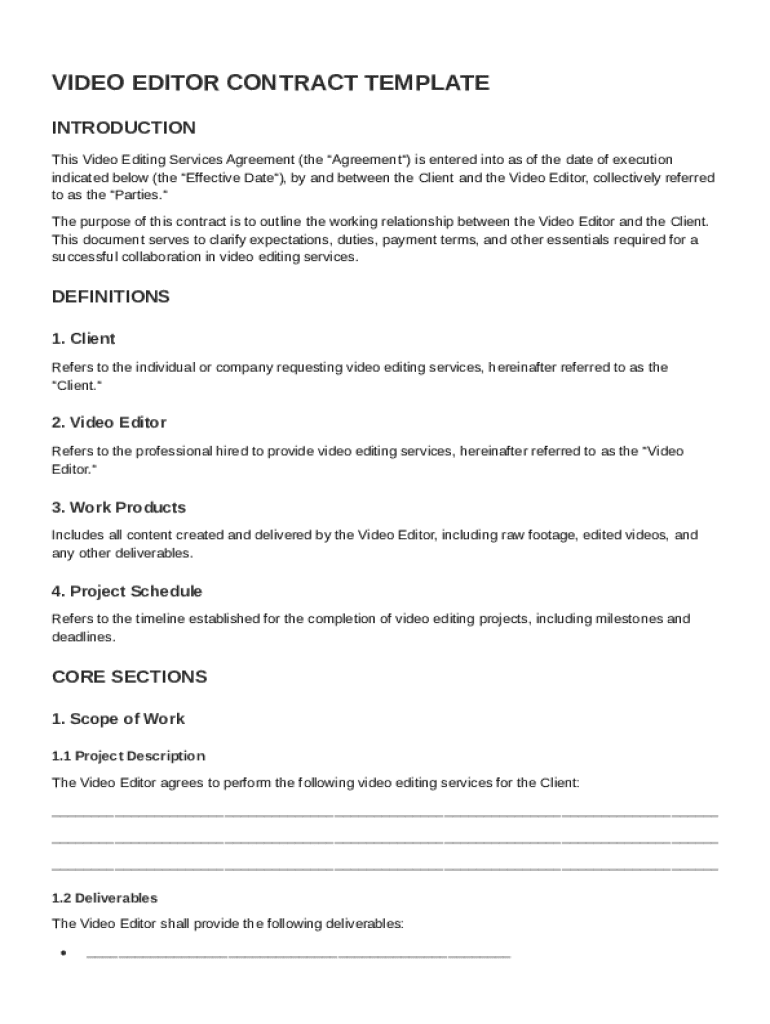
The Video Editor Contract Template serves as a foundational document outlining the agreement between a client and a video editor. It clearly defines the terms of collaboration, including the scope of work, compensation, timelines, ownership rights, confidentiality obligations, and mechanisms for dispute resolution. This template is essential for establishing mutual expectations and responsibilities, ensuring both parties are aligned on the services to be provided. It functions as both a legal safeguard and a procedural guide that facilitates a smooth working relationship throughout the project duration.
How to Obtain the Video Editor Contract Template
Accessing the Video Editor Contract Template can be streamlined through platforms like DocHub, which provide users with the flexibility to download and customize forms specific to their needs. The template can be imported from various sources, including cloud storage services such as Google Drive or Dropbox, ensuring it aligns seamlessly with existing document workflows. Users can choose between a downloadable version for offline use or an online format that allows immediate editing and signing capabilities from any browser.
Steps to Complete the Video Editor Contract Template
-
Fill In Basic Details: Begin by entering the names and contact information of both the client and the video editor. This section should also cover the date of agreement and an overview of the project.
-
Define the Scope of Work: Describe in detail the specific tasks the video editor will undertake, including any deliverables, revisions, and final output expectations.
-
Establish Payment Terms: Clearly outline the payment structure, including rates, deposit requirements, and payment schedule. Include any penalties for late payments and conditions for payment adjustments.
-
Set Project Timelines: Specify critical deadlines, including project start and end dates, key milestones, and delivery timelines for each stage.
-
Determine Ownership and Rights: Detail who retains the rights to the final video product, and under what conditions the rights can be transferred or shared.
-
Outline Confidentiality Obligations: Include clauses that protect sensitive information shared during the project, ensuring both parties agree to maintain confidentiality.
-
Discuss Termination Conditions: Define scenarios that might lead to the contract's termination, such as breaches of agreement, failure to meet expectations, or external factors.
-
Incorporate Dispute Resolution Processes: Agree on methods for resolving disagreements, such as mediation or arbitration, to avoid protracted legal battles.
Why Use the Video Editor Contract Template
Utilizing the Video Editor Contract Template offers multiple benefits for both parties involved in video production. It acts as a preventive measure against potential disputes by delineating clear terms and conditions. The template also instills professionalism by displaying a commitment to structured business practices. Moreover, it provides legal protection, ensuring that all aspects of the project are documented and agreed upon, reducing uncertainties and building trust between collaborators.
Important Terms Related to the Video Editor Contract Template
-
Scope of Work: Comprehensive details on the services to be rendered, including specific tasks and deliverables.
-
Payment Terms: Agreed-upon financial arrangements covering compensation rates, schedules, and non-payment ramifications.
-
Rights and Ownership: Defines the legal ownership of the work product upon completion, vital for protecting intellectual property.
-
Confidentiality: Obligations regarding the nondisclosure of sensitive information exchanged during the project's lifespan.
-
Termination Conditions: Circumstances under which the contract may be nullified, safeguarding both parties against breaches.
-
Dispute Resolution: Pre-agreed methods for settling disagreements, ensuring disagreements are managed efficiently.
Key Elements of the Video Editor Contract Template
A comprehensive Video Editor Contract Template should cover several critical elements to ensure all aspects of the video editing service are addressed:
-
Introduction and Identification: The contract should start with identifying the parties involved and providing a brief project overview.
-
Detailed Work Instructions: An extensive outline of what the video editor is expected to accomplish and the specific standards the work must meet.
-
Financial Details: Clear financial stipulations including total cost, payment intervals, and modalities.
-
Rights Management: Explicit terms regarding the use and distribution of the final product, addressing all copyright considerations.
-
Confidentiality Clause: Protects the confidentiality of proprietary information and trade secrets shared between parties.
-
Exit Strategy: Clearly defined exit clauses that detail how the contract can be dissolved amicably.
-
Signatures: A designated section for both parties to sign, indicating their acceptance of and compliance with the contract’s terms.
Legal Use of the Video Editor Contract Template
Using the Video Editor Contract Template legally binds both parties to the stipulated terms, provided the agreement is signed by all parties involved. It is crucial to ensure that the document complies with applicable state and federal laws within the United States, where most users are based. Legal use involves adhering to relevant regulations, such as electronic signature laws like the ESIGN Act, affirming the validity of digital agreements.
State-Specific Rules for the Video Editor Contract Template
While the Video Editor Contract Template is versatile, users must consider state-specific regulations that might affect the contract’s enforceability. Each state may have unique laws concerning labor rights, payment terms, and contractual agreements in the creative field. For instance, California has stringent guidelines on freelancers dictating distinct employment considerations, whereas New York might have specific laws related to media rights and confidentiality. Understanding and adapting the template to align with local laws ensures it remains valid and legally binding in any jurisdiction.




