







Definition and Meaning
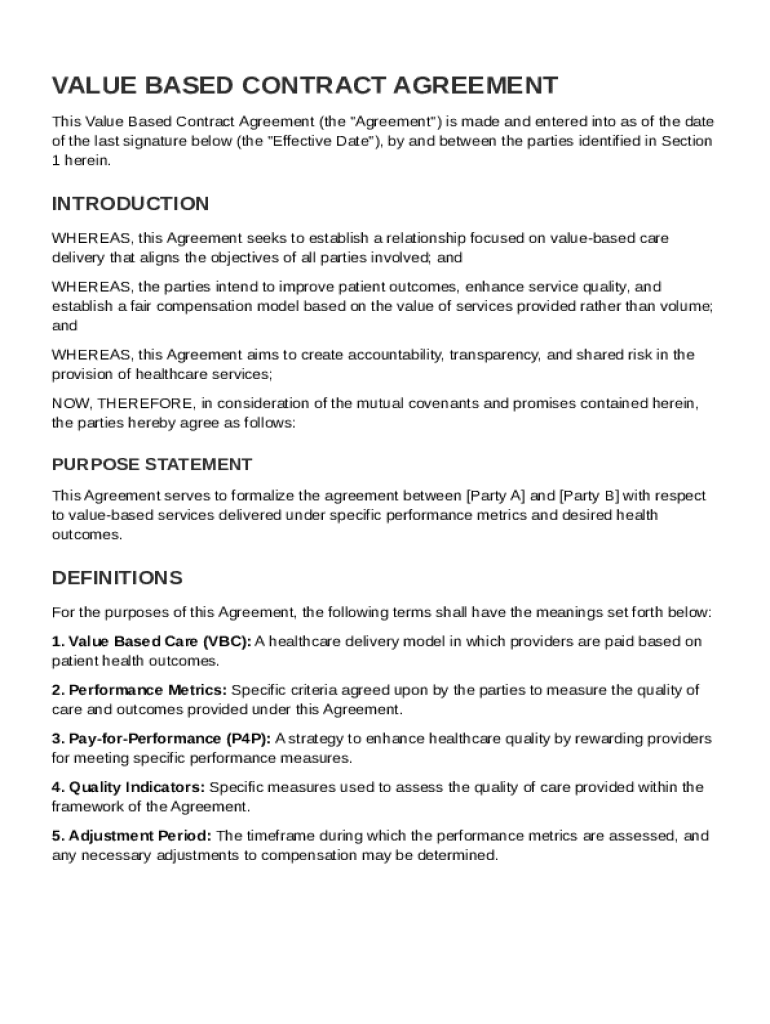
A Value Based Contract Template establishes a partnership between two parties to provide value-based healthcare services. This template prioritizes patient outcomes and service quality over traditional service volume methods. The contract includes provisions for performance metrics and compensation tied to health outcomes, emphasizing a mutual commitment to improving healthcare quality and accountability.
Elements and Components
- Partnership Definition: Establishes the relationship and scope of collaboration.
- Outcome-Focused Compensation: Compensation based on achieved health outcomes rather than service quantity.
- Performance Metrics: Criteria and benchmarks to measure service quality and patient outcomes.
- Shared Accountability: Both parties share risks and benefits, fostering collaborative improvement efforts in healthcare delivery.
How to Use the Value Based Contract Template
Using the Value Based Contract Template entails a structured approach to ensure comprehensive agreement coverage and clarity. Here is a step-by-step guide on using the template effectively:
- Identify Parties Involved: Clearly denote the names and roles of each participating entity.
- Define Objectives: Outline the primary goals, focusing on improving patient outcomes.
- Set Performance Benchmarks: Identify measurable indicators of success.
- Clarify Compensation Structure: Specify payments linked to defined health outcomes.
- Ensure Mutual Risks and Benefits: Develop a framework for shared risks, ensuring alignment of interests.
- Draft and Review: Use the template to draft the contract and review all sections for accuracy and completeness.
Practical Example
For instance, a hospital and an insurance provider might collaborate using this template. They would draft terms indicating how the hospital’s compensation will vary depending on patient readmission rates and overall treatment effectiveness.
Key Elements of the Value Based Contract Template
The template includes several crucial elements ensuring comprehensive contractual agreements:
Comprehensive Role Definition
- Roles and Responsibilities: Detailed descriptions of duties for both parties.
- Contact Points: Designated individuals responsible for communication and implementation oversight.
Performance-Based Payment Structures
- Incentive Models: Outline specific performance incentives tied to patient health outcomes.
- Payment Terms: Detailed terms include payment schedules and methods based on achieved outcomes.
Accountability Measures
- Compliance Protocols: Adherence to relevant healthcare laws and standards.
- Reporting Requirements: Regular progress reports and performance reviews for transparency and accountability.
Steps to Complete the Value Based Contract Template
Completing the Value Based Contract Template requires careful attention to various sections:
- Initial Setup: Begin with basic information about the parties involved and their roles.
- Objective Alignment: Clearly state intended healthcare quality improvements.
- Define Metrics: Establish clear, measurable performance criteria.
- Detail Compensation: Specify how compensation will be handled, focusing on outcomes linked to performance metrics.
- Outline Reporting Procedures: Define how and when performance data will be collected and reported.
- Review Legal Obligations: Ensure compliance with applicable laws and regulations.
- Finalize and Execute: Get approval from legal advisors and obtain necessary signatures for contract execution.
Common Pitfalls
- Vague Objectives: Be specific in goal-setting to avoid misinterpretations.
- Inadequate Measurement: Ensure chosen metrics are accurate and aligned with goals.
- Improper Use of Templates: Tailor the template to fit specific needs rather than using a generic form.
Examples of Using the Value Based Contract Template
The application of the Value Based Contract Template can vary widely based on industry needs:
- Healthcare Systems: Hospitals partnering with private insurers to reduce patient readmission rates.
- Pharmaceuticals: Drug manufacturers entering agreements with providers to link reimbursements to drug efficacy.
- Managed Care Networks: Networked healthcare providers coordinating care improvement and cost efficiencies.
Case Study
A regional health clinic enters a contract with a state health department aiming to improve vaccination rates. The template outlines goals, performance incentives, and reporting procedures, benefiting both parties through mutual goal setting.
Important Terms Related to Value Based Contract Template
Understanding key terms related to the Value Based Contract Template enhances clarity:
- Value-Based Care: A healthcare delivery model focused on patient outcomes rather than service volume.
- Risk Reallocation: Sharing of financial risks between providers and payers to care quality and cost.
- Outcome Measures: Specific standards used to assess the performance and results of healthcare services administered.
Contextualizing Terms
- Accountability: Shared responsibility in achieving specified health outcomes drives improvements and efficiency.
- Performance Indicators: Defined metrics which are pivotal in guiding compensation and improvement strategies.
Legal Use of the Value Based Contract Template
Ensuring the legal applicability of a Value Based Contract Template requires adherence to specific guidelines and laws:
Legal Framework
- ESIGN Act Compliance: Ensures electronic signatures are recognized as valid and legally binding.
- Healthcare Regulations: Adherence to HIPAA and other relevant healthcare laws.
Implementation
- Document Authentication: Use of legally binding electronic signatures to authenticate all contractual components.
- Data Privacy: Compliance with privacy standards for sensitive patient data handled during the contract.
Business Types That Benefit Most from Value Based Contract Template
Several business types find significant utility in using the Value Based Contract Template:
- Healthcare Providers: Hospitals, clinics, and private practices improve patient outcomes and reduce costs.
- Insurance Firms: Structuring payment models with providers to improve health service quality.
- Pharmaceutical Companies: Aligning drug pricing with performance metrics enhances value delivered.
Specific Scenarios
- Collaborative Care Models: Health networks forming partnerships with local governments to improve community health services.
- Chronic Disease Management: Targeted interventions for chronic diseases using structured, outcome-focused agreements.
By focusing on these blocks, the comprehensive understanding of the Value Based Contract Template is achieved, ensuring clarity, efficiency, and legal compliance in its application and execution.




