






Definition & Meaning
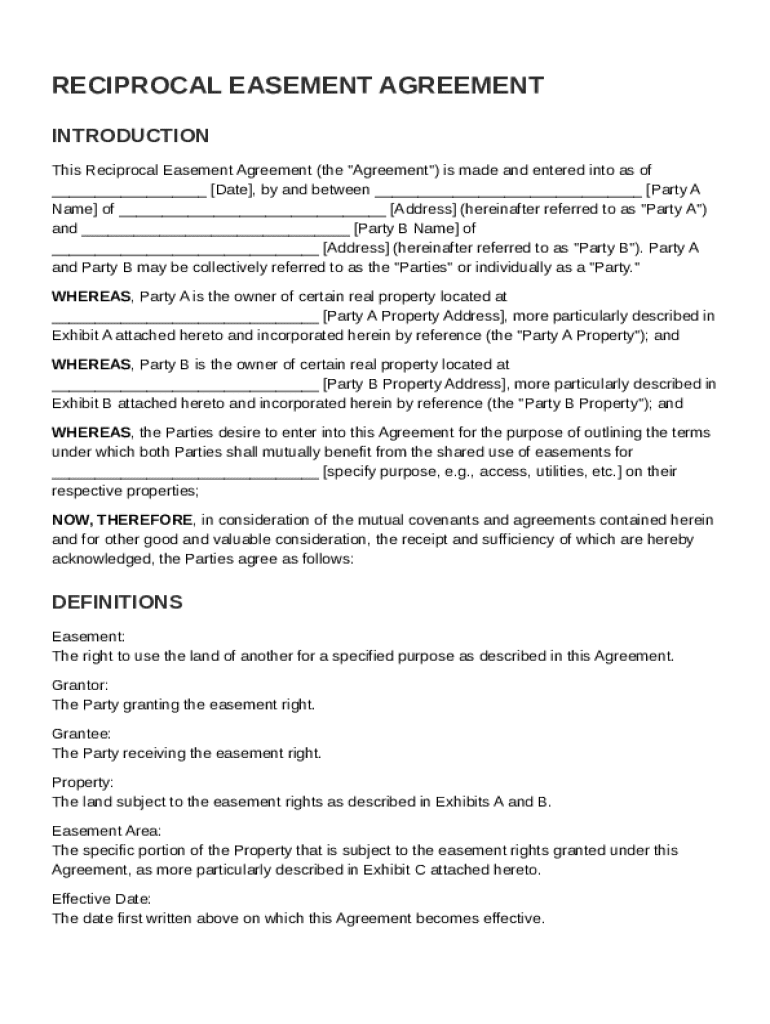
A Reciprocal Easement Agreement is a legal document specifying the shared use of easements between two parties, usually property owners. It outlines the rights and responsibilities associated with mutual access to specific areas, such as driveways or walkways, creating a framework for construction, maintenance, and utilities. This agreement ensures both parties comply with terms, preventing disputes and facilitating cooperation over shared access spaces.
Practical Example
Imagine two neighboring businesses with adjoining parking lots. By creating a Reciprocal Easement Agreement, they can allow each other's customers to use both parking areas, enhancing accessibility for clients. This agreement would detail upkeep responsibilities, usage rights, and any potential liabilities. Thus, it ensures smooth operation and the maintenance of a professional relationship between the businesses.
Key Elements of the Reciprocal Easement Agreement Template
The Reciprocal Easement Agreement includes several key elements necessary for outlining the terms and conditions of the shared easement:
-
Identification of Parties: Clearly names the involved parties, often Property A and Property B.
-
Easement Description: Specifies the geographical and functional aspects of the easements.
-
Rights and Obligations: Details what each party can and cannot do, including maintenance responsibilities.
-
Access Provisions: Describes how and when the easements can be used by either party.
-
Default and Remedies: Outlines consequences if parties fail to comply with the agreement.
Detailed Breakdown
Rights and Obligations
This section specifies that Party A might be responsible for maintaining a shared driveway, while Party B takes care of utilities. It ensures both parties understand and agree to their roles, reducing the opportunity for conflict.
Access Provisions
For instance, Party A may have unrestricted access except during specified emergency maintenance windows, reinforcing things both legally and practically.
Legal Use of the Reciprocal Easement Agreement Template
Ensuring that the Reciprocal Easement Agreement is legally binding entails several considerations:
-
Compliance with State Laws: Each state may have different requirements for easement agreements; ensuring compliance is crucial for validity.
-
Recording the Agreement: Typically requires filing with local land records offices; this makes the agreement known legally and accessible for public viewing.
-
Legal Advice: Consulting with a property attorney to tailor the agreement to specific circumstances and regulations is recommended.
Scenario
If a homeowner decides to sell their property, the recorded agreement ensures the new owner is bound by the same easement obligations, regardless of changes in ownership.
Steps to Complete the Reciprocal Easement Agreement Template
-
Draft the Agreement: Start by entering the legal names and addresses of each party involved.
-
Describe the Easement: Provide a clear written description of the easement area, including a map if necessary.
-
Specify Rights and Obligations: Detail each party's usage rights and maintenance responsibilities.
-
Outline Dispute Resolution: Include a section on how disputes will be resolved, such as through mediation or arbitration.
-
Finalize and Sign: Ensure both parties read and understand the terms before each party signs the agreement.
-
Record the Document: File the signed agreement with the local land records office.
Practical Tips
- Use precise language to prevent future disputes.
- Include conditions for amendments to adapt to changes.
State-Specific Rules for the Reciprocal Easement Agreement Template
Given that local laws can affect the execution of easement agreements, understanding the variations across states is crucial.
Key Differences
-
Statutory Requirements: Some states may require particular wording or clauses.
-
Recording Fees: Different states may levy varying fees for recording these agreements.
-
Environmental Concerns: Certain states may enforce additional compliance, especially in environmental protection zones.
Imagine a coastal state, like California, requiring more stringent environmental assessments for easement agreements near protected shoreline areas.
Who Typically Uses the Reciprocal Easement Agreement Template
This template is essential for a range of stakeholders who need legally binding access arrangements:
-
Residential Property Owners: Homeowners sharing driveways or other access points.
-
Commercial Enterprises: Businesses that need shared access to parking, ingress, or utilities.
-
Developers: Real estate developers planning subdivisions or multi-use properties needing shared service lines.


Real-World Example
Consider a multi-unit apartment complex with shared amenities such as walkways and recreational spaces. The Reciprocal Easement Agreement ensures the individual unit owners understand and adhere to agreed-upon maintenance responsibilities.
Software Compatibility for Reciprocal Easement Agreement Template
The adaptability of the Reciprocal Easement Agreement Template across various digital platforms enhances ease of use and distribution. DocHub, known for its comprehensive document management capabilities, facilitates seamless integration with Google Workspace, allowing templates to be accessed and edited from Google Drive or Gmail.
Key Features
-
File Format Flexibility: Compatible with DOC, PDF, and more, ensuring ease of sharing across different software environments.
-
Real-Time Collaboration: Multiple users can work on a document simultaneously, ensuring consistency and up-to-date information.
-
Security Protocols: SSL encryption and OAuth 2.0 ensure the document and user data security during edits and sharing.
For example, a legal team working across different locations could use DocHub's integration with cloud storage services to collaboratively edit and finalize an easement agreement.
Examples of Using the Reciprocal Easement Agreement Template
Examples of the application of a Reciprocal Easement Agreement vary and highlight its versatility:
-
Suburban Neighborhoods: Neighbors sharing drive paths benefit from clear agreements regulating usage and maintenance costs.
-
Shared Utility Spaces: Businesses or residential units requiring shared HVAC systems or electrical access can rely on these agreements to establish maintenance and operational protocols.
Extended Use Example
Two companies occupying different floors in the same building agree to share a backup generator. This agreement would specify operational stress management responsibilities to prevent and address electrical overloads.
Versions or Alternatives to the Reciprocal Easement Agreement Template
While the template provides a standard framework, variations exist to suit specific needs:
-
Temporary Easement Agreement: For short-term access needs, such as during construction.
-
Exclusive Easement: Grants access rights to only one of the involved parties.
-
Shared Utility Easement: Specifically focuses on the joint use of utility lines or equipment.
Contextual Advantages
A temporary easement agreement might be appropriate for a construction project requiring space on a neighbor’s property for staging materials.
By offering these detailed sections, users can maximize the utility and understanding of the Reciprocal Easement Agreement Template, ensuring appropriate application and compliance with legal and practical requirements.