
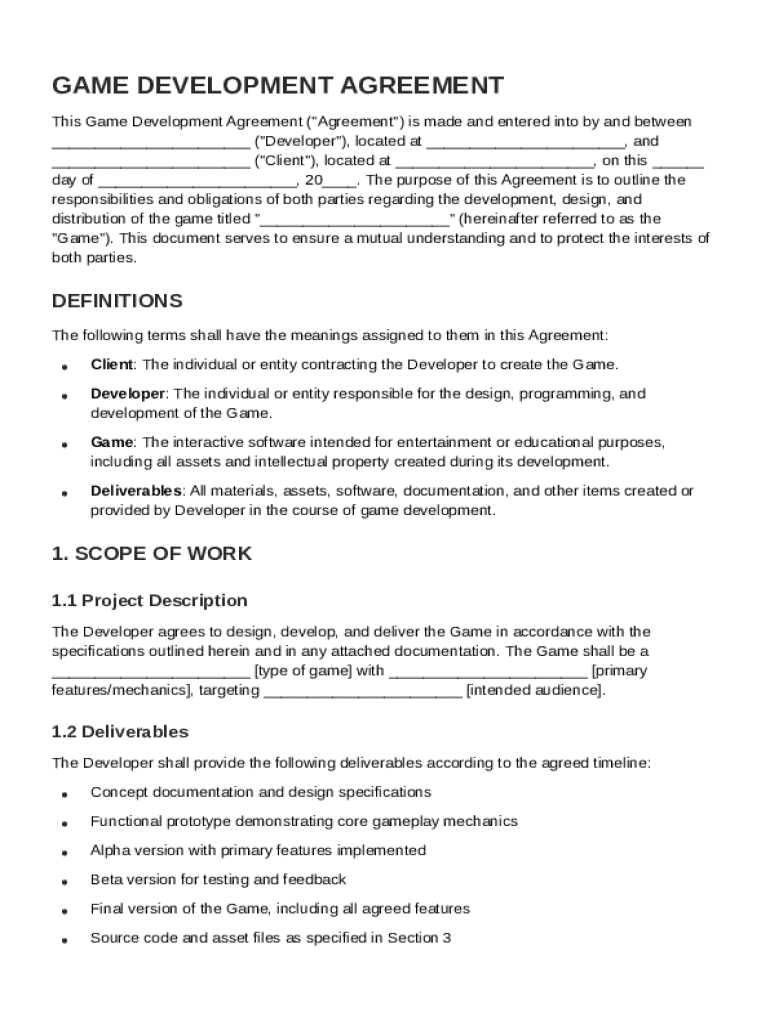




Key Elements of the Game Development Contract Template
A Game Development Contract Template serves as a comprehensive agreement between a Developer and a Client to establish clear expectations throughout the game's creation process. Key elements include:
- Definitions: Establishes clarity by defining critical terms used within the contract, such as "Developer," "Client," "Project," and "Deliverables."
- Scope of Work: Outlines the specific tasks and responsibilities expected from the Developer, including timelines, phases, and milestones.
- Compensation Terms: Details the payment structure, including rates, schedules, and conditions for any additional expenses.
- Intellectual Property Rights: Clarifies ownership of the game's code, graphics, and design elements, determining who retains or transfers rights.
- Confidentiality Obligations: Ensures that both parties understand and agree to maintain the confidentiality of proprietary information shared during the project.
- Warranties and Representations: Sets forth the guarantees each party provides regarding their authority and capability to fulfill the contract.
- Termination Conditions: Describes scenarios and procedures for ending the contract prematurely and any associated consequences.
- Dispute Resolution Procedures: Provides methods for resolving conflicts, such as mediation or arbitration, to avoid escalation.
Definition and Meaning
The Game Development Agreement is a legally binding document that formalizes the working relationship between a Developer and a Client in the gaming industry. This contract protects both parties by defining the project's scope, deliverables, timelines, remuneration, and other critical factors. It acts as a safeguard by ensuring that all parties have a shared understanding of the obligations and expected outcomes.
- Purpose: To prevent misunderstandings and potential disputes by having a clear and agreed-upon document outlining all necessary terms.
- Participants: Typically involves individuals or companies focused on developing video games, apps, or interactive software.
- Outcomes: A well-drafted agreement leads to smoother collaboration and a higher chance of successful project completion.
Steps to Complete the Game Development Contract Template
Completing the Game Development Contract Template requires systematic attention to detail to ensure its comprehensive nature is maintained. Here are the steps to follow:
- Review the Template: Carefully examine the template to understand each section and how it applies to your project.
- Fill in Identifying Information: Enter the names, addresses, and contact details of both the Developer and the Client.
- Define the Project Scope: Clearly describe the development project, including features, phases, and expected outcomes.
- Determine Compensation and Payment Structure: Outline the agreed payment method, including milestones, amounts, and deadlines.
- Clarify Intellectual Property Arrangements: Document who will own the game post-development and any license terms.
- Add Confidentiality and NDA Provisions: Specify what information must remain confidential and the penalties for breaches.
- Set Termination Conditions: Establish grounds for contract termination, ensuring both parties understand exit options.
- Agree on Warrants and Indemnities: Finalize the responsibilities each party will uphold regarding claims and liabilities.
Who Typically Uses the Game Development Contract Template
The Game Development Contract Template is utilized by a variety of stakeholders within the gaming industry. Typical users include:
- Game Developers: Independent contractors or companies responsible for creating video game software.
- Publishers: Entities that finance and distribute video games, interested in formalizing development agreements.
- Clients: Individuals or organizations commissioning a game development project, often seeking to ensure deliverables meet specific standards.
- Legal Professionals: Attorneys specializing in contracts and IP law, assisting in drafting and reviewing such agreements to ensure legality and compliance.

Important Terms Related to the Game Development Contract Template
Understanding the terminology in a Game Development Contract Template is crucial to ensuring all parties interpret the agreement consistently. Key terms include:
- "Developer" and "Client": Establish the roles of the parties in the contract.
- "Deliverables": Refers to the specific outputs or products the Developer is expected to provide.
- "Milestones": Project checkpoints that dictate partial payment releases upon completion.
- "Royalties": Ongoing payments based on sales or usage, sometimes included in the compensation structure.
- "License": The permission granted to use the intellectual property in a specified way.
- "Arbitration/Mediation": Methods of dispute resolution outside of the court system.
Legal Use of the Game Development Contract Template
The Game Development Contract Template serves as a legal instrument that ensures a project's terms are enforceable under U.S. law. It includes provisions that follow federal guidelines and adhere to industry standards.
- Enforceability: Contracts are upheld in court if they meet necessary legal requirements, offering recourse if terms are violated.
- Compliance: Parties must comply with state-specific regulations, which can affect intellectual property rights and privacy laws.
- Protection: Legal provisions in the contract protect against unauthorized use of proprietary information and intellectual property disputes.
Examples of Using the Game Development Contract Template
Real-world applications of the Game Development Contract Template vary across different projects and partnerships. Examples include:
- Indie Game Projects: Independent developers deliver games to clients, using a contract to manage copyright and revenue-sharing arrangements.
- Corporate Collaborations: Large gaming companies engaging with external developers to produce parts of larger multi-platform projects.
- Educational Games: Schools partnering with developers to create educational content, governed by strict deadlines and quality standards.
- Crowdsourced Games: Developers outline terms with contributors and platforms hosting the crowdfunded project.
Digital vs. Paper Version of the Game Development Contract Template
For ease of use, the Game Development Contract Template can be used in either a digital or paper format. Each option has its advantages:
-
Digital Version: Offers easy editing, sharing via email, and secure digital signatures allowing remote collaboration.
-
Paper Version: Provides a tangible copy for physical records and traditional wet signatures, preferred in formal presentations.
-
Security Considerations: Digital versions can include encryption for confidentiality, while paper versions need secure physical storage.
-
Convenience: Digital formats align with a global, remote workforce, whereas paper formats may be preferred in formal business environments with fewer technology resources.