




01. Edit your pep boys fleet account online
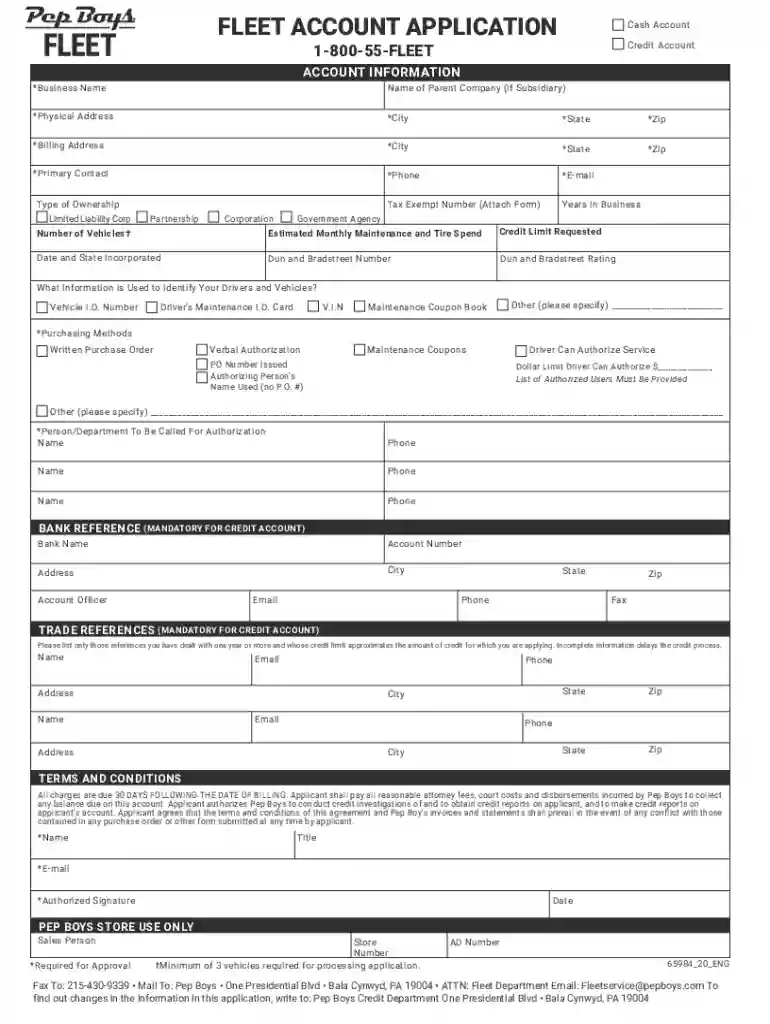
Type text, add images, blackout confidential details, add comments, highlights and more.

Type text, add images, blackout confidential details, add comments, highlights and more.

Draw your signature, type it, upload its image, or use your mobile device as a signature pad.

Send it via email, link, or fax. You can also download it, export it or print it out.
The Application for Charitable Organization Property Tax refers to a specialized tax form utilized by non-profit and charitable entities in the United States to seek an exemption from property taxes. This form allows these organizations to apply for relief based on their charitable status, potentially reducing significant operational costs associated with property ownership. Primarily applicable to organizations classified under Section 501(c)(3) of the Internal Revenue Code, this application process is crucial for entities aiming to benefit from property tax exemptions, ultimately channeling more resources toward their charitable activities.
Using the Application for Charitable Organization Property Tax involves several key steps. Organizations must first assess eligibility criteria specific to their state, as the qualifications for tax-exempt status can vary widely. Upon verifying eligibility, the organization should accurately complete the form, including detailed information about the property in question and the organization’s mission, activities, and financial status. Supporting documentation is often required, such as letters of determination from the IRS, financial statements, and proofs of the charitable use of the property. Once the form is completed, it should be submitted per the instructions provided, typically to the local tax assessor's office or similar authority.
Typically, the application can be obtained directly from the website of the local tax authority in the state where the property is located. For organizations operating in multiple states, it is important to acquire the correct version of the form applicable to each state’s specific requirements. In some cases, a form can be requested via phone or in person from the local assessor’s office. It is essential to ensure that the most recent version of the form is used, as regulations and form structures may change over time. Additionally, many states provide digital access to these forms, enabling direct download for convenience.
Eligibility for the Application for Charitable Organization Property Tax is typically predicated on the organization’s official recognition as a 501(c)(3) entity. Organizations must demonstrate that their property is used exclusively for charitable, religious, educational, or similar purposes. Furthermore, some states require a history of compliance with filing requirements and may deny exemptions to organizations that have previously failed to adhere to state tax regulations. Specific definitions of eligible uses can vary between states, thus necessitating close adherence to local requirements.


While the overarching principles of eligibility and process remain similar across states, each state may have unique criteria and additional requirements. Factors such as the percentage of the property used for charitable purposes, local ordinances, and the nature of the charity's work can influence the application outcome. Some states mandate periodic reapplication to maintain tax-exempt status, while others offer continuous exemption upon approval unless there are significant changes in property use.
The IRS provides overarching guidelines that help define which organizations qualify as tax-exempt under federal law, serving as a baseline for state-level applications. The organization seeking exemption should align their operations with IRS definitions of charitable activity, ensuring compliance with public service, religious, educational, or scientific purposes. This alignment is critical not just for the property tax exemption but also for broader tax-exempt status under federal regulations.
The timeline for submitting the Application for Charitable Organization Property Tax can vary by state. Many states set a deadline aligned with property tax assessment cycles, commonly requiring submissions within the first quarter of the calendar year. It’s vital for organizations to track and adhere to these deadlines to prevent missed opportunities for tax exemption and plan for any administrative reviews that may be necessary before the deadline. In certain jurisdictions, late applications may be accepted with justifications, often accompanied by a penalty.
We've got more versions of the pep boys fleet account form. Select the right pep boys fleet account version from the list and start editing it straight away!
At DocHub, your data security is our priority. We follow HIPAA, SOC2, GDPR, and other standards, so you can work on your documents with confidence.
(c) To be eligible for a property tax exemption as a charitable institution, the applicant must be primarily eleemosynary in nature. Such an institution willRead more
Jul 14, 2025 The purpose of the RP-420-a and RP-420-b exemption application forms is to provide the assessor with the information needed to determine whether property ownedRead more


