
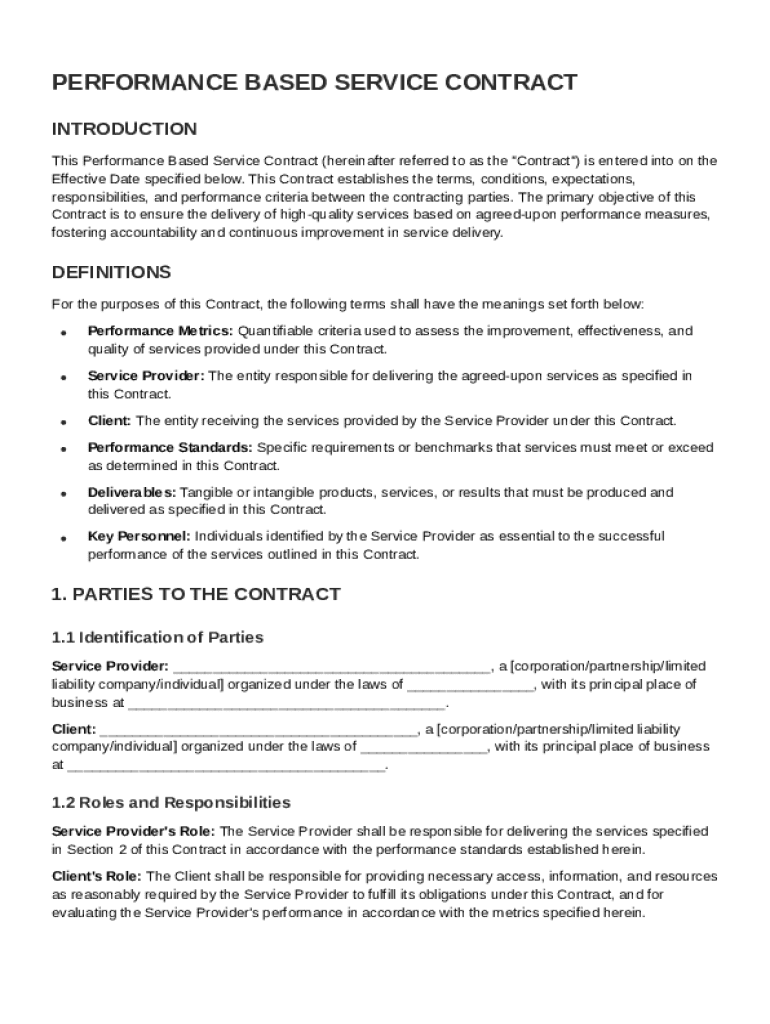







Key Elements of the Performance Based Service Contract Template
The Performance Based Service Contract Template is designed to establish a clear framework for service delivery between a client and a service provider. This template highlights several essential components to ensure that both parties understand their roles, responsibilities, and expectations. Key elements include:
-
Performance Metrics: The contract defines specific criteria that measure the quality and efficiency of the services provided. These metrics could include response times, error rates, and customer satisfaction scores.
-
Compensation Structures: It lays out how the service provider will be compensated based on performance outcomes. Compensation may vary depending on the achievement of agreed-upon targets.
-
Roles and Responsibilities: Clearly delineating the duties of both the client and the service provider helps prevent misunderstandings that could affect service delivery.
-
Reporting Requirements: The contract outlines the type and frequency of reports that the service provider must deliver, ensuring ongoing transparency and alignment with the client’s objectives.
-
Compliance Regulations: It ensures that all services adhere to relevant laws and industry standards to mitigate legal risks.
-
Dispute Resolution Processes: Procedures for resolving conflicts or disagreements between parties are specified, which is essential for maintaining a smooth, ongoing working relationship.
How to Use the Performance Based Service Contract Template
Utilizing the Performance Based Service Contract Template effectively involves several specific steps to adapt it to your needs:
-
Review the Template: Start by thoroughly examining the provided sections and customization options that pertain to your specific service agreement.
-
Tailor Performance Metrics: Adjust the performance metrics to reflect the services you expect. This includes customizing criteria to measure success accurately and relevantly.
-
Define Responsibilities: Clearly outline the roles and responsibilities unique to the service provider and client in the context of your agreement.
-
Set Compensation Terms: Establish how payment will be linked to performance, including any penalties for not meeting agreed standards.
-
Customize Legal Clauses: Modify any compliance and legal clauses to ensure alignment with industry-specific regulations and the legal environment within which your business operates.
-
Finalize Terms: Collaborate with all stakeholders to finalize the terms, ensuring that the document comprehensively addresses all necessary details and regulations.
Important Terms Related to Performance Based Service Contract Template
Understanding the terminology used in the Performance Based Service Contract Template ensures accurate interpretation and application of its contents:
-
Service Level Agreement (SLA): A critical component specifying the expected level of service performance.
-
Force Majeure: Clauses that relieve parties from obligations due to unforeseen events beyond their control, such as natural disasters.
-
Non-Disclosure Agreement (NDA): A contractual agreement that obligates parties to maintain confidentiality about shared information.
-
Indemnification: Terms wherein one party agrees to compensate another for certain damages or losses.
-
Termination Clause: Guidelines that outline circumstances under which the contract may end before its usual term.
Steps to Complete the Performance Based Service Contract Template
Completing a Performance Based Service Contract entails a systematic approach to ensure it reflects the nuances of the agreed services:
-
Gather Basic Information: Collect the fundamental details of the service provider and client, including contact information and business credentials.
-
Negotiate Key Points: Collaborate with all involved parties to discuss and agree on essential conditions such as performance metrics, compensation, and responsibilities.
-
Draft the Contract: Using the template, begin drafting the contract by filling out the required sections with relevant information from the negotiation phase.
-
Review Legal Language: Conduct a thorough review of the legal language used within the document to ensure clarity and compliance with applicable laws.
-
Seek Legal Counsel: If necessary, have the contract reviewed by a legal professional to prevent potential legal disputes.
-
Implementation and Signatures: Finalize the document by adding required signatures from both parties, ensuring that all understand and agree with the established terms.
Examples of Using the Performance Based Service Contract Template
Real-world applications of the Performance Based Service Contract Template can vary across industries:
-
IT Services: A technology company uses the contract to set expectations for network support services, detailing response times and resolutions.
-
Facilities Management: A firm managing building maintenance implements performance metrics like timely completion of work orders and tenant satisfaction.
-
Customer Support Outsourcing: A business contracts a third-party provider with performance metrics focused on average handling time and call resolution rates.
Who Typically Uses the Performance Based Service Contract Template
Various entities benefit from using the Performance Based Service Contract Template, adapting its structure to their unique needs:
-
Small to Medium Enterprises (SMEs): They use it to formalize service delivery expectations, allowing them to scale operations while maintaining service quality.
-
Government Agencies: They apply this contract to ensure accountability and efficient service delivery from suppliers and contractors.
-
Multinational Corporations: Utilizing this contract helps these corporations manage relationships with a broad range of service providers, ensuring consistent performance across locations.

Legal Use of the Performance Based Service Contract Template
The legal framework surrounding the Performance Based Service Contract Template is important:
-
Adherence to the ESIGN Act: The contract ensures legal compliance for electronic signatures, enabling both parties to sign and execute contracts digitally yet legally binding.
-
Jurisdictional Requirements: It’s crucial to adapt the contract to meet specific legal requirements based on the location where the services will be performed.
-
Modification Clauses: Include provisions that allow amendments to the contract in accordance with legal guidelines, ensuring the document remains relevant and enforceable.
Software Compatibility with Performance Based Service Contract Template
Handling performance-based contracts digitally simplifies management and collaboration:
-
DocHub Integration: Compatible with various cloud storage services such as Google Drive and Dropbox, allowing seamless document editing and storage.
-
File Format Versatility: Supporting multiple file formats including DOC and PDF facilitates integration with existing workflows without necessitating conversion.
-
Mobile Access: The ability to manage and sign contracts on both desktop and mobile platforms enhances flexibility and access for all users.
These sections provide a comprehensive guide to understanding, using, and managing the Performance Based Service Contract Template, ensuring that users can maximize its benefits for effective service management.




