






Definition & Meaning
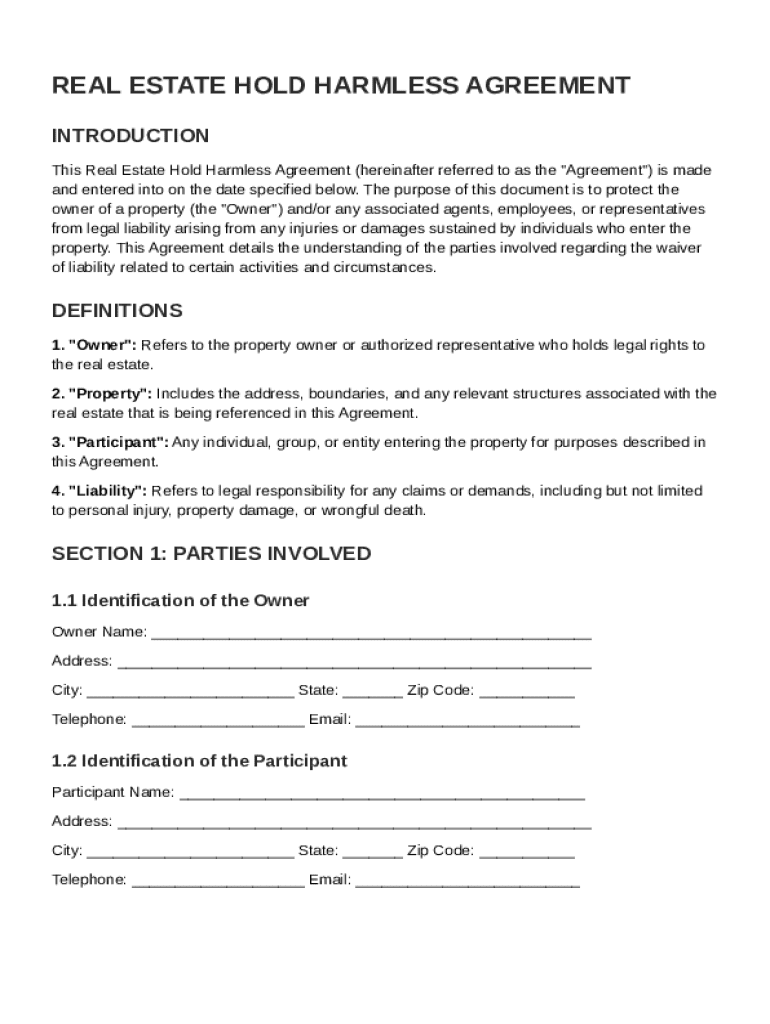
A Real Estate Hold Harmless Agreement Template is a legal document used to protect property owners from liability claims posed by individuals entering or using the property. By defining key terms and outlining the parties involved, this agreement helps manage risk associated with the property. It serves an important function in various real estate transactions by highlighting potential dangers and preventing legal disputes over injuries or damages that might occur during property use.
Key Terminology
- Hold Harmless Clause: A provision in the agreement where one party agrees not to hold the other responsible for any legal liability or penalties incurred during the use of the property.
- Indemnity Clause: Protects one party against financial loss, preventing claims against them for damages caused to a third party.
How to Use the Real Estate Hold Harmless Agreement Template
The Real Estate Hold Harmless Agreement Template can be customized and used in various scenarios, ensuring protection against liability. To use the template:
- Identify the Parties: Clearly define the parties involved, including the property owner and any individual or entity entering the property.
- Detail the Property: Accurately describe the property or specific area covered by the agreement.
- Include Specific Terms: Reference particular activities or uses permitted on the property, along with any restrictions.
- Establish Agreement Terms: Mention the duration of the agreement and conditions under which it may be terminated or modified.
Practical Examples
- A homeowner allowing a contractor to perform renovations may use this document to avoid liability for potential accidents on-site.
- Real estate investors might require a hold harmless agreement from short-term renters to mitigate risks associated with their stay.
Key Elements of the Real Estate Hold Harmless Agreement Template
For an effective Real Estate Hold Harmless Agreement, it's essential to include several critical elements:
Parties Involved
- Owner Information: Name, contact details, and address.
- Tenant/Visitor Information: Include anyone entering the property who must agree to the terms.
Liability Waiver
- Clearly state that the party entering the property waives all claims against the property owner for any injuries or damages incurred.
Governing Law and Jurisdiction
- Specify which state’s laws will govern the agreement and where any legal proceedings will be initiated if necessary.
Expiration and Renewal Terms
- Outline when the agreement ends and how it might be renewed if the need arises, maintaining clarity for all parties.
Legal Use of the Real Estate Hold Harmless Agreement Template
This template serves to legally safeguard property owners by establishing agreed conditions that any entrant must follow. It’s crucial within:
- Court Settings: Demonstrating due diligence in protecting both owner and entrant in potential lawsuits.
- Insurance Policies: Supporting claims by illustrating proactive risk management.
Edge Cases
- The agreement does not cover acts of gross negligence or willful misconduct by the owner; clear demarcation is essential for clarity and legal protection.
Steps to Complete the Real Estate Hold Harmless Agreement Template
The process to fill out the template is systematic:
- Initiate Document: Obtain a comprehensive template matching specific needs from trustworthy legal or online resources.
- Fill Party Details: Input comprehensive information about all parties involved.
- Define Terms: Establish the scope of property usage, risks accounted for, and liability limitations.
- Review Legal Language: Ensure clarity and accuracy of all legal terms used within the document.
- Sign and Notarize: If legally required, both parties should sign, and depending on jurisdiction, notarization might be necessary.
Suggested Tools
- Online platforms like DocHub that allow real-time collaboration and digital signing provide a streamlined process for filling and completing the document.
State-Specific Rules for the Real Estate Hold Harmless Agreement Template
Different states in the U.S. might have specific provisions influencing how Hold Harmless Agreements operate legally:
State Variations
- Enforceability: Some states have stricter guidelines on what constitutes a valid indemnity clause.
- Regulations: Check whether a disclaimer or waiver must meet specific state authority criteria to be valid.
For example, in California, additional disclosures must accompany any indemnity clause, whereas Texas may have limitations on them in construction contracts.
Important Terms Related to Real Estate Hold Harmless Agreement Template
This agreement features several important terms, essential for understanding:
- Waiver of Subrogation: Prevents the insurer from stepping in to sue the waiver signatory after paying a claim.
- Mutual Indemnification: Both parties protect each other against liabilities, making it a bilateral agreement.
Example Contexts
- A mutual indemnification clause might be beneficial when multiple parties have equal exposure to risk, such as joint commercial ventures.
Who Typically Uses the Real Estate Hold Harmless Agreement Template
These templates are used broadly across various sectors in the real estate industry:
- Homeowners: To protect during property tours or renovations.
- Realtors and Agents: Providing these templates to clients for open houses or viewings.
- Contractors and Subcontractors: Ensuring limited liability during construction projects.