Vanguard tax form schedule 2026

Get Form
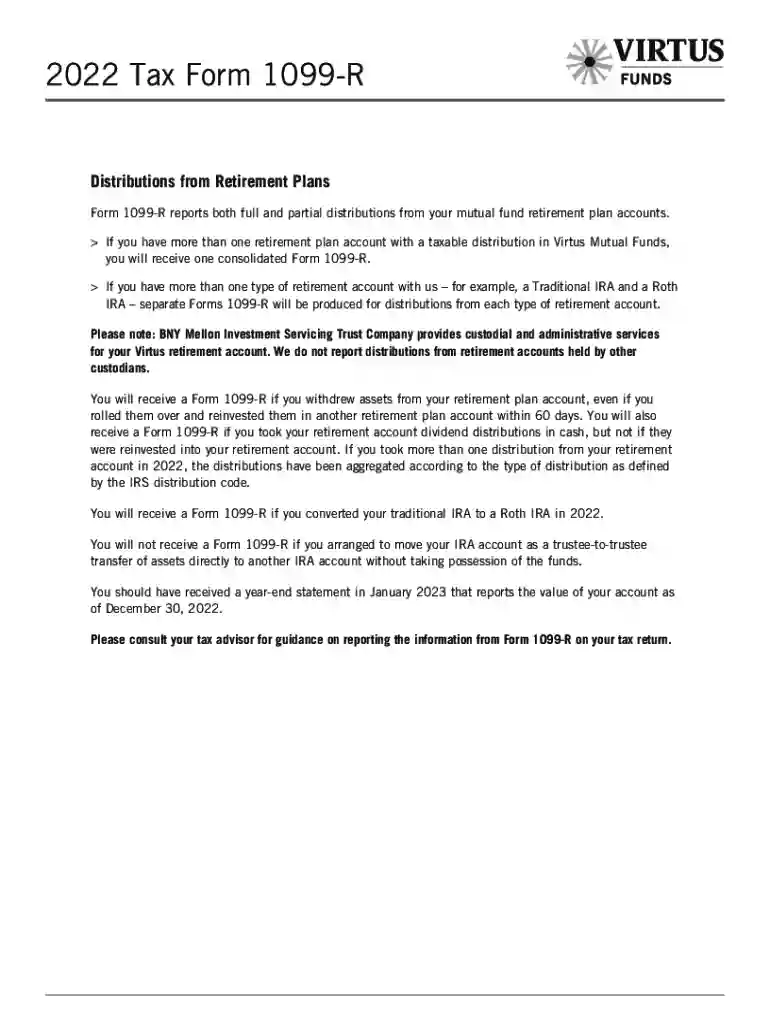
Vanguard tax form schedule Preview on Page 1

Here's how it works

01. Edit your form online
Type text, add images, blackout confidential details, add comments, highlights and more.

02. Sign it in a few clicks
Draw your signature, type it, upload its image, or use your mobile device as a signature pad.

03. Share your form with others
Send it via email, link, or fax. You can also download it, export it or print it out.

How to use or fill out Vanguard tax form schedule with our platform

Form edit decoration
9.5
Ease of Setup
DocHub User Ratings on G2
9.0
Ease of Use
DocHub User Ratings on G2
  1. Click ‘Get Form’ to open the Vanguard tax form schedule in the editor.
  2. Begin by entering your personal information in the 'Recipient's Name and Address' section. Ensure that your name and address are accurate, as this will be used for IRS reporting.
  3. In the 'Payer's Name' section, input the name of the financial institution managing your retirement account. This is crucial for identifying where your distributions originated.
  4. Fill out the 'Gross Distribution' field with the total amount you withdrew from your retirement account during the year. This figure is essential for calculating your taxable income.
  5. Complete the 'Taxable Amount' fields based on whether any portion of your distribution is taxable. Refer to IRS guidelines if you're unsure about how to categorize these amounts.
  6. Review all entries for accuracy before saving or exporting your completed form. Use our platform’s features to easily share or print your finalized document.

Start using our platform today to simplify filling out your Vanguard tax form schedule for free!

See more Vanguard tax form schedule versions

We've got more versions of the Vanguard tax form schedule form. Select the right Vanguard tax form schedule version from the list and start editing it straight away!
Versions Form popularity Fillable & printable
2022 4.9 Satisfied (30 Votes)
2020 4.8 Satisfied (60 Votes)
2019 4.8 Satisfied (243 Votes)
2018 4.2 Satisfied (77 Votes)
2013 4.3 Satisfied (178 Votes)
be ready to get more

Complete this form in 5 minutes or less

Get form

Got questions?

We have answers to the most popular questions from our customers. If you can't find an answer to your question, please contact us.
Contact us
Who Needs to File Schedule 1? Unemployment compensation. Business income (youll also need Schedule C) Rental property income. Farming income. Gambling winnings. Alimony received. Other income not reported on your W-2.
Obtain a copy of Form 1040 and Schedule 1 from the IRS website, local IRS office, or by requesting that they be mailed to you. Fill out the required information on both forms manually, following the instructions provided. Attach Schedule 1 to your completed Form 1040.
Youll typically get a 1099-DIV each year you receive a dividend distribution or capital gains distribution, or if you paid foreign taxes on your taxable investments. But if the amount is less than $10 for the year, no 1099-DIV is sent.
Most are mailed no later than January 31 to the address on file.
Schedule 1 is included in the 1040 tax return. In TurboTax you do not edit Schedule 1. It is posted and calculated for you.

Security and compliance

At DocHub, your data security is our priority. We follow HIPAA, SOC2, GDPR, and other standards, so you can work on your documents with confidence.

Learn more
ccpa2
pci-dss
gdpr-compliance
hipaa
soc-compliance
be ready to get more

Complete this form in 5 minutes or less

Get form

People also ask

You dont have to use Schedule 1 if all of your income comes from the five categories included on Form 1040: wages, interest and dividends, retirement income, Social Security benefits, or capital gains or losses.
Why didnt I get a Form 1099-R? You will not receive a Form 1099-R, if your distributions were: Made from Coverdell ESAs. ESA distributions are reported on Form 1099-Q.
You only need to file Schedule 1 if you have additional income or adjustments to income, such as freelance or gig income, unemployment benefits, alimony (from agreements prior to 2019), student loan interest deductions, or contributions to an HSA or IRA.

Related links