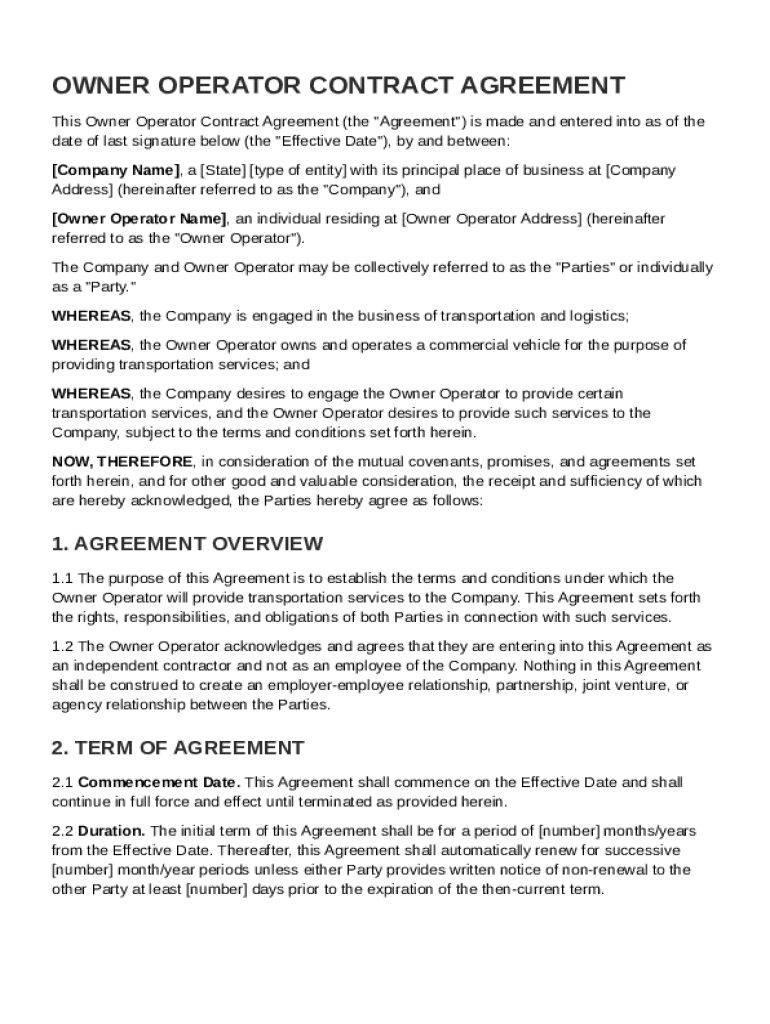







Definition and Meaning of the Owner Operator Contract Template
An Owner Operator Contract Template is a standardized document specifically designed to outline the terms and conditions under which an independent contractor, known as the Owner Operator, provides transportation services to a company. This form serves as a legal framework that ensures both parties are clear on their responsibilities and obligations. It is particularly important in the trucking industry where owner-operators act independently but provide services to larger logistics companies. The template typically includes sections on compliance with relevant laws, vehicle maintenance, insurance requirements, compensation structures, and termination clauses. Additionally, it clarifies the independent contractor status of the Owner Operator to distinguish it from an employment relationship.
Key Elements of the Owner Operator Contract Template
Compliance with Laws
The contract should detail the obligation of the Owner Operator to comply with all applicable federal, state, and local laws. This includes regulations regarding transportation safety, taxation, and employment standards. The emphasis on legal compliance protects both parties from potential legal disputes and ensures the integrity of the contractual relationship.
Vehicle Maintenance and Safety
A crucial component of the contract is the requirement for the Owner Operator to maintain their vehicle in good working condition. Regular inspections and adherence to safety standards are typically mandated to ensure the safe transport of goods. This section may also stipulate the types of maintenance that must be logged and reported to the hiring company.
Insurance Requirements
Adequate insurance coverage is another key element. The contract usually specifies the types of insurance the Owner Operator must maintain, such as liability insurance and cargo insurance. This protects both the contractor and the company in the event of accidents or damage to goods.
Compensation Structure
Details on how and when the Owner Operator will be compensated are clearly outlined. This includes the rate of payment, additional expenses that may be reimbursed, and the method of payment. A well-defined compensation structure helps prevent misunderstandings and disputes regarding payments.
Termination Clauses
The conditions under which either party can terminate the contract are listed. This includes notice periods, reasons for termination, and any penalties for early termination. A termination clause is essential for providing a clear exit strategy and protecting the interests of both parties.
Legal Use of the Owner Operator Contract Template
The legal use of this template involves ensuring that all sections of the document comply with the laws governing independent contractors in the United States. The contract not only formalizes the working relationship but also serves as a crucial legal document outlining each party's rights and obligations. Key provisions often include confidentiality clauses, indemnification terms, and governing law stipulations. A properly executed contract can prevent costly legal disputes and provide clear remedies if disagreements arise.
Steps to Complete the Owner Operator Contract Template
-
Information Gathering: Start by collecting all necessary details from both the Owner Operator and the company, including contact information and specifics of the transportation services to be provided.
-
Contract Customization: Modify the template to reflect the unique aspects of the agreement. This might involve specifying the type of goods to be transported, exact compensation details, and any special conditions or requirements.
-
Review of Legal Provisions: Carefully examine all legal provisions, ensuring that the document complies with applicable laws. Consult with a legal professional if necessary to verify the accuracy of indemnification and confidentiality clauses.
-
Signing and Execution: Once both parties agree on the terms, sign and date the contract. It is often recommended to have the document notarized to prevent future disputes regarding authenticity.
State-Specific Rules for the Owner Operator Contract Template
The use of this template can be affected by state-specific regulations, particularly those dealing with employment classifications and contract enforcement. For example, California's Assembly Bill 5 (AB5) has specific implications for classifying workers as independent contractors versus employees. Businesses operating in multiple states should be aware of such variations to ensure compliance with local laws. Consulting with legal experts familiar with state-specific transportation regulations can help tailor the contract to meet these legal requirements.
Examples of Using the Owner Operator Contract Template
Intermodal Transportation
In intermodal transportation, owner operators provide essential services by transporting freight across different modes of transit. The contract template can be customized to include maritime law provisions if ships or ports are involved.
Long-Haul Trucking
For long-haul trucking companies, these contracts ensure owner operators are adequately compensated for extended travel distances. Provisions might include specifics on allowable mileage or rest periods.
Specialized Freight
When dealing with specialized freight such as hazardous materials, the template can be modified to include additional safety and compliance requirements. This ensures that all unique aspects of such transportation are legally addressed in the contract.
Required Documents for Completing the Template
To complete the Owner Operator Contract Template, several supporting documents will often be necessary:
- Proof of Insurance: Documentation confirming that the Owner Operator holds the required insurance policies.
- Vehicle Inspection Reports: Records indicating the vehicle's maintenance history and current condition.
- Licenses and Certifications: Copies of any relevant licenses or certifications needed to perform transportation services legally.
- Tax Identification Numbers: Both the Owner Operator and the company might need to provide their respective tax identification numbers for payment processing.
These documents ensure that all necessary prerequisites are met before the contract is signed and can help facilitate a smooth working relationship.