




01. Edit your form online
Type text, add images, blackout confidential details, add comments, highlights and more.

Type text, add images, blackout confidential details, add comments, highlights and more.

Draw your signature, type it, upload its image, or use your mobile device as a signature pad.

Send it via email, link, or fax. You can also download it, export it or print it out.
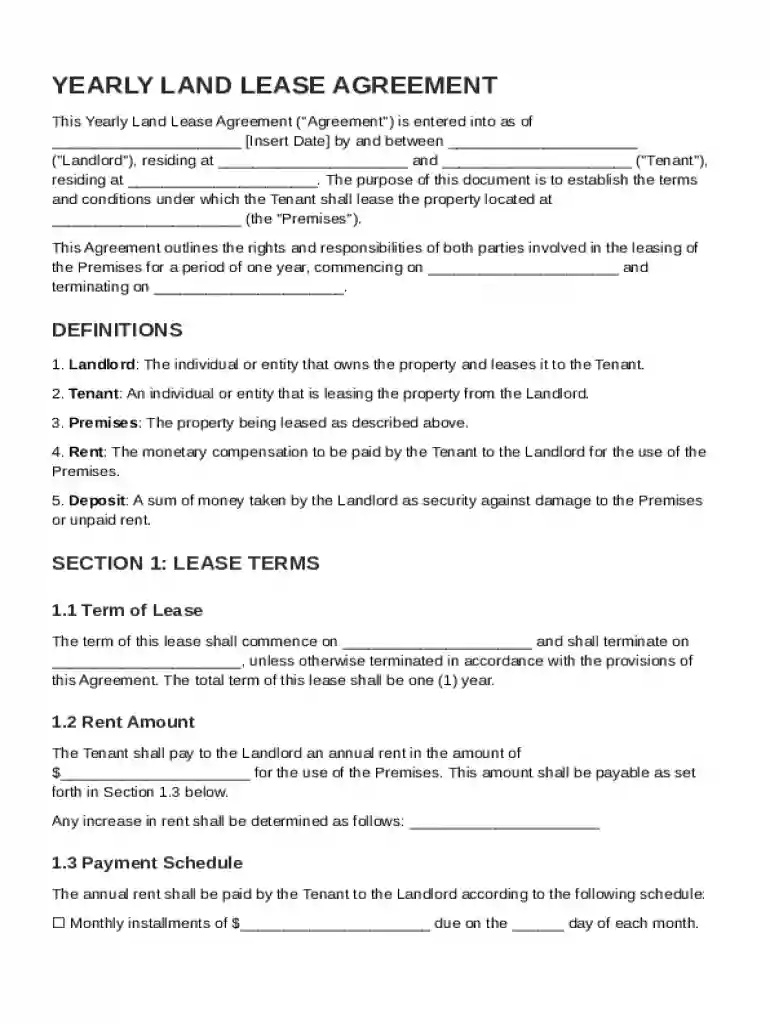
The Yearly Land Lease Agreement Template is a legal document designed to formalize the terms and conditions of leasing property for a one-year period between a landlord and a tenant. It sets the groundwork for understanding each party's rights and responsibilities, providing a structured approach to property rental agreements. This template serves as a key tool in real estate, ensuring all relevant aspects—such as payment schedules, maintenance responsibilities, and legal compliance—are covered comprehensively.
Utilizing the Yearly Land Lease Agreement Template requires careful attention to detail to ensure all sections are accurately filled out. The process begins with obtaining the template from a reputable source, such as a trusted document management platform.
Completion of the Yearly Land Lease Agreement Template involves several crucial steps. Each section must be filled out with precision to avoid any potential legal disputes.
Understanding the key elements of the template ensures that all critical information is included and legally enforceable.
The template serves as a legally binding document that protects both the landlord’s and tenant’s interests when properly executed.
Familiarity with key legal terms within the agreement template can help prevent misunderstandings.
Considering state laws is crucial, as they can significantly impact the terms and enforceability of the lease agreement.
This template is primarily used by individuals and entities engaged in property rental.


At DocHub, your data security is our priority. We follow HIPAA, SOC2, GDPR, and other standards, so you can work on your documents with confidence.


The community also developed a land leasing agreement form. This form is included in this booklet. The push for enhancing tenure security in land leasing goes
This lease is between a Landlord and Tenant for agricultural use of approximately acres in County, for years starting on the day of 20.


