



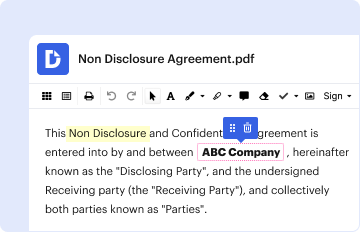
01. Edit your form online
Type text, add images, blackout confidential details, add comments, highlights and more.

Type text, add images, blackout confidential details, add comments, highlights and more.
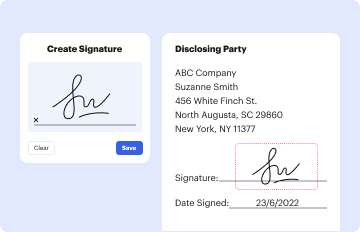
Draw your signature, type it, upload its image, or use your mobile device as a signature pad.

Send it via email, link, or fax. You can also download it, export it or print it out.
The AS 4991 PDF refers to the document outlining the Australian Standard for lifting devices used with cranes, hoists, and winches, published by Standards Australia. This document specifies the essential design, testing, marking, and maintenance protocols required to ensure the safety and effectiveness of various types of lifting equipment. These can include gripping devices, vacuum lifters, and lifting magnets. Understanding the contents and purpose of the AS 4991 standard is essential for professionals involved in industries where lifting equipment is regularly used. This document emphasizes keeping up-to-date with current standards and includes guidelines for risk assessment and ergonomics to minimize workplace hazards.
Professionals in industries where lifting equipment is crucial are the primary users of the AS 4991 PDF. This includes engineers, safety officers, and maintenance personnel who work with cranes, hoists, and winches. Additionally, manufacturers of lifting devices need to adhere to these standards to ensure their products meet the required safety and design specifications. Companies involved in logistics, construction, and manufacturing may also rely on the AS 4991 standard to train employees and develop protocols for the safe operation and maintenance of their lifting equipment.


The AS 4991 PDF includes several critical sections that outline the requirements and guidelines for lifting devices:
Several key terms are essential for understanding the AS 4991 PDF:
Incorporating the AS 4991 PDF into workplace procedures ensures compliance with Australian safety laws and regulations. Adhering to these standards can be a legal requirement for industries using lifting equipment, helping to prevent accidents and protect against potential liabilities. The document serves as an authoritative guide for developing safety protocols and training programs aimed at minimizing workplace incidents related to lifting operations.
Understanding how to implement the standards specified in the AS 4991 PDF involves several critical steps:
For organizations using software for equipment management, ensuring compatibility with AS 4991 PDF requirements can be critical. Software platforms like DocHub can be utilized to manage and annotate documents such as this standard. They allow users to make necessary edits and maintain a record of compliance procedures, facilitating easy access for training and audits. Importing and storing the AS 4991 document within such software ensures streamlined workflows and access across teams.
Access to the AS 4991 PDF can be achieved through digital or paper formats:
We've got more versions of the as 4991 pdf form. Select the right as 4991 pdf version from the list and start editing it straight away!
| Versions | Form popularity | Fillable & printable |
|---|---|---|
| 2004 | 4 Satisfied (52 Votes) |
Most eSignature services require users to have a paid subscription. With DocHub, there are two options for you to add an electronic signature to your as 4991 pdf free of charge:
The second option, though, has restrictions on the number of signatures, sign requests, emails, and documents for editing available per month. You can check for full information here.
You can find the latest and most relevant version of the as 4991 pdf in our DocHub forms collection. Search it by categories or use the search field to locate the exact template that fits your case. You can open this form for editing after you find it.
At DocHub, your data security is our priority. We follow HIPAA, SOC2, GDPR, and other standards, so you can work on your documents with confidence.
This Standard specifies general requirements for the design, testing, marking and correct care and use of lifting devices that can be fitted directly orRead more
by HW Sites 2000 Cited by 1 (616) 387-4991 sauck@wmich.edu. Page 62. Crystal Refinery. 56. MEDIA AND CONTAMINANTS. Matrix Identification. Type of Matrix Sampled and Analyzed: SubsurfaceRead more
Mar 10, 2026 4991. NINETY-FOURTH SESSION. (SENATE AUTHORS: SEEBERGER). OFFICIAL STATUS. D-PG. DATE. Introduction and first reading. 7915. 04/07/2026Read more


