






Key Elements of the Website Retainer Agreement Template
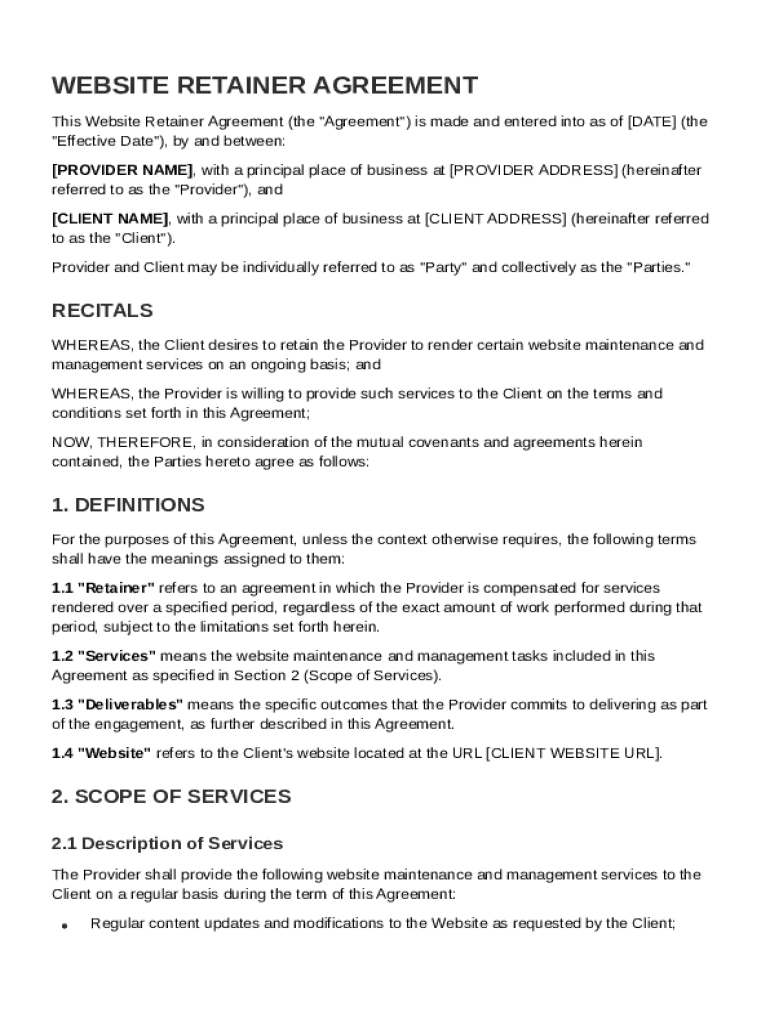
A Website Retainer Agreement Template serves as a comprehensive framework that outlines the relationship between a client and a service provider for ongoing website maintenance and management. Key elements include:
- Scope of Services: Details about regular updates, security patches, performance monitoring, and technical support. The scope defines what activities the service provider is responsible for and any limitations.
- Payment Terms: Specifies the payment structure, frequency, and method. This section might include provisions for late payments or additional charges for out-of-scope work.
- Confidentiality Obligations: Protects sensitive information that the client shares with the service provider, ensuring it remains confidential and delineating any exceptions.
- Intellectual Property Rights: Clarifies ownership of content and design elements created during the contract period. This is crucial for avoiding future disputes about the website's components.
- Indemnification Clauses: Details the responsibilities each party holds in protecting the other against losses caused by the other party's actions.
Steps to Complete the Website Retainer Agreement Template
Completing the Website Retainer Agreement Template involves several essential steps:
- Review and Understanding: Thoroughly read the entire document to comprehend the terms and conditions.
- Customizing Details: Insert specific details such as names, dates, and service descriptions. This includes adjusting the scope of work to match the client’s particular needs.
- Negotiating Terms: Both parties should discuss and agree on all terms, ensuring there is a mutual understanding of each obligation.
- Filling Payment Information: Provide details regarding payment methods, amounts, and intervals to avoid future ambiguities.
- Obtaining Signatures: Once all details are confirmed, both parties must sign the document to make it legally binding. Electronic signatures may be used for convenience and efficiency if both parties agree.
Who Typically Uses the Website Retainer Agreement Template
The Website Retainer Agreement Template is used by various professionals and entities, including:
- Freelancers/Independent Contractors: Individuals offering specialized web services to clients on a long-term basis.
- Web Development Agencies: Companies providing ongoing website management, hosting, and updates as part of their service package.
- Small to Medium Enterprises (SMEs): Businesses that require regular website maintenance but lack an in-house team.
- Non-Profit Organizations: Groups that rely on external expertise to maintain an online presence efficiently and cost-effectively.


How to Use the Website Retainer Agreement Template
Utilizing the Website Retainer Agreement Template effectively involves:
- Initial Setup: Import the template into a document editing platform such as DocHub for flexibility and ease of use.
- Customization: Modify the template to align with specific service offerings and client requirements.
- Amendments: Make adjustments over time to cater to evolving business needs or changes in the scope of services.
- Documentation: Maintain a record of the agreement and any amendments made, ensuring that both parties have access to the final version.
Legal Use of the Website Retainer Agreement Template
The legal framework for using a Website Retainer Agreement Template includes:
- Compliance with Federal and State Laws: Ensure that the agreement complies with applicable laws, particularly concerning employment and service provision.
- Legal Review: Both parties may want to have the agreement reviewed by a legal professional to safeguard their interests and ensure comprehensive coverage of potential legal issues.
- Enforceability: Make sure the agreement includes clauses that provide enforceability, such as dispute resolution methods like mediation or arbitration.
Examples of Using the Website Retainer Agreement Template
Real-world scenarios can illustrate the template’s utility:
- Agency Scenario: A digital marketing agency uses the template to formalize its ongoing SEO, content updates, and site analysis services for a client.
- Freelancer Example: An independent graphic designer contracts to maintain the visual assets of a client’s e-commerce website, ensuring ongoing brand consistency.
- Corporate Use Case: A corporation hires a service provider to oversee security updates and compliance checks for its internal portal, using the template to set performance expectations.
State-Specific Rules for the Website Retainer Agreement Template
The applicability of state-specific rules involves:
- Jurisdiction Clauses: Include where disputes will be resolved—typically in the client's or provider's state.
- Consumer Protection Laws: Adherence to regulations that protect clients from unfair practices, which may vary between states.
- Tax Implications: Consideration for how retainer fees are treated under specific state tax laws, impacting withholding requirements or service taxes.
Versions or Alternatives to the Website Retainer Agreement Template
Alternative forms and their uses include:
- Hourly Service Agreements: Suitable for projects with variable requirements where billing is based on time spent rather than a fixed retainer.
- Project-Based Contracts: Used when services are tied to a specific project rather than ongoing maintenance.
- Advanced Retainer Agreements: These are more complex versions that include additional clauses for performance metrics and escalation processes, ideal for larger corporations or more complex service arrangements.
Each of these alternatives provides flexibility based on the nature of services and business relationships.