




Definition and Purpose of a Standard Work Contract Template
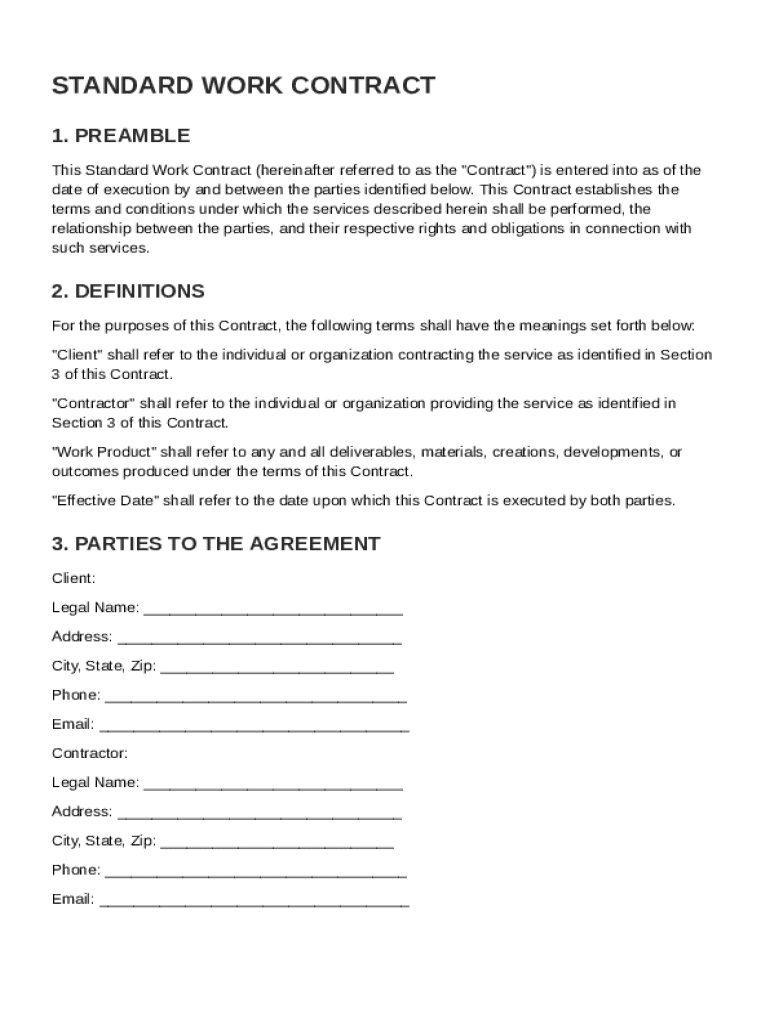
A Standard Work Contract Template is a pre-formatted document designed to outline the essential terms and conditions of a professional agreement between a contractor and a client. The template serves as a comprehensive framework that includes important clauses such as the scope of work, compensation, confidentiality, and ownership of the work product. This document acts as a critical legal instrument that establishes clear expectations and responsibilities for both parties, reducing ambiguity and mitigating risks of disputes.
The use of a Standard Work Contract Template ensures uniformity in contractual agreements and helps both contractors and clients adhere to commonly accepted legal standards. It captures key details about the parties involved, specific tasks to be completed, timelines for delivery, and payment schedules, which can be tailored to fit different project requirements. By employing this template, businesses and individuals can streamline the documentation process, saving time and resources.
Key Elements of the Standard Work Contract Template
A Standard Work Contract Template is highly detailed and includes multiple elements that address various aspects of the working relationship. Some of the critical components include:
- Parties Involved: Clearly defines the contractor and the client, including their official names and contact information.
- Scope of Work: Provides a detailed description of the services to be provided, including specific deliverables and any deadlines.
- Compensation Structure: Outlines how and when the contractor will be compensated, including rates, fees, and payment schedules.
- Confidentiality Obligations: Ensures both parties agree to maintain privacy and confidentiality of any sensitive information shared during the contract.
- Termination Clauses: Specifies conditions under which either party can terminate the agreement, including notice requirements and potential penalties.
- Dispute Resolution: Details the process for resolving any disputes that may arise, which may include mediation or arbitration.
- Governing Law: Identifies the state's laws that will be used to interpret the contract.
Each of these elements is critical to achieving a comprehensive and legally compliant agreement that protects the interests of both parties.
How to Use the Standard Work Contract Template
Utilizing a Standard Work Contract Template involves several steps to ensure it accurately reflects the agreement between the client and contractor. Here’s a general guide:
- Review the Template: Examine the entire document to understand the standard terms and conditions included.
- Customize Details: Modify sections of the template to include specifics of the project, such as names, scope, and compensation details.
- Add Special Clauses: Depending on the project's nature, additional clauses or stipulations may be necessary, such as intellectual property rights or additional confidentiality measures.
- Legal Consultation: Consider having a legal professional review the contract to ensure it meets specific legal requirements and addresses all potential liabilities.
- Review and Sign: Both parties should thoroughly review the final contract before signing to confirm agreement on all terms.
This structured approach ensures the contract is both comprehensive and legally sound.
Who Typically Uses a Standard Work Contract Template
A Standard Work Contract Template is widely used across various industries and by multiple types of businesses and professionals. Those who commonly rely on this template include:
- Freelancers: Professionals offering services in fields like graphic design, content writing, and consulting use these templates to formalize agreements with clients.
- Small Businesses: They leverage these templates to efficiently enter into contracts with independent contractors or consultants.
- Corporates: Large enterprises may use customized versions to manage numerous contract agreements with third-party service providers.
- Non-Profit Organizations: Often these groups utilize work contracts to engage volunteers or contractors for specific projects.
- Government Entities: When hiring contractors for public sector projects, a standard template ensures consistency and compliance with regulations.
The broad applicability of the Standard Work Contract Template makes it an essential tool for ensuring transparent and fair business practices.
Legal Use of the Standard Work Contract Template
The legal use of a Standard Work Contract Template ensures that all parties are bound by terms that are enforceable in a court of law. It must include legally necessary components like:
- Mutual Agreement: Both parties must agree to the terms voluntarily without any pressure or misrepresentation.
- Capacity: All parties need to have the legal capacity and authority to enter into the contract.
- Consideration: There must be something of value exchanged between the parties, such as payment for services.
Adhering to these principles ensures that the contract is valid and enforceable, offering protection and recourse in case of a breach.
State-Specific Rules for the Standard Work Contract Template
While the template provides a generalized framework, specific legal requirements can vary by state. These state-specific rules may affect areas like:
- Contract Formalities: Some states require certain agreements to be notarized or witnessed to be valid.
- Minimum Wage Laws: Compensation terms must always comply with state-specific employment laws.
- Dispute Resolution Procedures: The preferred method for settling disputes may differ, with some states requiring arbitration over litigation.
Understanding these regional differences is crucial, especially for businesses operating across multiple states. Legal consultation is often advisable to navigate these complexities effectively.
Examples of Using the Standard Work Contract Template
Understanding practical applications can provide better clarity on how a Standard Work Contract Template functions in real-world scenarios:
- Example 1: A web development company enters into a contract with a freelance programmer, detailing specific website functionalities, milestones, and payment schedules.
- Example 2: A marketing consultant engages with a small business to provide monthly SEO services, with clauses outlining deliverables, expertise assurances, and confidentiality.
- Example 3: An event management company hires a photographer, specifying the events to cover, duration, post-event deliverables, and usage rights for photos.
These varied examples illustrate the template's flexibility and utility across different services and industries.
Important Terms Related to the Standard Work Contract Template
Familiarity with the terminology used in a Standard Work Contract Template can ensure a clear understanding and proper execution of the agreement. Key terms include:
- Contractor: The individual or entity providing the services outlined.
- Client: The party receiving the services and responsible for compensation.
- Deliverables: Specific products or results that the contractor is expected to deliver.
- Force Majeure: Contractual clause that frees parties from obligations due to unforeseen events beyond their control.
- Indemnity: Protection from loss or damage, specified in the contract to safeguard one party against claims or liabilities.
Understanding these terms reduces misunderstandings and enhances communication between parties involved in the contract.